Page loaded successfully. Showing biography for Middleton Manigault.
Middleton Manigault BIOGRAPHY

1887 London, Ontario, Canada - 1922 San Francisco, California. Known for: Modernist figure painting, genre-symbols, views.
Edward Middleton Manigault was born in London, Ontario, Canada on June 14, 1887. Manigault had a mental breakdown while serving as an ambulance driver for the Canadian Expeditionary Forces during the... Read full biography
Edward Middleton Manigault was born in London, Ontario, Canada on June 14, 1887. Manigault had a mental breakdown while serving as an ambulance driver for the Canadian Expeditionary Forces during the World War. Opting for an art career, he was a pupil of Robert Henri and Kenneth Hayes Miller in... Read full biography
Edward Middleton Manigault was born in London, Ontario, Canada on June 14, 1887. Manigault had a mental breakdown while serving as an ambulance driver for the Canadian Expeditionary Forces during the World War. Opting for an art career, he was a pupil of Robert Henri and Kenneth Hayes Miller in NYC. In search of a therapeutic climate, he left NYC in 1919 and settled in Los Angeles. As the Hindu mystics advocated, he fasted for months in an attempt to achieve a spiritual vision for his... Read full biography
Edward Middleton Manigault was born in London, Ontario, Canada on June 14, 1887. Manigault had a mental breakdown while serving as an ambulance driver for the Canadian Expeditionary Forces during the World War. Opting for an art career, he was a pupil of Robert Henri and Kenneth Hayes Miller in NYC. In search of a therapeutic climate, he left NYC in 1919 and settled in Los Angeles. As the Hindu mystics advocated, he fasted for months in an attempt to achieve a spiritual vision for his paintings. He died of starvation while visiting in San Francisco on Aug. 31, 1922. Due to his short lifespan, his works are rare. Exh: Armory Show (NYC), 1913; Columbus (OH) Museum, 2002 (retrospective). Works held in Public Places: Columbus Museum; Gibbes... Read full biography
Edward Middleton Manigault was born in London, Ontario, Canada on June 14, 1887. Manigault had a mental breakdown while serving as an ambulance driver for the Canadian Expeditionary Forces during the World War. Opting for an art career, he was a pupil of Robert Henri and Kenneth Hayes Miller in NYC. In search of a therapeutic climate, he left NYC in 1919 and settled in Los Angeles. As the Hindu mystics advocated, he fasted for months in an attempt to achieve a spiritual vision for his paintings. He died of starvation while visiting in San Francisco on Aug. 31, 1922. Due to his short lifespan, his works are rare. Exh: Armory Show (NYC), 1913; Columbus (OH) Museum, 2002 (retrospective). Works held in Public Places: Columbus Museum; Gibbes Gallery (Charleston, SC). Source: Edan Hughes, author of the book "Artists in California, 1786-1940". American Art Annual 1921; SF Examiner, 9-6-1922 &... Read full biography
Artist Biography
Biography page for Middleton Manigault ((1887 - 1922)), known for Modernist figure painting, genre-symbols, views. Showing 4 biographical entries and 0 sample artworks.
Middleton Manigault - Artist Info
About Middleton Manigault
Name variants
Edward Middleton Manigault
Biography from the Archives of askART
 Edward Middleton Manigault was born in London, Ontario, Canada on June 14, 1887. Manigault had a mental breakdown while serving as an ambulance driver for the Canadian Expeditionary Forces during the World War.
Opting for an art career, he was a pupil of Robert Henri and Kenneth Hayes Miller in NYC. In search of a therapeutic climate, he left NYC in 1919 and settled in Los Angeles. As the Hindu mystics advocated, he fasted for months in an attempt to achieve a spiritual vision for his paintings.
He died of starvation while visiting in San Francisco on Aug. 31, 1922. Due to his short lifespan, his works are rare.
Exh: Armory Show (NYC), 1913; Columbus (OH) Museum, 2002 (retrospective).
Works held in Public Places: Columbus Museum; Gibbes Gallery (Charleston, SC).Biography from Hollis Taggart Galleries
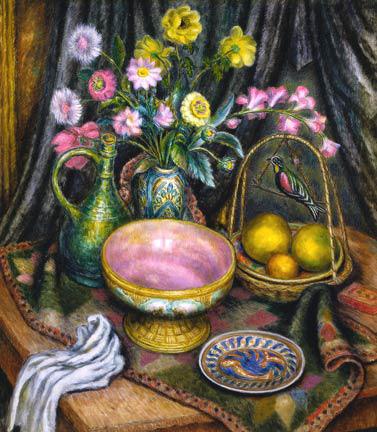 Driven by an intensely experimental nature, Edward Middleton Manigault explored the parameters of Realism, Post-Impressionism, Symbolism, and Cubism. In addition to painting, he proved to be a talented craftsman who produced ceramics, picture frames, carved wood constructions and furniture. Unlike other artists of the period whose reputations rested on a signature style, Manigault created a diverse body of work in a range of styles that reflected his visionary approach to the aesthetics of modernism. His artistic development parallels the trajectory of early American modernism and exemplifies its innovative, searching spirit.
Manigault was born in London, Ontario, on June 14, 1887, into a prominent London family. In search of formal art training, he moved to New York City in 1905 and enrolled in classes at the New York School of Art. He studied under Robert Henri, the leader of the American Realists, and Kenneth Hayes Miller, who would remain a lifelong friend and enthusiastic champion of Manigault's work.
The dark palette of Manigault's early paintings clearly reflects Robert Henri's influence. These works also shared the hazy, romantic and symbolic subjects found in Miller's work. Early in his career Manigault concentrated on depicting effects of light, time of day, and atmosphere. Under Henri's influence, and along with his friend George Bellows, Manigault took to the streets and portrayed the rivers and parks of the city.
Manigault made a dramatic shift away from Realism by 1909 and began producing paintings in the spirit of Post-Impressionism. During next two years, which were among the most productive of his career, Manigault honed an independent style that resulted in a number of dramatic, imaginative compositions. Manigault exhibited some of them at the Haas Gallery in New York, where he had three solo shows from 1909 through 1911. Infused with Fauve chromatics, many of Manigault's compositions at this time were created with a technique related to pointillism in which the artist juxtaposed bold patches of color to create mosaic-like effects. These energetic, vibrant paintings also drew upon decorative aspects of Eastern art.
Manigault continued to refine his modernist style and build upon qualities of Eastern art in the pictures he created around 1911. However, a palette of more somber, muted tones replaced the bright palette he had previously favored. In addition, Manigault had become far more focused on overall decorative patterning. During this period Manigault also created low-toned Symbolist-inspired paintings. His visionary landscapes populated by nudes bear a resemblance to those of Arthur B. Davies, an artist with whom Manigault was undoubtedly familiar.
Manigault's pilgrimage to Europe in 1912 reinforced his attraction to Symbolist subjects. He remained abroad, traveling in France and England, from June to September of that year. Manigault had not gone to train under a specific master or to study in any particular school. Rather, he spent time visiting museums and galleries where he could make copies of works by the old masters and see the work of Cézanne and other modern masters. During his travels, Manigault painted extensively in watercolor and renewed his earlier interest in architectural scenes and landscapes.
After returning from Europe, Manigault began regularly exhibiting his paintings. In 1913 Manigault had his first solo show at the Charles Daniel Gallery in New York. His association with this establishment endured for several years. 1915 marked a radical change in Manigault's career. He married Gertrude Buffington Phillips (1886-1958) and shortly thereafter volunteered as an ambulance driver in the World War I. Manigault's artistic output ceased while he was at the front. After only five months he was declared "incapacitated" and discharged from service.
Manigault's war experiences precipitated a serious nervous breakdown and made returning to art an extremely difficult task. He produced only four paintings in 1916. When Manigault regrouped, he made numerous war-related paintings, most of which are now unlocated. The only known extant image directly pertaining to his military experiences is "Vorticist Landscape (War Impression)" (c. 1916, Curtis Galleries, Minneapolis, Minnesota) a distinctive painting that expresses the tumultuous conditions of war.
During the postwar years, Manigault worked in a wide range of styles. He was inspired by the example of American modernists including William and Marguerite Zorach, each of whom painted flat, compressed, and highly patterned compositions. Manigault also spent considerable time in upstate New York, immersed in the utopian society of the Oneida Community. Manigault also painted intensely colored still life arrangements that showcase his masterful handling of richly patterned decorative subjects. These arrangements, inspired by Oriental motifs, typically featured ceramic vases and plates that Manigault may have created during his sojourn with the Oneida Community.
In 1919 Manigault resettled in Los Angeles, California, and underwent a period of artistic renewal. He pursued craft work and produced interior design pieces, including decorative furniture, screens, and moldings. He also painted flower still lifes and landscapes, works that drew upon Cézanne's and Renoir's language of form and color. Manigault navigated new terrain between color and spatial relationships, and his late work displayed his awareness of the modernist innovations of Synchromists Stanton MacDonald-Wright and Morgan Russell.
Manigault attracted an impressive range of patrons including J. Paul Getty and Ferdinand Howald, noted American collector of European and American modernist art. Old friend Kenneth Hayes Miller was a leading champion of Manigault's work, as was the modernist sculptor Elie Nadelman.
Shortly before Manigault starved himself to death in 1922, he destroyed approximately 200 of his paintings during periods of depression and hysteria. His remaining works are invaluable documents that highlight the artist's contribution to American modernism.
Works by Manigault can be found in the collections of the Arnot Art Museum, Elmira, New York; Columbus Museum of Art, Columbus, Ohio; Curtis Galleries, Minneapolis, Minnesota; Gibbes Art Museum, Charleston, South Carolina; Metropolitan Museum of Art, New York, New York; Museum of London, London, Ontario; and Norton Museum of Art, West Palm Beach, Florida.
© Copyright 2007 Hollis Taggart GalleriesBiography from Hollis Taggart Galleries
Edward Middleton Manigault (1887-1922)
Driven by an intensely experimental nature, Edward Middleton Manigault explored the parameters of Realism, Post-Impressionism, Symbolism, and Cubism. In addition to painting, he proved to be a talented craftsman who produced ceramics, picture frames, carved wood constructions and furniture. Unlike other artists of the period whose reputations rested on a signature style, Manigault created a diverse body of work in a range of styles that reflected his visionary approach to the aesthetics of modernism. His artistic development parallels the trajectory of early American modernism and exemplifies its innovative, searching spirit.
Manigault was born in London, Ontario, on June 14, 1887, into a prominent London family. In search of formal art training, he moved to New York City in 1905 and enrolled in classes at the New York School of Art. He studied under Robert Henri, the leader of the American Realists, and Kenneth Hayes Miller, who would remain a lifelong friend and enthusiastic champion of Manigault's work.
The dark palette of Manigault's early paintings clearly reflects Robert Henri's influence. These works also shared the hazy, romantic and symbolic subjects found in Miller's work. Early in his career Manigault concentrated on depicting effects of light, time of day, and atmosphere. Under Henri's influence, and along with his friend George Bellows, Manigault took to the streets and portrayed the rivers and parks of the city.
Manigault made a dramatic shift away from Realism by 1909 and began producing paintings in the spirit of Post-Impressionism. During next two years, which were among the most productive of his career, Manigault honed an independent style that resulted in a number of dramatic, imaginative compositions. Manigault exhibited some of them at the Haas Gallery in New York, where he had three solo shows from 1909 through 1911. Infused with Fauve chromatics, many of Manigault's compositions at this time were created with a technique related to pointillism in which the artist juxtaposed bold patches of color to create mosaic-like effects. These energetic, vibrant paintings also drew upon decorative aspects of Eastern art.
Manigault continued to refine his modernist style and build upon qualities of Eastern art in the pictures he created around 1911. However, a palette of more somber, muted tones replaced the bright palette he had previously favored. In addition, Manigault had become far more focused on overall decorative patterning. During this period Manigault also created low-toned Symbolist-inspired paintings. His visionary landscapes populated by nudes bear a resemblance to those of Arthur B. Davies, an artist with whom Manigault was undoubtedly familiar.
Manigault's pilgrimage to Europe in 1912 reinforced his attraction to Symbolist subjects. He remained abroad, traveling in France and England, from June to September of that year. Manigault had not gone to train under a specific master or to study in any particular school. Rather, he spent time visiting museums and galleries where he could make copies of works by the old masters and see the work of Cézanne and other modern masters. During his travels, Manigault painted extensively in watercolor and renewed his earlier interest in architectural scenes and landscapes.
After returning from Europe, Manigault began regularly exhibiting his paintings. In 1913 Manigault had his first solo show at the Charles Daniel Gallery in New York. His association with this establishment endured for several years. 1915 marked a radical change in Manigault's career. He married Gertrude Buffington Phillips (1886-1958) and shortly thereafter volunteered as an ambulance driver in the World War I. Manigault's artistic output ceased while he was at the front. After only five months he was declared "incapacitated" and discharged from service.
Manigault's war experiences precipitated a serious nervous breakdown and made returning to art an extremely difficult task. He produced only four paintings in 1916. When Manigault regrouped, he made numerous war-related paintings, most of which are now unlocated. The only known extant image directly pertaining to his military experiences is Vorticist Landscape (War Impression) (c. 1916, Curtis Galleries, Minneapolis, Minnesota) a distinctive painting that expresses the tumultuous conditions of war.
During the postwar years, Manigault worked in a wide range of styles. He was inspired by the example of American modernists including William and Marguerite Zorach, each of whom painted flat, compressed, and highly patterned compositions. Manigault also spent considerable time in upstate New York, immersed in the utopian society of the Oneida Community. Manigault also painted intensely colored still life arrangements that showcase his masterful handling of richly patterned decorative subjects. These arrangements, inspired by Oriental motifs, typically featured ceramic vases and plates that Manigault may have created during his sojourn with the Oneida Community.
In 1919 Manigault resettled in Los Angeles, California, and underwent a period of artistic renewal. He pursued craft work and produced interior design pieces, including decorative furniture, screens, and moldings. He also painted flower still lifes and landscapes, works that drew upon Cézanne's and Renoir's language of form and color. Manigault navigated new terrain between color and spatial relationships, and his late work displayed his awareness of the modernist innovations of Synchromists Stanton MacDonald-Wright and Morgan Russell.
Manigault attracted an impressive range of patrons including J. Paul Getty and Ferdinand Howald, noted American collector of European and American modernist art. Old friend Kenneth Hayes Miller was a leading champion of Manigault's work, as was the modernist sculptor Elie Nadelman.
Shortly before Manigault starved himself to death in 1922, he destroyed approximately 200 of his paintings during periods of depression and hysteria. His remaining works are invaluable documents that highlight the artist's contribution to American modernism.
Works by Manigault can be found in the collections of the Arnot Art Museum, Elmira, New York; Columbus Museum of Art, Columbus, Ohio; Curtis Galleries, Minneapolis, Minnesota; Gibbes Art Museum, Charleston, South Carolina; Metropolitan Museum of Art, New York, New York; Museum of London, London, Ontario; and Norton Museum of Art, West Palm Beach, Florida.Biography from The Johnson Collection
EDWARD MIDDLETON MANIGAULT (1877-1922)
In 1914, the renowned art critic Charles H. Caffin reviewed an exhibition of paintings by Edward Middleton Manigault, who was living and showing his work in New York at that time. Caffin noted the novelty and youthfulness that characterized Manigault’s paintings, writing that “the explanation of his originality is the secret of all originality. . . . How refreshing it is to come in touch with an artistic imagination which is teeming with ideas that are translatable into the pictorial medium!”
Middleton Manigault was born and raised in Canada, but his family had deep roots in the South Carolina Lowcountry. His father, Edward Manigault, Sr., was descended from a distinguished Huguenot family that had settled in Charleston in the seventeenth century. In 1905, eighteen-year-old Middleton enrolled at the New York School of Art. There, he was immersed in an atmosphere energized by avant-garde ideals and burgeoning modernism. He studied under Robert Henri and Kenneth Hayes Miller, and worked alongside classmates Edward Hopper, George Bellows, and Rockwell Kent. Having entered art school with the goal of becoming an illustrator, Manigault quickly abandoned his pen-and-ink drawings in favor of painting.
Manigault’s early efforts were influenced by the gritty realism of Ashcan artists like Henri, but he soon started investigating different modes of painting and a variety of subject matter that was often fanciful in nature, leading critics to describe his output as “symbolistic,” “imaginative,” and “unconventional.” Following European travels in 1912, Manigault found representation, in 1913, with the Charles Daniel Gallery, a venue dedicated to modern art, where his work received enthusiastic reviews and attracted the patronage of prominent collectors. He was also included in the groundbreaking New York Armory Show that same year.
Critical and commercial success aside, Manigault was an emotionally unstable, reclusive individual, a constant seeker who was prone to bouts of depression. In 1915, he married just days before volunteering as an ambulance driver for British forces in World War I. Deemed “incapacitated for service,” he was discharged only five months later. He later spent time in the utopian community of Oneida, New York. Manigault relocated to San Francisco in 1919 and began working in a Cubist style. Displeased with the results of that experimentation, he destroyed nearly two hundred of his own paintings.
It was around this time that Manigault undertook a practice of fasting, hoping that starvation and meditation would enable him “to approach the spiritual plane and see colors not perceptible to the physical eye.” Despite warnings from friends and family, in August 1922, Manigault fasted for two weeks before being admitted to the hospital; he died one week later, at the age of thirty-five.
Although his career was brief and few of his paintings survive today, Manigault was heralded during his own lifetime as a pioneer of American modernism. After his death, Manigault’s mentor Kenneth Hayes Miller wrote, “Nothing is more certain than that the time will come when the product of [Manigault’s] tragically short but intensely passionate artistic endeavor will be valued at its true worth.” Miller’s foresight proved correct. Manigault’s work continues to be included in exhibitions of vanguard art and is held by major institutions, including the Art Institute of Chicago, the Metropolitan Museum of Art, and the Gibbes Museum of Art in Charleston.
The Johnson Collection, Spartanburg, South Carolina
thejohnsoncollection.org