Page loaded successfully. Showing biography for Milt Kobayashi.
Milt Kobayashi BIOGRAPHY

Born 1950 New York City. Known for: Interiors, child genre and figure painting, illustration.
Milt Kobayashi's work has been referred to as ethereal. Kobayashi is increasing his use of light, reflected in the thoughtful gleam of a woman's facial expression; exposing naked intimacy in his... Read full biography
Milt Kobayashi's work has been referred to as ethereal. Kobayashi is increasing his use of light, reflected in the thoughtful gleam of a woman's facial expression; exposing naked intimacy in his moody interior scenes. Kobayashi's subjects are people from another time and place and, yet, they are... Read full biography
Milt Kobayashi's work has been referred to as ethereal. Kobayashi is increasing his use of light, reflected in the thoughtful gleam of a woman's facial expression; exposing naked intimacy in his moody interior scenes. Kobayashi's subjects are people from another time and place and, yet, they are strangely familiar. Kobayashi's people are mysterious, lonely, romantic and yet recognizable. As a young illustrator working in New York City, Milt Kobayashi frequented the Metropolitan Museum of Art to... Read full biography
Milt Kobayashi's work has been referred to as ethereal. Kobayashi is increasing his use of light, reflected in the thoughtful gleam of a woman's facial expression; exposing naked intimacy in his moody interior scenes. Kobayashi's subjects are people from another time and place and, yet, they are strangely familiar. Kobayashi's people are mysterious, lonely, romantic and yet recognizable. As a young illustrator working in New York City, Milt Kobayashi frequented the Metropolitan Museum of Art to study the masters - Sargent, Chase, Duvanek, and Vuillard. Even today, as a successful painter, he returns to the museum often to spend time with the artists of the 18th and 19th century who have influenced his own work. Most recently, revisiting... Read full biography
Milt Kobayashi's work has been referred to as ethereal. Kobayashi is increasing his use of light, reflected in the thoughtful gleam of a woman's facial expression; exposing naked intimacy in his moody interior scenes. Kobayashi's subjects are people from another time and place and, yet, they are strangely familiar. Kobayashi's people are mysterious, lonely, romantic and yet recognizable. As a young illustrator working in New York City, Milt Kobayashi frequented the Metropolitan Museum of Art to study the masters - Sargent, Chase, Duvanek, and Vuillard. Even today, as a successful painter, he returns to the museum often to spend time with the artists of the 18th and 19th century who have influenced his own work. Most recently, revisiting William Merritt Chase helped him resolve problems with larger paintings. He also studied the wo... Read full biography
Artist Biography
Biography page for Milt Kobayashi ((Born 1950)), known for Interiors, child genre and figure painting, illustration. Showing 4 biographical entries and 0 sample artworks.
Milt Kobayashi - Artist Info
About Milt Kobayashi
Biography from the Archives of askART
 Milt Kobayashi's work has been referred to as ethereal. Kobayashi is increasing his use of light, reflected in the thoughtful gleam of a woman's facial expression; exposing naked intimacy in his moody interior scenes. Kobayashi's subjects are people from another time and place and, yet, they are strangely familiar. Kobayashi's people are mysterious, lonely, romantic and yet recognizable.
As a young illustrator working in New York City, Milt Kobayashi frequented the Metropolitan Museum of Art to study the masters - Sargent, Chase, Duvanek, and Vuillard. Even today, as a successful painter, he returns to the museum often to spend time with the artists of the 18th and 19th century who have influenced his own work. Most recently, revisiting William Merritt Chase helped him resolve problems with larger paintings. He also studied the works of Whistler, Chase and Sargent, who were also influenced by Velazquez.
Strangely enough, it was through his study of Western masters, especially Whistler, that Kobayashi became aware of Japanese art and "the Japanese floating world of Edo". He began studying the 16th and 17th century Japanese Ukiyo-e woodblock print masters Hokasai, Sharaku and Utamaro. Ukiyo-e is defined as "pictures of the floating world," depicting characters in the constantly changing motions of life.
The whole perspective of Japanese art allures him - the patterns, color harmonies, use of negative space, and primarily, composition and design. "I'm focusing more on attitudes and aspects of personality, shifting from café scenes and restaurants to simpler scenes. My palette is getting brighter, as I rely more heavily on illumination. But I still have a strong connection to tonal earth colors. I've studied the heavy, dark museum paintings of Velasquez and Van Dyke and, in spite of that darkness, their subjects absolutely glow. I feel I can still maintain rich color and tone, while using a lighter palette. I stopped using the complicated patterns for a while, but now they are getting back into my work. I have also gotten much more elaborate with textures in this series. I have come to appreciate Chase's experimentation. Exploring how he attacked a painting has allowed me to look at my large canvases in a new way."
A third generation Japanese-American, Kobayashi was born in New York City, soon after that his family moved to Oahu, Hawaii, and then ventured to Los Angeles when he was eight. After receiving his B.A. in 1970 from the University of California - Los Angeles, Kobayashi began working as an illustrator. However he found his work, which was quite editorial in its nature, did not fit the Los Angeles commercial art market. In 1977, Kobayashi returned to New York City.
Kobayashi has received two major awards: the National Academy of Design's Ranger Purchased Award and the Allied Arts Silver Medal. His work has appeared in Forbes, Fortune, and Reader's Digest magazines. In September of 1997, Kobayashi was a featured guest artist at the Artist of America show in Denver, CO.
Source: Kent Whipple, Art Professional, Santa Fe, New MexicoBiography from Jones & Terwilliger Galleries
There is a quiet sophistication in Milt Kobayashi's painted canvases, summoning a pensive, etheral feeling in the viewer. Kobayashi's subjects are people from another time and place, yet, they are strangely familiar. They are urban dwellers lost in thought as they take a momentary respite from their routine. Kobayashi's people are absorbed in the world of contemplation and meditation--making them attractively aloof.
A third generation Japanese-American, Kobayashi was born in New York City, soon after that this family moved to Oahu, Hawaii, and then ventured to Los Angeles when he was eight. After receiving his B.A. in 1970 from the University of California-Los Angeles, Kobayashi began working as an illustrator. In 1977, Kobayashi returned to New York City. As a young illustrator working in New York, Kobayashi frequented the Metropolitan Museum of Art to study the old masters -- Sargent, Chase, Duvanek, Vuillard and especially the paintings of Velazquez. Strangely enough, it was through the study of western masters, especially Whistler, that Kobayashi became aware of Japanese art and "the Japanese floating world of Edo". He began studying the 16th and 17th century Japanese Ukiyo-e woodblock print masters Hokasai, Sharaku and Utamaro. The whole perspective of Japanese art allures him -- the patterns, color, harmonies, use of negative space, and primarily, composition and design.
Kobayashi himself a creature of the city at night, is drawn to the same foreboding, noctural scenes that magnetized Toulouse-Lautrec. Known for his urban cafe and bar scenes which dominated his work in the 90's, he has moved to the non-smoking section and is gravitating toward quieter settings -- an afternoon tearoom, a milliner's shop, the tranquility of a private home. Still a tonalist, he admits to a growing freedom in his use of color. The intricacies in fabrics and accessories fade as patches of stronger color emerge. Backgrounds of red or green and the artist's extensive use of black intensify his compositional use of negative space and serve to focus attention on atmosphere. While he is less and less a painter of details, it is the hint of detail that most intrigues us, and Milt Kobayashi has perfected the fine art of subtlety.
British art correspondent, Godfrey Barker wrote of Kobayashi, "Milt Kobayashi's compositions are wicked in their education, wicked in their skillful calculation and wickedly clever in their balance, their tonal contrasts and their negative space. In short, we're looking at an unusually professional and well-sourced artist, cultivated in a manner uncommon in the desert of Disney that is modern America. He's apart from his age and we need to see more of him!" (London Evening Standard, November 1988.)
Kobayashi has received two major awards: the National Academy of Design's Ranger Purchased Award and the Allied Arts Silver Medal. His work has appeared in Forbes, Fortune, and Reader's Digest magazines. His work was featured at the Artist of America show in Denver, CO for several years and he has had many sold out shows throughout the United States and England.Biography from Meyer Gallery
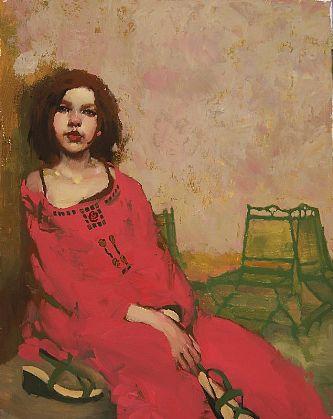 There is a quiet sophistication in Milt Kobayashi's oil painted canvases, summoning a pensive, ethereal feeling in the viewer. Kobayashi's subjects are people from another time and place and, yet, they are strangely familiar. They are urban dwellers lost in thought as they take a momentary respite from their routine. Kobayashi's people are absorbed in the world of contemplation and meditation - making the attractively aloof.
A third generation Japanese-American, Kobayashi was born in New York City, soon after that his family moved to Oahu, Hawaii, and then ventured to Los Angeles when he was eight. After receiving his B.A. in 1970 from the University of California - Los Angeles, Kobayashi began working as an illustrator. However he found his work, which was quite editorial in its nature, did not fit the Los Angeles commercial art market. In 1977, Kobayashi returned to New York City. After returning to New York, a casual visit to the Metropolitan Museum of Art permanently altered Kobayashi's artistic direction and prompted a career change. There he saw Velazquez's portrait Juan de Paraja.
He began studying the works of Whistler, Chase and Sargent, who were also influenced by Velazquez. Strangely enough, it was through his study of Western masters, especially Whistler, that Kobayashi became aware of Japanese art and "the Japanese floating world of Edo". He began studying the 16th and 17th century Japanese Ukiyo-e woodblock print masters Hokasai, Sharaku and Utamaro. Ukiyo-e is defined as "pictures of the floating world," depicting characters in the constantly changing motions of life. The whole perspective of Japanese art allures him - the patterns, color harmonies, use of negative space, and primarily, composition and design.
Kobayashi has received two major awards: the National Academy of Design's Ranger Purchased Award and the Allied Arts Silver Medal. His work has appeared in Forbes, Fortune, and Reader's Digest magazines. In September of 1997, Kobayashi was a featured guest artist at the Artist of America show in Denver, CO.Biography from Red Piano Art Gallery
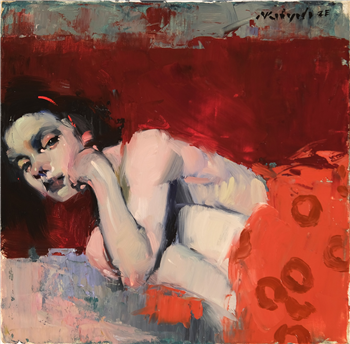 The artwork of Milt Kobayashi blends together his diverse life experiences, heritage, and appreciation for great artists of the past. Although born in New York City, his early childhood was spent on the island of Oahu, Hawaii and later in California where he completed his undergraduate studies at the Univeraity of California, Los Angeles.
In 1977, Kobayashi returned to New York to work as an illustrator and often toured New York's famous Metopolitan Museum of Art as well as the city's many galleries. It was from the inspiration of artists such as Velasquez, Whistler, Chase, Sargent and several others that he found his particular use of color, pattern, and his compositional style. It was also from these western masters' use of negative space as seen in Japanese Edo, or "pictures of the floating world", that Kobayashi was brought back to his Japanese-American heritage.
From dark, etheral figures shadowed in the corners of cafes and bars, to bright, diverse, and more detailed figures at home and even in the ballet studio, Milt Kobabyshi's style continues to evolve. His latest work has taken on a more relaxed feel with a diverse palette and figures that seem to have a greater sense of optimism to their color and attitude. The darkness of Kobayashi's work from the 90's has found its way into a new light, and so has transformed the entire ambiance of his work.
Internationally recognized, Kobayashi has been awarded the National Academy of Design's Ranger Purchase Award as well as a Silver Medal from the Allied Arts Show in New York. He has been featured in publications ranging from American Art Collector to Forbes, Fortune, and Readers Digest.