Page loaded successfully. Showing biography for Moke.
Moke BIOGRAPHY
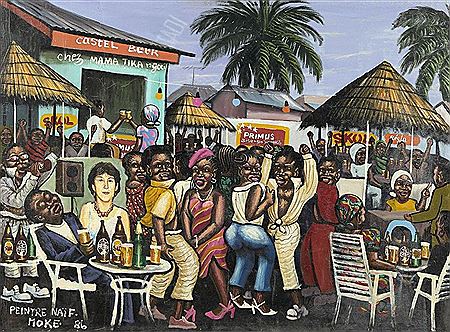
1950 Monsenguro Kejwamfi, Democratic Republic of Congo - 2001 Kinshasa, Democratic Republic of Congo. Known for: Paintings of contemporary life in home country.
Born Monsenguro Kejwamfi in Bandundu province, of the Democratic Republic of the Congo, . Moké (acroynym for Monsengwo Kejwamfi), was among the leading artists of the school of popular painting that... Read full biography
Born Monsenguro Kejwamfi in Bandundu province, of the Democratic Republic of the Congo, . Moké (acroynym for Monsengwo Kejwamfi), was among the leading artists of the school of popular painting that sprung up in Kinshasa in the first decades of Zaïre's independence. The painting titled Les Sapeurs,... Read full biography
Born Monsenguro Kejwamfi in Bandundu province, of the Democratic Republic of the Congo, . Moké (acroynym for Monsengwo Kejwamfi), was among the leading artists of the school of popular painting that sprung up in Kinshasa in the first decades of Zaïre's independence. The painting titled Les Sapeurs, dated 1999, was completed only two years after the fall of Zaire's dictator Mobutu Sese Seko (president from 1965- 1997). Under his leadership he sought to eradicate as much colonial cultural... Read full biography
Born Monsenguro Kejwamfi in Bandundu province, of the Democratic Republic of the Congo, . Moké (acroynym for Monsengwo Kejwamfi), was among the leading artists of the school of popular painting that sprung up in Kinshasa in the first decades of Zaïre's independence. The painting titled Les Sapeurs, dated 1999, was completed only two years after the fall of Zaire's dictator Mobutu Sese Seko (president from 1965- 1997). Under his leadership he sought to eradicate as much colonial cultural influence as possible, and was known for his tendency towards large scale events of 'staged popularism'. Moké is probably best known for his work of 1982 entitled Mitterrand and Mobutu, which depicts the motorcade of the French Prime Minister and Mobutu... Read full biography
Born Monsenguro Kejwamfi in Bandundu province, of the Democratic Republic of the Congo, . Moké (acroynym for Monsengwo Kejwamfi), was among the leading artists of the school of popular painting that sprung up in Kinshasa in the first decades of Zaïre's independence. The painting titled Les Sapeurs, dated 1999, was completed only two years after the fall of Zaire's dictator Mobutu Sese Seko (president from 1965- 1997). Under his leadership he sought to eradicate as much colonial cultural influence as possible, and was known for his tendency towards large scale events of 'staged popularism'. Moké is probably best known for his work of 1982 entitled Mitterrand and Mobutu, which depicts the motorcade of the French Prime Minister and Mobutu riding through the streets of Kinshasa. Moké renders the scene so hyperbolic, in... Read full biography
Artist Biography
Biography page for Moke ((1950 - 2001)), known for Paintings of contemporary life in home country. Showing 2 biographical entries and 0 sample artworks.
Moke - Artist Info
About Moke
Name variants
Monsengwo Kejwamfi, Monsengwo Kejwamfi Moke, Moke Pere
Biography from Dorotheum, Vienna
Moké was among the leading artists of the school of popular painting that developed in Kinshasa in the first decade of Zaïre’s independence. Fascinated by the progress in a spontaneous and naive way, he painted symbols of the modernization that was arriving in Africa in those years: fashionable glasses, guitars and telephones.
His realistic and vivacious paintings reveal his meticulous observation of daily life in Kinshasa: street scenes, bars and local dandies, rumbas and all-night parties, public transport, ceremonials and neighborhood disputes.
Because of the heat and the lively industrial colours, Moké paints almost cartoon-like characters with round and full faces, with a black line separating each of them, without concern for likeness or perspective.
Unlike Chéri Samba, who would follow in his footsteps, Moké rarely depicted social conflicts, and even when he depicted African history, as is the case in the present work where he showed Mobutu telling the Belgians to return to their own country, he does it in a more humorous and light way.Biography from Bonhams Bond Street
Born Monsenguro Kejwamfi in Bandundu province, of the Democratic Republic of the Congo, . Moké (acroynym for Monsengwo Kejwamfi), was among the leading artists of the school of popular painting that sprung up in Kinshasa in the first decades of Zaïre's independence.
The painting titled Les Sapeurs, dated 1999, was completed only two years after the fall of Zaire's dictator Mobutu Sese Seko (president from 1965- 1997). Under his leadership he sought to eradicate as much colonial cultural influence as possible, and was known for his tendency towards large scale events of 'staged popularism'.
Moké is probably best known for his work of 1982 entitled Mitterrand and Mobutu, which depicts the motorcade of the French Prime Minister and Mobutu riding through the streets of Kinshasa.
Moké renders the scene so hyperbolic, in overly bright green with caricatured figures, that it undermines the power of both political figures parodying their over-blown pageantry. "A veritable visual journalist, Moké has an eye for the pictorial thrill of mundane experience, of the urban folk, or the spectacular performance of official pageantry." (Enwezor & Okeke, 2009)
The artist's sympathetic and vivaciously humorous paintings were grounded in his observation of daily life in Kinshasa (capital city of the DRC): street scenes, bars, the local dandies known as sapeurs, the powerful Miziki (associations of financially independent women), all-night parties, neighbourhood disputes, and public ceremonies all found their way into his work.