Page loaded successfully. Showing biography for Olle Baertling.
Olle Baertling BIOGRAPHY
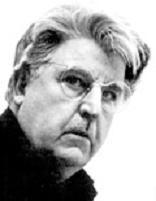
1911 Halmsted - 1981. Known for: Geometric sculpture and modernist painting, landscapes.
Like Bengt Lindström, Olle Bærtling studied in Paris with André Lhote and Fernand Léger. He encountered influences from Mondrian, Kandinsky, Kasimir Malewitsch, Suprematism, Synthetism, Concretism,... Read full biography
Like Bengt Lindström, Olle Bærtling studied in Paris with André Lhote and Fernand Léger. He encountered influences from Mondrian, Kandinsky, Kasimir Malewitsch, Suprematism, Synthetism, Concretism, Neoplasticism and the Realist Manifesto. *His first exhibition took place in Stockholm in 1949. He... Read full biography
Like Bengt Lindström, Olle Bærtling studied in Paris with André Lhote and Fernand Léger. He encountered influences from Mondrian, Kandinsky, Kasimir Malewitsch, Suprematism, Synthetism, Concretism, Neoplasticism and the Realist Manifesto. *His first exhibition took place in Stockholm in 1949. He worked mainly in a geometric, non-figurative style and approached his art as the scientist does his research. Olle Bærtling came into contact with the organization Les Realités Nouvelles in 1950 and... Read full biography
Like Bengt Lindström, Olle Bærtling studied in Paris with André Lhote and Fernand Léger. He encountered influences from Mondrian, Kandinsky, Kasimir Malewitsch, Suprematism, Synthetism, Concretism, Neoplasticism and the Realist Manifesto. *His first exhibition took place in Stockholm in 1949. He worked mainly in a geometric, non-figurative style and approached his art as the scientist does his research. Olle Bærtling came into contact with the organization Les Realités Nouvelles in 1950 and Galleri Denise René in Paris, at the same time as the great concretist August Herbin became his support and sponsor. His first exhibition in Paris took place in 1953 and he quickly achieved worldwide fame. In 1952 he found his "open form", the open... Read full biography
Like Bengt Lindström, Olle Bærtling studied in Paris with André Lhote and Fernand Léger. He encountered influences from Mondrian, Kandinsky, Kasimir Malewitsch, Suprematism, Synthetism, Concretism, Neoplasticism and the Realist Manifesto. *His first exhibition took place in Stockholm in 1949. He worked mainly in a geometric, non-figurative style and approached his art as the scientist does his research. Olle Bærtling came into contact with the organization Les Realités Nouvelles in 1950 and Galleri Denise René in Paris, at the same time as the great concretist August Herbin became his support and sponsor. His first exhibition in Paris took place in 1953 and he quickly achieved worldwide fame. In 1952 he found his "open form", the open triangle with an acute angle that expresses speed. When in 1956 he placed the angle point outside the canvas, the image became a sect... Read full biography
Artist Biography
Biography page for Olle Baertling ((1911 - 1981)), known for Geometric sculpture and modernist painting, landscapes. Showing 2 biographical entries and 0 sample artworks.
Olle Baertling - Artist Info
About Olle Baertling
Biography from Bukowski Stockholm
Like Bengt Lindström, Olle Bærtling studied in Paris with André Lhote and Fernand Léger. He encountered influences from Mondrian, Kandinsky, Kasimir Malewitsch, Suprematism, Synthetism, Concretism, Neoplasticism and the Realist Manifesto.
*His first exhibition took place in Stockholm in 1949. He worked mainly in a geometric, non-figurative style and approached his art as the scientist does his research. Olle Bærtling came into contact with the organization Les Realités Nouvelles in 1950 and Galleri Denise René in Paris, at the same time as the great concretist August Herbin became his support and sponsor.
His first exhibition in Paris took place in 1953 and he quickly achieved worldwide fame. In 1952 he found his "open form", the open triangle with an acute angle that expresses speed. When in 1956 he placed the angle point outside the canvas, the image became a section of a sequence of events that takes place outside our field of vision. The speed is higher, it is emphasized by the color which gives the impression of greater speed closer to the tip of the triangle.
The black contours are fundamental in Baertling's art. They look straight but actually bend inward against the large fields, whose outward pressure would otherwise cause them to bow. The colors are also essential, it is important that they are not found in nature and cannot be associated with any form or object. Eventually, Baertling only used secondary colors: violet, orange, green and Baertling white (a slightly greenish color).
His open form appears most clearly in the sculptures he made starting in 1958. Consequently, Baertling immersed himself in the interrelationship of colors and forms and remained throughout his life unaffected by external art events. Many artists, such as Marc Guyard and Ann Edholm, have been inspired by Bærtling's creations. In collaboration with the Bartling Foundation, three carpets were produced in 1997, of which only two were put into production, in a limited edition. The auction's two carpets are in mint condition, never used before.
Olle Bærtling has also worked with line-thin steel tube sculptures and in 1959 executed monumental paintings with mirrors in the entrance hall to the first high-rise building in Hötorgscity. In 1961, he made a proposal for a large sculpture for Sergels Torg, called Asamk. This would have been made about 85 meters high and in one of the metal tubes there would be a lift up to a platform that would give a nice view. A smaller version can be found at the Skissernas museum in Lund
Collections:
Tate Modern in London, Louisiana Museum of Modern Art
outside Copenhagen, University of Cambridge, National Museum in Stockholm, Moderna Museet in Stockholm, Ateneum in Helsinki, Konsten Aalborg in Denmark, Malmö Museum, Gothenburg Art Museum, Norrköping Art Museum, Halland Art Museum, Örebro county museum. Västerås museum, HMK, Lund University Library, Uppsala University Library, and the Museum of Sketches in Lund.Biography from Christie's New York, Rockefeller Center
Currency trader turned modern artist, Olle Baertling’s one-time hobby would eventually earn him the adulation of art-world titans, including Donald Judd. A Swede, Baertling was born in Halmsted in 1911 and eventually settled in Stockholm where he entered the banking profession and painted in his spare time. Shortly after the end of World War II, Baertling committed himself further to his art and traveled to Paris where he connected with Fernand Léger, Victor Vasarely and Auguste Herbin.
In 1951, Baertling abandoned his vertical and horizontal linear style, turning instead to the oblique. The work, Oradalki, exhibits this open form style. His use of acute angles and penetrating linear forms and shapes became the hallmarks of the artist’s mature work. Baertling’s take on postwar European Modernism found admirers across the globe, including in the United States where he would have seventeen solo exhibitions before his death in 1981.