Page loaded successfully. Showing biography for Otto Freundlich.
Otto Freundlich BIOGRAPHY

1878 Stolp, Prussia - 1943 Majdanek Concentration Camp, Poland. Known for: Abstract geometric painting, sculpture.
Otto Freundlich (10 July 1878 – 9 March 1943) was a German painter and sculptor of Jewish origin and one of the first generation of abstract artists. Freundlich was born in Stolp, Province of... Read full biography
Otto Freundlich (10 July 1878 – 9 March 1943) was a German painter and sculptor of Jewish origin and one of the first generation of abstract artists. Freundlich was born in Stolp, Province of Pomerania, Prussia. His mother was a first cousin of the writer Samuel Lublinski. Otto studied dentistry... Read full biography
Otto Freundlich (10 July 1878 – 9 March 1943) was a German painter and sculptor of Jewish origin and one of the first generation of abstract artists. Freundlich was born in Stolp, Province of Pomerania, Prussia. His mother was a first cousin of the writer Samuel Lublinski. Otto studied dentistry before deciding to become an artist. He went to Paris in 1908, living in Montmartre in Bateau Lavoir near to Pablo Picasso, Braque and others. In 1914 he returned to Germany. After World War I, he... Read full biography
Otto Freundlich (10 July 1878 – 9 March 1943) was a German painter and sculptor of Jewish origin and one of the first generation of abstract artists. Freundlich was born in Stolp, Province of Pomerania, Prussia. His mother was a first cousin of the writer Samuel Lublinski. Otto studied dentistry before deciding to become an artist. He went to Paris in 1908, living in Montmartre in Bateau Lavoir near to Pablo Picasso, Braque and others. In 1914 he returned to Germany. After World War I, he became politically active as a member of the November Group. In 1919, he organized the first Dada - exhibition in Cologne with Max Ernst and Johannes Theodor Baargeld. In 1925, he joined the Abstraction-Création group. After 1925, Freundlich lived and... Read full biography
Otto Freundlich (10 July 1878 – 9 March 1943) was a German painter and sculptor of Jewish origin and one of the first generation of abstract artists. Freundlich was born in Stolp, Province of Pomerania, Prussia. His mother was a first cousin of the writer Samuel Lublinski. Otto studied dentistry before deciding to become an artist. He went to Paris in 1908, living in Montmartre in Bateau Lavoir near to Pablo Picasso, Braque and others. In 1914 he returned to Germany. After World War I, he became politically active as a member of the November Group. In 1919, he organized the first Dada - exhibition in Cologne with Max Ernst and Johannes Theodor Baargeld. In 1925, he joined the Abstraction-Création group. After 1925, Freundlich lived and worked mainly in France. In Germany, his work was condemned by the Nazis as degenerate and removed from public display. Some works w... Read full biography
Artist Biography
Biography page for Otto Freundlich ((1878 - 1943)), known for Abstract geometric painting, sculpture. Showing 1 biographical entries and 0 sample artworks.
Otto Freundlich - Artist Info
About Otto Freundlich
Name variants
Otto Friendly
Biography from the Archives of askART
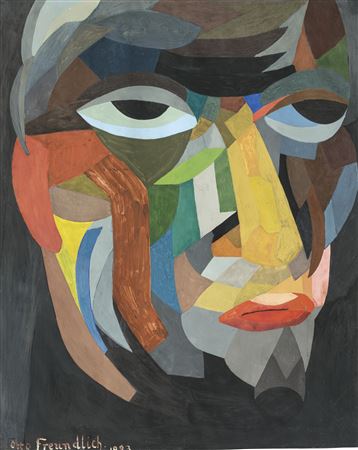 Otto Freundlich (10 July 1878 – 9 March 1943) was a German painter and sculptor of Jewish origin and one of the first generation of abstract artists.
Freundlich was born in Stolp, Province of Pomerania, Prussia. His mother was a first cousin of the writer Samuel Lublinski. Otto studied dentistry before deciding to become an artist. He went to Paris in 1908, living in Montmartre in Bateau Lavoir near to Pablo Picasso, Braque and others.
In 1914 he returned to Germany. After World War I, he became politically active as a member of the November Group. In 1919, he organized the first Dada - exhibition in Cologne with Max Ernst and Johannes Theodor Baargeld. In 1925, he joined the Abstraction-Création group.
After 1925, Freundlich lived and worked mainly in France. In Germany, his work was condemned by the Nazis as degenerate and removed from public display. Some works were seized and displayed at the infamous Nazi exhibition of degenerate art including his monumental sculpture Der Neue Mensch (The New Man), which was photographed unsympathetically and used as the cover illustration of the exhibition catalogue.
Der Neue Mensch was never recovered and is assumed to have been destroyed. One of his sculptures was recovered in an excavation in Berlin and put on display at the Neues Museum.
While in Paris, he became a member of the Union des Artistes Allemandes Libres. With outbreak of World War II, Freundlich was interned by the French authorities but released, for a time, under the influence of Pablo Picasso. In 1943 he was arrested and deported to Majdanek Concentration Camp, where he was murdered on the day he arrived.
Although Otto Freunlich has been largely overlooked since being vilified by the Nazis, a documentary Das Geht Nur Langsam (It Takes Time) was released in 2012. The film traces his vision to build streets of sculptures running through Europe symbolizing his utopian ideas for a world society.
Source:
"Otto Freundlich," Wikipedia, 2017