Page loaded successfully. Showing biography for PHASE 2.
PHASE 2 BIOGRAPHY
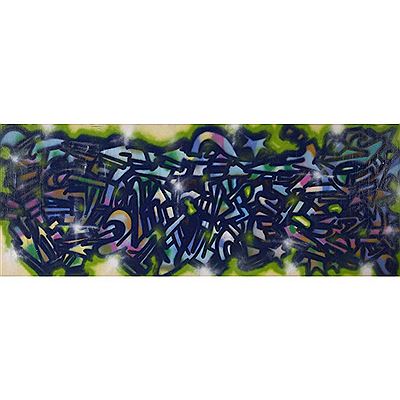
1955 Manhattan, New York - 2019 Bronx, New York. Known for: Aerosal graffiti artist, street art painting, sculptudre, work on paper, party flyers.
"Phase 2, an Aerosol Art Innovator, Is Dead at 64," Online Obituary, The New York Times, By Jon Caramanica, Dec. 20, 2019. In the early 1970s, the dawn of what became known as hip-hop, he helped... Read full biography
"Phase 2, an Aerosol Art Innovator, Is Dead at 64," Online Obituary, The New York Times, By Jon Caramanica, Dec. 20, 2019. In the early 1970s, the dawn of what became known as hip-hop, he helped shape the art of graffiti on New York City subways. But he hated the word. Phase 2, who in the early... Read full biography
"Phase 2, an Aerosol Art Innovator, Is Dead at 64," Online Obituary, The New York Times, By Jon Caramanica, Dec. 20, 2019. In the early 1970s, the dawn of what became known as hip-hop, he helped shape the art of graffiti on New York City subways. But he hated the word. Phase 2, who in the early 1970s was one of the most prolific, inventive and emulated New York graffiti writers, and who later in his career produced early hip-hop’s most innovative fliers, died on Dec. 12 at a nursing and... Read full biography
"Phase 2, an Aerosol Art Innovator, Is Dead at 64," Online Obituary, The New York Times, By Jon Caramanica, Dec. 20, 2019. In the early 1970s, the dawn of what became known as hip-hop, he helped shape the art of graffiti on New York City subways. But he hated the word. Phase 2, who in the early 1970s was one of the most prolific, inventive and emulated New York graffiti writers, and who later in his career produced early hip-hop’s most innovative fliers, died on Dec. 12 at a nursing and rehabilitation center in the Bronx. He was 64. The cause was amyotrophic lateral sclerosis, also known as Lou Gehrig’s disease, his longtime friend David Schmidlapp said. In the South Bronx at the dawn of the 1970s, all the creative components that would... Read full biography
"Phase 2, an Aerosol Art Innovator, Is Dead at 64," Online Obituary, The New York Times, By Jon Caramanica, Dec. 20, 2019. In the early 1970s, the dawn of what became known as hip-hop, he helped shape the art of graffiti on New York City subways. But he hated the word. Phase 2, who in the early 1970s was one of the most prolific, inventive and emulated New York graffiti writers, and who later in his career produced early hip-hop’s most innovative fliers, died on Dec. 12 at a nursing and rehabilitation center in the Bronx. He was 64. The cause was amyotrophic lateral sclerosis, also known as Lou Gehrig’s disease, his longtime friend David Schmidlapp said. In the South Bronx at the dawn of the 1970s, all the creative components that would coalesce into what became widely known as hip-hop were beginning to take shape. At the center of them all was Phase 2, an i... Read full biography
Artist Biography
Biography page for PHASE 2 ((1955 - 2019)), known for Aerosal graffiti artist, street art painting, sculptudre, work on paper, party flyers. Showing 3 biographical entries and 0 sample artworks.
PHASE 2 - Artist Info
About PHASE 2
Name variants
Michael Lawrence Marrow, Pain, Phase II, Phase Two, PHASEZ, Lonny Wood
Biography from the Archives of askART
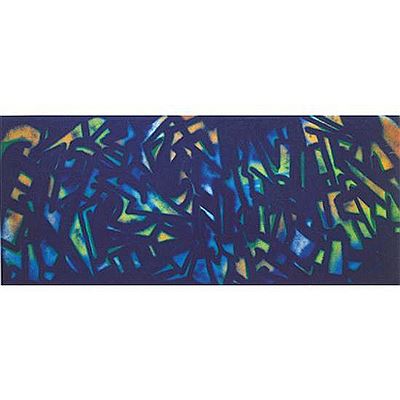 "Phase 2, an Aerosol Art Innovator, Is Dead at 64," Online Obituary, The New York Times, By Jon Caramanica, Dec. 20, 2019
In the early 1970s, the dawn of what became known as hip-hop, he helped shape the art of graffiti on New York City subways. But he hated the word.
Phase 2, who in the early 1970s was one of the most prolific, inventive and emulated New York graffiti writers, and who later in his career produced early hip-hop’s most innovative fliers, died on Dec. 12 at a nursing and rehabilitation center in the Bronx. He was 64.
The cause was amyotrophic lateral sclerosis, also known as Lou Gehrig’s disease, his longtime friend David Schmidlapp said.
In the South Bronx at the dawn of the 1970s, all the creative components that would coalesce into what became widely known as hip-hop were beginning to take shape. At the center of them all was Phase 2, an intuitive, disruptive talent who first made his mark as a writer of graffiti — although he hated the term.
“He had a natural gift or ability to stylize letters,” said Alan Ket, a founder of the Museum of Graffiti in Miami, adding that he “continued to develop styles that were pioneering or just wildly innovative.”
His influence on the burgeoning art form was seismic.
The graffiti artist Coco 144, born Roberto Gualtieri, met Phase 2 in 1973 and found him to be an almost mystical figure: “a person from another dimension that came in and deconstructed the letter and reconstructed it again.”
Phase 2 was born Michael Lawrence Marrow on Aug. 2, 1955, in Manhattan. He was raised primarily in the Bronx, in the Forest Houses projects, and attended DeWitt Clinton High School, which in the early 1970s was rapidly becoming a graffiti hotbed. Conveniently, it was across the street from a Transit Authority storage yard; subway cars were the preferred canvas of the day.
He began writing graffiti in October 1971, inspired by a cousin, who went by the name Lee 163d. The form was evolving rapidly, with each day delivering a fresh set of artworks on train lines across the city. Phase 2 was best known as the pioneer of softies — bubble-style letters that helped usher graffiti away from simple tags and toward full-fledged artworks. He painted a variety of substyles of these letters, with a name for each: “squish luscious,”
“His lettering constantly changed; you never saw his tag repeat itself. He was constantly trying to destroy himself, destroying his previous style,” said Hugo Martinez, who formed the United Graffiti Artists collective, of which Phase 2 was a member, in 1972.
Phase 2 — sometimes referred to as Phase Too or Phase II — was featured at the first gallery show of graffiti, a United Graffiti Artists presentation at the Razor Gallery in SoHo in September 1973. Writing in The New York Times, the critic Peter Schjeldahl singled out one of his canvas works: “Phase II’s name is couched in fat, sensual, screaming-pink script set in an ambience of blue billows.”
He also painted onstage, along with several other writers, as part of Twyla Tharp’s ballet “Deuce Coupe” in 1973.
Phase 2 enjoyed the thrill of writing on subway cars; “impact expressionism,” he called it. In an interview with Wax Poetics magazine, he recalled writing a poem to a police officer on the vandal squad who had just missed arresting him: “If you only knew/the real Phase 2/the super sleuth/who’s still on the loose.”
By the beginning of 1975, he had largely given up subway graffiti, moving his work onto paper and canvas or into sculpture. And he was consistently developing new styles, sometimes passing them off to his fellow writers.
Crucially, he rejected the word graffiti — “the G-word,” he called it. He found it denigrating and preferred terms like style writing.
“It’s like calling a meteor a pebble,” he told Raw Vision magazine in 1997. “I’m absorbing and devouring language in its coexisting state and creating something else with it.”
He was also a sometime D.J., as well as a dancer and a founder of the New York City Breakers crew. And he rapped: In the late 1970s he was a member of a crew called the Wizards, and in 1982 he released a pair of singles, The Roxy and Beach Boy.
Charlie Ahearn, the director of the 1983 film Wild Style, has said that Phase 2 was the basis for the film’s main character, Phade (played by Fab 5 Freddy). Phase 2 wasn’t formally involved with the film, but he was a consultant on the 1984 hip-hop movie Beat Street.
In the late 1970s, Phase 2 began applying his artistic gifts to a different medium: party fliers. His designs, laid out by hand, were modern, orderly and dense; he called the style “funky nous deco.” In an interview this year with Eye on Design magazine, he said he drew influences from Art Deco, the comic book artist Jack Kirby and the painter and collagist Romare Bearden.
He designed hundreds of them — for Grandmaster Flash’s early D.J. gigs, for a variety of uptown events and, later, for the Friday night parties at the Roxy, where uptown and downtown were commingling, and where he would also do live painting
Phase 2 was comfortable moving between scenes. “For somebody to be from the South Bronx, he wasn’t like everybody else,” Van Silk, a former party promoter, said. “He was intellectually different.”
He designed the first logo for the Tuff City record label and the fliers for the New York City Rap Tour, which in 1982 took a cadre of rappers, dancers and artists across the Atlantic to England and France, the first real exporting of New York hip-hop culture.
“He was one of the few artists of that ’70s period that continued with the newer set,” said Mr. Schmidlapp, who later began IGTimes (International Graffiti Times, later International Get-Hip Times). The publication became the first graffiti magazine with any significant distribution, for which Phase 2 became an art director and writer. In 1996, Phase 2 and Mr. Schmidlapp released a graffiti history book, Style: Writing From the Underground.
Phase 2 also wrote an oracular column for the hip-hop and graffiti magazine Stress. His persistent concerns were the determination of who would tell the stories of his generation, and the proper code of conduct for people in the graffiti scene.
A party flier designed by Phase 2 in 1981. He said he was influenced by Art Deco, the comic book artist Jack Kirby and the painter and collagist Romare Bearden.
He was “policing the culture, explaining, calling out suckers, biters and frauds,” the writer Adam Mansbach, a friend of Phase 2’s since the 1990s, said.
He was particular about what collectors he would sell to, and whom he would do shows with. “He’d rather go hungry,” Mr. Schmidlapp said, than compromise his integrity. But if he liked you, his nephew Seku Grey said, “He gave away his art, literally.”
And while Phase 2 prized his anonymity — he rarely posed for photos, and for decades he publicly used an alias, Lonny Wood, rather than his birth name — he was an inveterate letter writer, replying to correspondence from young graffiti artists.
His survivors include his mother, a sister, five children and seven grandchildren.
From the 1990s forward, Phase 2 brought his collage artwork to collaborations with the skate brand Supreme and designed album covers for the Rawkus and Definitive Jux labels. He continued to make art, selling privately and occasionally in galleries, including works on paper and robot-style sculptures influenced by his love of Japanese animation. He had been in the early stages of a documentary project with Mr. Grey and a book about his fliers with the hip-hop historian Pete Nice.
But he was primarily concerned with preserving what he deemed to be the correct and proper history of aerosol art.
His writings, Mr. Ket said, “were militant and a call to action. A warning that people were being hoodwinked by the media, the gallerists, the collectors, other artists. He was our reality check.”
Kitty Bennett contributed research for this obituary.Biography from the Archives of askART
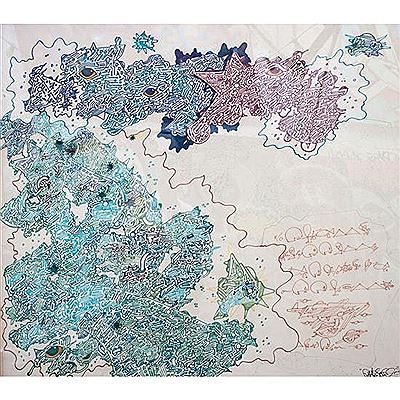 PHASE 2 (aka Lonny Wood) is a New York City aerosol artist. Mostly active in the 1970s, Phase 2 is generally credited with originating the "bubble letter" style of aerosol writing, also known as "softies". He was also influential in the early hip-hop scene.
Phase 2 is from The Bronx, and attended DeWitt Clinton High School along with a number of other early graffiti artists. Many famous graffiti writers of the early 1970s would meet at a doughnut shop across from the school called the Coffee Shop before heading down to the subway station at 149th Street and Grand Concourse to watch tagged trains on the IRT line pass by.
He began writing in late 1971 under the name Phase 2, a moniker, which had a rather mundane provenance. As Phase 2 would later recall, "the previous year we'd given this party. We were getting ready to give another one and I said, 'We'll call this one Phase Two.' I don't know why, but I was stuck on the name. It had meaning for me. I started writing 'Phase 2.'"
Part of the appeal of graffiti writing for Phase 2 was that it allowed him to get his "name" known yet remain anonymous. He noted later that tagging provided disadvantaged urban teens "the only significant vehicle to represent their 'existence.'"
It was in late 1972 that Phase 2 first used an early version of the "bubble letter" or "softie", a style of graffiti writing which would become extremely influential and is considered a "giant leap" in the art form. The puffed-out, marshmallow-like letters drawn by Phase 2 were soon copied by other artists who added their own variations. Phase himself quickly embellished on his original form, creating and naming dozens of varieties of softies such as "phasemagorical phantastic" (bubble letters with stars), "bubble cloud", and "bubble drip." He is also credited with pioneering the use of arrows in graf writing around this same time. Hip-hop journalist Jeff Chang has noted that Phase 2's canvasses from 1973 have "been widely recognized as defining the early genre."
Over time Phase's work become more and more complex, moving far away from the simple tags of the early 70s to "hieroglyphical calligraphic abstraction." Chang points out that much of Phase's work involved "deconstructing the letter", transforming characters in the alphabet "into hard lines, third eyes, horns, drills, spikes, Egyptian pharaohs and dogs, pure geometrics." Another New York graffiti artist, Vulcan, remarked that "one of the things about Phase is that he was the only person at the time whose name could roll by ten times and each piece was different. That's what you noticed about his [work]."
In 1974 Phase 2 joined the newly created United Graffiti Artists, a professional graffiti collective which began to attract media attention. He was featured in an important essay on graffiti art by Richard Goldstein which appeared in New York magazine and inspired a new generation of graffiti artists.
In 1986, Phase 2 became the art director of International Graffiti Times, the first zine about graffiti writing.
Unlike some other pioneers of New York City graffiti, Phase 2 had a prominent role in The South Bronx hip-hop scene in the early 1980s. He also continues to be referenced in hip-hop songs.
Phase participated in the legendary hip-hop shows organized by Kool Lady Blue during the summer of 1982 at the Roxy nightclub in the Chelsea neighborhood of Manhattan. These shows brought together the top DJ's, MC's, breakers, and aerosol artists from The South Bronx and introduced hip-hop music and culture to the downtown punk and new wave scenes. Phase 2 designed the flyers for these events and often did aerosol pieces live on stage. He was also part of the first "international" hip-hop tour when stars from the Roxy performances toured in England and France in November of that year.
Phase 2 was one of the few aerosol artists to be involved in the musical side of hip-hop culture as well. He had a background as a DJ in the very early days of hip-hop, though he never made a name for himself in that role. In 1982, as part of his involvement with the Roxy scene, Phase released two rap singles. Beach Boy was a collaboration with Barry Michael Cooper, who would later co-write the script for New Jack City. "The Roxy" featured the Bill Laswell-led group Material and Grandmixer D.ST, though Phase 2 would later remark that he was disappointed in the song and felt that it "wasn't done properly."
Phase was also an early b-boy and claims that his dance crew pioneered the uprock (or "battle rock") style of dance despite claims that it originated in Brooklyn. He was thus actively involved in all of the traditional "four elements" of hip-hop culture.
Though he did not have a role in the production, Phase 2 did apparently influence the classic early hip-hop movie Wild Style. In the DVD commentary for the film, director Charlie Ahearn explained that, when thinking about the key character named "Phade", he had Phase 2 in mind (either to actually play the part or simply as a model) because Phase was a legendary graffiti writer from the past who was also involved in the hip-hop scene, as was the character of Phade. The role would ultimately be played by Fab 5 Freddy, himself a graffiti artist who along with Ahearn was the major creative force behind Wild Style. Phase 2 did take on an official role in another early hip-hop film when he worked as a graffiti consultant on the 1984 movie Beat Street.
In his 1995 song Out for Fame - an homage to graffiti artists and culture - KRS-One implores his audience "in the name of Phase 2" and fellow Bronx graffiti legend Stay High to "grab your cans and hit the streets." Several years later Mos Def mentioned Phase 2 on his widely respected debut album Black on Both Sides, specifically on the track "Hip Hop", in which he noted that hip-hop itself was "all city like Phase 2" - presumably a reference to the ubiquity of Phase 2's graffiti pieces on trains throughout the city during the early 1970s. In 1996, he appeared in the song I Messaggeri Pt. It contained in Italian artist Neffa's album I Messaggeri della Dopa.
Source:
"Phase 2", Wikipedia, //en.wikipedia.org/wiki/PHASE_2 (Accessed 3/4/2014)Biography from Blanchet & Associes
PHASE2, or PAIN, the other alias used by PHASE2 when he painted on the NYC subway cars, symbolizes the spirit of "writing" (hence the title of the work). This spirit has been present in PHASE2's work throughout the years, as he has been nourished by Kung-Fu films and manga culture.
His signature in Japanese characters being the proof of this passion he had. PHASE 2 defines himself as the father of the "style". PHASE 2 is considered as one of the most important writers of the "Aerosol art" movement as he likes to call it. In 1971 he started to paint on cars and tried to create and reinterpret new forms of letters. He is one of the precursors of the "Bubble" shape (rounded lettering shape) among others.
Today, many artists are still inspired by his creations. He is the founding president of the INDs collective as well as the EX-VANDALS (which includes STAY HIGH 149, LAVA III...). He was also one of the first underground graphic designers to create visuals at the beginning of Hip Hop through the creation of flyers and posters that he made for mythical artists such as Grand Master Flash or Kool Herc.
He also contributes to the magazine dedicated to Aerosol art IGT TIMES, founded by David Schmidlapp with whom he writes one of the most important books on the movement Style: Writing From The Undergroun".