Page loaded successfully. Showing biography for Patrick William Adam.
Patrick William Adam BIOGRAPHY
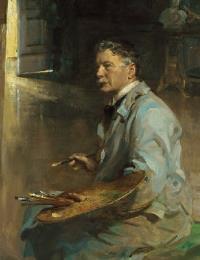
1854 Edinburgh, Scotland - 1929 North Berwick, East Lothian, Scotland. Known for: Symbolist-inflected academic painting; literary and allegorical subjects; Scottish Aesthetic Movement.
Patrick William Adam was born in 1854 in Edinburgh, Scotland, and he died in 1929. Patrick William Adam was a Scottish painter whose work bridged the late Victorian era and the early twentieth... Read full biography
Patrick William Adam was born in 1854 in Edinburgh, Scotland, and he died in 1929. Patrick William Adam was a Scottish painter whose work bridged the late Victorian era and the early twentieth century. Patrick William Adam was born into a family with artistic connections, receiving early... Read full biography
Patrick William Adam was born in 1854 in Edinburgh, Scotland, and he died in 1929. Patrick William Adam was a Scottish painter whose work bridged the late Victorian era and the early twentieth century. Patrick William Adam was born into a family with artistic connections, receiving early encouragement from his father, William Adam, who was a noted landscape painter. Patrick William Adam studied at the Royal Scottish Academy Life School in Edinburgh and later at the Académie Julian in Paris,... Read full biography
Patrick William Adam was born in 1854 in Edinburgh, Scotland, and he died in 1929. Patrick William Adam was a Scottish painter whose work bridged the late Victorian era and the early twentieth century. Patrick William Adam was born into a family with artistic connections, receiving early encouragement from his father, William Adam, who was a noted landscape painter. Patrick William Adam studied at the Royal Scottish Academy Life School in Edinburgh and later at the Académie Julian in Paris, where he encountered the academic traditions of Jean-Léon Gérôme and the emerging currents of Symbolist and Aestheticist thought. Adam did not align closely with the Glasgow Boys, whose plein-air naturalism and social realism diverged from his own... Read full biography
Patrick William Adam was born in 1854 in Edinburgh, Scotland, and he died in 1929. Patrick William Adam was a Scottish painter whose work bridged the late Victorian era and the early twentieth century. Patrick William Adam was born into a family with artistic connections, receiving early encouragement from his father, William Adam, who was a noted landscape painter. Patrick William Adam studied at the Royal Scottish Academy Life School in Edinburgh and later at the Académie Julian in Paris, where he encountered the academic traditions of Jean-Léon Gérôme and the emerging currents of Symbolist and Aestheticist thought. Adam did not align closely with the Glasgow Boys, whose plein-air naturalism and social realism diverged from his own allegorical and literary interests. Adam’s career unfolded primarily in Edinburgh and London, where he exhibited regularly at the Royal Scottish... Read full biography
Artist Biography
Biography page for Patrick William Adam ((1854 - 1929)), known for Symbolist-inflected academic painting; literary and allegorical subjects; Scottish Aesthetic Movement. Showing 2 biographical entries and 0 sample artworks.
Patrick William Adam - Artist Info
About Patrick William Adam
Name variants
Patrick William
Biography from McTear's
Patrick William Adam was born in 1854 in Edinburgh, Scotland, and he died in 1929. Patrick William Adam was a Scottish painter whose work bridged the late Victorian era and the early twentieth century. Patrick William Adam was born into a family with artistic connections, receiving early encouragement from his father, William Adam, who was a noted landscape painter. Patrick William Adam studied at the Royal Scottish Academy Life School in Edinburgh and later at the Académie Julian in Paris, where he encountered the academic traditions of Jean-Léon Gérôme and the emerging currents of Symbolist and Aestheticist thought.
Adam did not align closely with the Glasgow Boys, whose plein-air naturalism and social realism diverged from his own allegorical and literary interests. Adam’s career unfolded primarily in Edinburgh and London, where he exhibited regularly at the Royal Scottish Academy and the Royal Academy. His personal life is less documented, though his marriage to Helen Patuffa Henderson in 1884 is recorded. Adam’s professional network remained tied to academic institutions and the Royal Scottish Academy rather than to progressive art movements.
Adam’s oeuvre combined academic precision with tempered Symbolist ambiguity. His works often explored mythological, literary, and allegorical themes rendered with meticulous technique. The Love Philter (1892), exhibited at the Royal Scottish Academy, exemplifies his narrative-driven approach, with a restrained palette and precise surfaces distinct from the looser brushwork of his Scottish contemporaries. Adam frequently employed classical and Arthurian subjects, and works such as The Enchanted Garden (1898) reveal his debt to Pre-Raphaelitism in their botanical detail and moralizing undertones. His use of gold leaf in works such as The Golden Apples of the Hesperides (1901) underscores his interest in decorative effects and aligns him with the Aesthetic Movement’s emphasis on beauty and craftsmanship.Biography from Lyon & Turnbull
Celebrated for his sensitively rendered interiors, Patrick William Adam was an important artist in late nineteenth and early twentieth century Edinburgh. He exhibited a total of one hundred and sixty-four pictures at the Royal Scottish Academy and was a founding member of the Society of Eight, a group of Scottish painters that aimed to unite Glasgow and Edinburgh artists in producing high-standard exhibitions.
Staircase and Stained Glass is a quintessential example of Adam’s carefully observed domestic interior style. Warm daylight radiates through the landing’s stained-glass window, cascading down the vermillion-red staircase. Adam’s attentive highlighting of the smooth, dark woodwork elevates the picture from its peripheral shadows, creating a rich image of depth.