Page loaded successfully. Showing biography for Paul Cesar Helleu.
Paul Cesar Helleu BIOGRAPHY
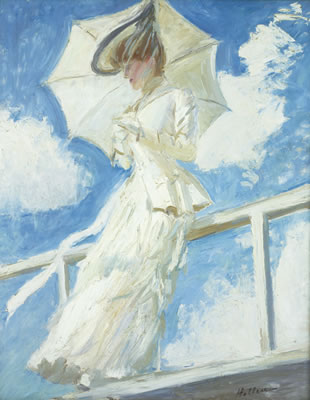
1859 Vannes, France - 1927 Paris, France. Known for: Portrait painting, draftsman, drypoint, ceramics, engraving, public art.
Admitted into the École des Beaux-Arts in 1876, at the age of sixteen, Paul-César Helleu studied there with Jean-Léon Gerome, whom he accompanied to London in 1885. He developed a strong attachment... Read full biography
Admitted into the École des Beaux-Arts in 1876, at the age of sixteen, Paul-César Helleu studied there with Jean-Léon Gerome, whom he accompanied to London in 1885. He developed a strong attachment to England, and was to return to London frequently throughout his career. In Paris, his circle of... Read full biography
Admitted into the École des Beaux-Arts in 1876, at the age of sixteen, Paul-César Helleu studied there with Jean-Léon Gerome, whom he accompanied to London in 1885. He developed a strong attachment to England, and was to return to London frequently throughout his career. In Paris, his circle of intimate friends included his fellow artists Giovanni Boldini, Alfred Stevens, James Whistler, Edgar Degas, Claude Monet and, in particular, John Singer Sargent, with whom he briefly shared a studio and... Read full biography
Admitted into the École des Beaux-Arts in 1876, at the age of sixteen, Paul-César Helleu studied there with Jean-Léon Gerome, whom he accompanied to London in 1885. He developed a strong attachment to England, and was to return to London frequently throughout his career. In Paris, his circle of intimate friends included his fellow artists Giovanni Boldini, Alfred Stevens, James Whistler, Edgar Degas, Claude Monet and, in particular, John Singer Sargent, with whom he briefly shared a studio and who bought a pastel from Helleu. He exhibited a number of large pastel portraits at the Salons of 1885 and 1886, where they were greatly admired, and his career was launched with a large exhibition of pastels at the Galerie Georges Petit in 1888.... Read full biography
Admitted into the École des Beaux-Arts in 1876, at the age of sixteen, Paul-César Helleu studied there with Jean-Léon Gerome, whom he accompanied to London in 1885. He developed a strong attachment to England, and was to return to London frequently throughout his career. In Paris, his circle of intimate friends included his fellow artists Giovanni Boldini, Alfred Stevens, James Whistler, Edgar Degas, Claude Monet and, in particular, John Singer Sargent, with whom he briefly shared a studio and who bought a pastel from Helleu. He exhibited a number of large pastel portraits at the Salons of 1885 and 1886, where they were greatly admired, and his career was launched with a large exhibition of pastels at the Galerie Georges Petit in 1888. Although friendly with many of the Impressionist painters and invited by Degas to participate in the eighth and final Impressionist exhibition of... Read full biography
Artist Biography
Biography page for Paul Cesar Helleu ((1859 - 1927)), known for Portrait painting, draftsman, drypoint, ceramics, engraving, public art. Showing 2 biographical entries and 0 sample artworks.
Paul Cesar Helleu - Artist Info
About Paul Cesar Helleu
Biography from the Archives of askART
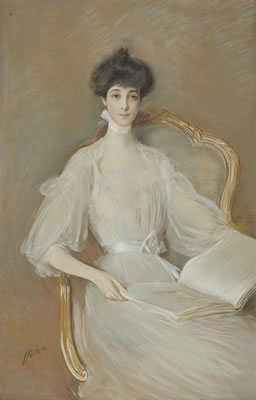 Admitted into the École des Beaux-Arts in 1876, at the age of sixteen, Paul-César Helleu studied there with Jean-Léon Gerome, whom he accompanied to London in 1885. He developed a strong attachment to England, and was to return to London frequently throughout his career. In Paris, his circle of intimate friends included his fellow artists Giovanni Boldini, Alfred Stevens, James Whistler, Edgar Degas, Claude Monet and, in particular, John Singer Sargent, with whom he briefly shared a studio and who bought a pastel from Helleu. He exhibited a number of large pastel portraits at the Salons of 1885 and 1886, where they were greatly admired, and his career was launched with a large exhibition of pastels at the Galerie Georges Petit in 1888.
Although friendly with many of the Impressionist painters and invited by Degas to participate in the eighth and final Impressionist exhibition of 1886, Helleu declined to do so, claiming a profound dislike of the work of Paul Gauguin. The following year he met Comte Robert de Montesquieu, who was to become his leading patron and who, in 1913, published the first important monograph on the artist. Helleu also enjoyed a long friendship with Marcel Proust, who based the character of the painter Elstir in A la recherche du temps perdu on him.
The 1890’s found Paul Helleu and his young wife Alice popular figures in polite society in both France and England, with the artist receiving numerous portrait commissions and enjoying considerable financial success. Encouraged by his friend Sargent, Helleu began travelling to America in 1902, where his reputation had preceded him, and where he achieved much success as a portrait painter (despite apparently only knowing one word of English, namely the word ‘charming’).
It was in 1912, on his second visit to New York, that he completed his most public work, the vaulted ceiling of the main hall of Grand Central Station, painted with the signs of the zodiac and the stars of the Milky Way. Helleu’s later reputation, however, has rested primarily on his etched work, executed in the medium of drypoint. First introduced to the etching medium by James Tissot, Helleu produced a large number of portraits of fashionable women in this manner, for which he charged up to 1,200 francs. The popularity of these drypoints has, however, tended to overshadow his less numerous oil paintings and pastels. In 1931, four years after Helleu’s death, a retrospective exhibition of his work was held at the Galerie Charpentier in Paris.
A gifted portraitist, Helleu enjoyed considerable success throughout his career with his portraits of the elegant women of the beau monde of Paris, London and New York. His subjects included the Comtesse Greffulhe, Queen Alexandra and Consuelo Vanderbilt, the Duchess of Marlborough. These works were greatly admired by his contemporaries.
As Edmond de Goncourt noted in a letter to the artist, written in February 1895, Your work has for its inspiration that dear model who fills all your compositions with her dainty elegance. It is sort of a monograph on Woman, in all the infinite varied attitudes of her intimate home life. We see her with her head lazily resting on the back of an arm chair;...or seated in a reverie as she holds in her hand the foot crossed upon her knee; or, reading, while one lock of hair strays down her cheek, the “tip-tilted” nose assuming a questioning air, as with lips barely parted she seems to be happily interpreting what she reads; or else sleeping, her head sunk in the pillow, the line of her shoulders vaguely seen, her profile lost except for a glimpse of her pretty little nose, and her eye closed beneath its dark curved lashes.
Source;
Website of Stephen Ongpin Fine Art, London, EnglandBiography from Newman Galleries
French painter and engraver, Paul-Cesar Helleu was born in Vannes on December 17, 1859. After working with ceramics and engraving, Helleu decided to study painting. He began his training with Jean-Leon Gerome at the National School of Fine Arts.
Helleu's first subjects were old churches, gothic naves, and stained glass windows. He later painted landscapes and scenes of Versailles. Yet it was his early 20th Century views of Parisian society that established Helleu's reputation.
His worldly effigies, female silhouettes, and sportive scenes of the elegant class, are among the most precise images of the "belle époque." His refined style is evident in his etchings and drypoints, as well as his canvases.
Helleu was a member of the National Society of Fine Arts beginning in 1893. He was also an honorary member of the International Society of Sculptors, Painters, and Engravers in London; and after 1904, he was decorated for the Legion of Honor.
Helleu's works are part of collections of the Boston Museum, the Louvre, and the Luxembourg Museum.
Paul-Cesar Helleu died in Paris on March 23, 1927.