Page loaded successfully. Showing biography for Paul Gauguin.
Paul Gauguin BIOGRAPHY
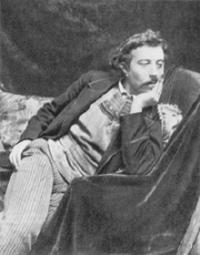
1848 Paris, France - 1903 Atuona (Hiva Oa), South Pacific Island. Known for: Post-Impressionist paintings, drawings, portraits.
The following text was written and submitted by Jean Ershler Schatz, artist and researcher in Laguna Hills, California:. Paul Gauguin was born in 1848 in Paris of a Breton father and a Peruvian... Read full biography
The following text was written and submitted by Jean Ershler Schatz, artist and researcher in Laguna Hills, California:. Paul Gauguin was born in 1848 in Paris of a Breton father and a Peruvian Creole mother. His grandmother, Flora Tristan, was a revolutionary socialist and an early French feminist... Read full biography
The following text was written and submitted by Jean Ershler Schatz, artist and researcher in Laguna Hills, California:. Paul Gauguin was born in 1848 in Paris of a Breton father and a Peruvian Creole mother. His grandmother, Flora Tristan, was a revolutionary socialist and an early French feminist who sometimes claimed to be descended from "a Bourbon of Aragon" whose family also produced the Borgia popes and Lucrezia Borgia. Tristan married a French engraver who became so violent that he was... Read full biography
The following text was written and submitted by Jean Ershler Schatz, artist and researcher in Laguna Hills, California:. Paul Gauguin was born in 1848 in Paris of a Breton father and a Peruvian Creole mother. His grandmother, Flora Tristan, was a revolutionary socialist and an early French feminist who sometimes claimed to be descended from "a Bourbon of Aragon" whose family also produced the Borgia popes and Lucrezia Borgia. Tristan married a French engraver who became so violent that he was eventually locked up for twenty years. Their daughter, Aline Chazel, was Gauguin's mother. His father, Clovis Gauguin, was a journalist who died when his son was an infant. As a small child, Paul was taken to Peru to live with an eccentric but... Read full biography
The following text was written and submitted by Jean Ershler Schatz, artist and researcher in Laguna Hills, California:. Paul Gauguin was born in 1848 in Paris of a Breton father and a Peruvian Creole mother. His grandmother, Flora Tristan, was a revolutionary socialist and an early French feminist who sometimes claimed to be descended from "a Bourbon of Aragon" whose family also produced the Borgia popes and Lucrezia Borgia. Tristan married a French engraver who became so violent that he was eventually locked up for twenty years. Their daughter, Aline Chazel, was Gauguin's mother. His father, Clovis Gauguin, was a journalist who died when his son was an infant. As a small child, Paul was taken to Peru to live with an eccentric but affectionate great-uncle, Don Pio Tristan, a sometime field marshal insurrentionist and the last Spanish viceroy of Peru. Don... Read full biography
Artist Biography
Biography page for Paul Gauguin ((1848 - 1903)), known for Post-Impressionist paintings, drawings, portraits. Showing 2 biographical entries and 0 sample artworks.
Paul Gauguin - Artist Info
About Paul Gauguin
Biography from the Archives of askART
 The following text was written and submitted by Jean Ershler Schatz, artist and researcher in Laguna Hills, California:
Paul Gauguin was born in 1848 in Paris of a Breton father and a Peruvian Creole mother. His grandmother, Flora Tristan, was a revolutionary socialist and an early French feminist who sometimes claimed to be descended from "a Bourbon of Aragon" whose family also produced the Borgia popes and Lucrezia Borgia. Tristan married a French engraver who became so violent that he was eventually locked up for twenty years. Their daughter, Aline Chazel, was Gauguin's mother. His father, Clovis Gauguin, was a journalist who died when his son was an infant.
As a small child, Paul was taken to Peru to live with an eccentric but affectionate great-uncle, Don Pio Tristan, a sometime field marshal insurrentionist and the last Spanish viceroy of Peru. Don Pio had a madman chained to the roof, a favor to the government, which reduced his local taxes. Gauguin lived in this unusual house until he was six, when his mother took him back to France.
Paul had no formal education of any kind beyond high school. He ran away to sea at the age of fourteen, acquiring a taste for travel at that time. He left the French Navy at the close of the Franco-Prussian War. He settled in Paris, painting in his spare time while working in a banking house. He not only distinguished himself in his brokerage firm, but managed to make considerable profits from independent speculation, earning as much as the approximate equivalent of $40,000 in one year.
In 1873 he was in a position to take a wife, and he married Mette Sophie Gad, a charming Danish girl who was visiting Paris at the time he met her. She was a forceful woman who wore men's clothes, smoked cigars and took little interest in Paul's hobby of painting. She was under the impression that she had married a man of business. The couple was very happy and eventually had five children.
He became a professional painter in 1883 through his interest in the Impressionists, especially Pissaro. They became friends and through him Gauguin got to know other men who were among Pissaro's fellow painters. As a result Gauguin's style changed. He suddenly resigned from his position on the stock market to devote himself to painting.
He moved his family to Rouen where the living was cheaper, but was unable to sell any works so he decided to move to Copenhagen where his in-laws lived. But his stay in Copenhagen was a disaster; his wife's family managed to destroy what faith his wife still had in him, and when he left Denmark for Paris in 1885, the break in their marriage became permanent.
With the help of Theo Van Gogh, Vincent's art dealer brother, Gauguin traveled to Arles to stay with Vincent at his request. They worked together with the hope that Arles, with its bright light, could become an impressionist center for all painters. But they quarreled and Gauguin decided to leave. He returned a few days later to find Van Gogh upstairs, unconscious, a bloody bandage wrapped around his head.
Van Gogh, in despair at Gauguin's decision to leave, had severed his left ear with a razor, and handed it as a gift to a prostitute who had befriended him. Saddened by the disastrous culmination of his visit to Van Gogh and depressed by public laughter and neglect of his painting, Gauguin nevertheless painted several still lifes that belied his state of mind and manifested his belief that, "The Japanese are masters of us all." The influence of woodcuts became evident in the flat background and decorative patterning. The hot pinks and yellows anticipated the riotous colors that would dominate his Tahitian paintings.
The painter Redon and the poet Mallarme' developed an idiom in which to express themselves that Gauguin used as the basis for what was to be his Tahitian art. He was going to a strange land to find a completely different decor to set his imagination free. He was therefore determined to associate in every possible way with the natives. He left Paris on the evening of April 4, 1891.Biography from Auktionshaus Schwab
Paul Gauguin, a renowned artist known for his paintings, also dabbled in woodcarving and decorative ceramics in his early days. The rare relief presented here, possibly one of his private works, depicts The Fall of Man and shows stylistic similarities to Gauguin's wooden reliefs with religious themes from the late 1880s and early 1890s. The choice of material in this ceramic relief is reminiscent of his fully sculptural Venus figure made of black-brown glazed earthenware.