Page loaded successfully. Showing biography for Paul Mak.
Paul Mak BIOGRAPHY
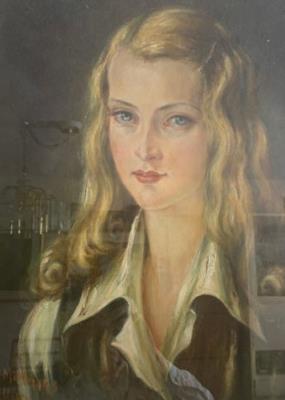
1891 Moscow, Russia - 1967 Brussels, Belgium. Known for: Miniature portrait painting, caricatures, illustration.
Paul Mak . My name is Nathalie. My mother, Emilie Mostovoy, was the devoted companion of Paul Mak for the last 22 years of his life. He never wrote his memoirs. No one lived with him long enough to... Read full biography
Paul Mak . My name is Nathalie. My mother, Emilie Mostovoy, was the devoted companion of Paul Mak for the last 22 years of his life. He never wrote his memoirs. No one lived with him long enough to write his full, personal and intimate biography, not even my mother. However, I had the great... Read full biography
Paul Mak . My name is Nathalie. My mother, Emilie Mostovoy, was the devoted companion of Paul Mak for the last 22 years of his life. He never wrote his memoirs. No one lived with him long enough to write his full, personal and intimate biography, not even my mother. However, I had the great pleasure of hearing his remarkable recollections: stories filled with adventure, loss, resilience, and humor. To h... Read full biography
Paul Mak . My name is Nathalie. My mother, Emilie Mostovoy, was the devoted companion of Paul Mak for the last 22 years of his life. He never wrote his memoirs. No one lived with him long enough to write his full, personal and intimate biography, not even my mother. However, I had the great pleasure of hearing his remarkable recollections: stories filled with adventure, loss, resilience, and humor. To h... Read full biography
Paul Mak . My name is Nathalie. My mother, Emilie Mostovoy, was the devoted companion of Paul Mak for the last 22 years of his life. He never wrote his memoirs. No one lived with him long enough to write his full, personal and intimate biography, not even my mother. However, I had the great pleasure of hearing his remarkable recollections: stories filled with adventure, loss, resilience, and humor. To h... Read full biography
Artist Biography
Biography page for Paul Mak ((1891 - 1967)), known for Miniature portrait painting, caricatures, illustration. Showing 4 biographical entries and 0 sample artworks.
Paul Mak - Artist Info
About Paul Mak
Name variants
Pavel Petrovich Ivanov
Biography from the Archives of askART
 Paul Mak
My name is Nathalie. My mother, Emilie Mostovoy, was the devoted companion of Paul Mak for the last 22 years of his life. He never wrote his memoirs. No one lived with him long enough to write his full, personal and intimate biography, not even my mother. However, I had the great pleasure of hearing his remarkable recollections: stories filled with adventure, loss, resilience, and humor. To his friends, he was known simply as Mak, and that is how I will refer to him throughout this biography. His Russian acquaintances called him Pavel Petrovich, while others addressed him as M. Mak, and my mother was affectionately known as Mme. Mak.
Paul Mak was a tall, strikingly handsome gentleman, always courteous, generous, and thoroughly likable. His charm and presence left a lasting impression on everyone he met. He was a man of wit and vitality, loved music, followed horse racing passionately, and delighted in simple pleasures: mushroom picking in the woods, card games with friends, the company of good conversation. He possessed a brilliant, almost photographic memory, a quality evident in his intricate art. When painting, he often used a magnifying glass, working meticulously at the table by his window, surrounded by his paints and custom-made brushes. He specialized in Persian miniatures, although his versatility extended to portraits, still lifes, and sketches.. His exhibitions attracted regular visitors, who treated his gallery space almost as a museum. Mak was also a decorated war hero and remained fiercely proud of his homeland.
Born in 1891 near Moscow, into a noble military family, Mak’s birth name was Pavel Petrovich Ivanov. By the age of twenty, he was already known in Moscow for his clever caricatures of cultural luminaries such as Fedor Chaliapin, Sergei Rachmaninov, Anna Pavlova, and Natalia Goncharova, who painted his portrait in 1910. He met many artists through his brother Victor, a member of an artistic circle. Mak illustrated for magazines such as Satyricon and other popular journals, signing his work as Mak, P. Mak, or Paul Mak, a nickname he had used since childhood. He studied painting at the distinguished Iouon Academy of Art in Moscow, where he refined his command of form and color. With the outbreak of World War I, in 1916, Mak entered the Kiev Military Academy, determined to serve his country. As an officer, he displayed great courage, suffering multiple wounds in combat. A severe hip injury left one leg shorter than the other, and his valor was recognized with the Order of St. George (Fourth Class).
Following the 1917 Revolution, Mak was imprisoned for refusing to abandon his military uniform. He spent six months in solitary confinement, expecting execution. But even then, he continued to draw sketches on paper and these sketches caught the attention of the guards. At their request, he drew the portrait of the prison chief which, won him his freedom. After his release, he worked as a stage designer at the Theatre of Revolutionary Satire in Moscow, continuing to paint despite widespread upheaval. In 1921, as the Revolution deepened, Mak and his wife Elena Kourbskaya fled south, through Turkistan and Afghanistan, eventually reaching northern Persia on horseback. For a time, Mak supported himself by working for a wealthy dentist as a racehorse trainer. He also sketched lively caricatures of racegoers and villagers, capturing local faces, fashions, and customs with humor and affection.
By 1922, he settled in Tehran, where he began painting portraits for high-ranking officials. Under the guidance of an elderly scholar, he studied the delicate techniques of Persian miniature art, which would later define much of his legacy. In 1925, his daughter Elizabeth was born, she was baptized in Tehran’s Russian Orthodox Church, part of the Russian émigré community. Mak’s first major exhibition in 1926 was a great success. That year, Sir Percy Loraine, the British minister, introduced him to Reza Shah Pahlavi. Mak’s monumental portrait of the young Shah was installed behind the throne in the royal audience hall. In 1927, Mak was officially appointed Court Painter and granted Persian citizenship for himself, his wife, and his daughter. He formally adopted the name Paul Mak, which he would use for the rest of his life. With his new passport, Mak moved to Cairo in 1928, where his exhibitions received glowing reviews in The Egyptian Gazette. He painted elegant portraits of lords and ladies, lived exuberantly, and indulged his love of horse racing and fine living. His success opened doors across Europe: Paris (Salon du Printemps, 1928 and (Salon de l’Automne, 1929), and London (Leicester Gallery, 1930). All were acclaimed exhibitions which cemented his reputation as a cosmopolitan painter and portraitist. In 1931, Mak relocated with his family to Athens to join his sister. With the help from his friend Mr. Benakis, whom he had met in Cairo, his works were shown at the Galerie de Versailles. Benakis became godfather to Mak’s son Vladimir, born during his time in Athens. As Mak’s career continued to flourish, he traveled frequently while his family remained in Greece. The couple eventually separated but never divorced, which later prevented him from remarrying, although some published biographies mistakenly suggest otherwise. In 1932, Mak moved to Paris, continuing to exhibit successfully in both Paris and London. His works were featured prominently in The London Illustrated News (1929 and 1935) and The Sketch, copies of which remain preserved in my mother’s archive.
By 1938, Mak was compelled to leave France. He told me he had been expelled for striking a diplomat who insulted Russia, however there are different accounts. Settling in Belgium, he faced economic hardship. He took on any available work, decorating furniture, painting shop windows, creating billboards, and even working as a coal miner near Charleroi. During the Nazi occupation (1940–1944), Mak was forced to work in a small military airport near Brussels. In 1943, he met Lydia Dourdina, a Russian actress who helped him survive these grim years. Their son, Dimitri Dourdine, was born in January 1946. Page 3 of 3 In late 1945, Mak met my mother, Emilie Mostovoy, who was then divorced from my father, Baron Leon Wrangel. They quickly became inseparable and shared her modest flat on Chaussée de Waterloo in Brussels for the next twenty-one years. Emilie became much more than his companion — she was his muse, secretary, organizer, and manager, tirelessly supporting his work and arranging his exhibitions. throughout Brussels, Ghent, Antwerp, Le Zoute, and Bruges. In 1958, Mak participated in the World Exhibition (Expo 58) in Brussels, representing Iran in the Iranian Pavilion, where he received the Gold Award as the fair’s Best Painter.
Paul Mak died after a brief illness on June 22, 1967, in Brussels. Later that year, my mother organized a final exhibition of his work at the Galerie Rubens, which received warm critical acclaim in the local press. In 1968, his son Vladimir Mak presented a tribute exhibition at the Walton Gallery in London. The last major exhibition of Mak’s paintings took place in 1969, once again in the Iranian Pavilion — this time at the Man and His World exposition in Canada organized by Emilie Mostovoy. Today, most of Paul Mak’s paintings are held in private collections. Now his works are sold through major auction houses. His works bridge the artistic traditions of Russia, Persia, and Europe, and are valued of their enduring beauty. Paul Mak’s life was a tapestry woven from art, courage, displacement, and love. From Moscow to Tehran, Cairo, Paris, and Brussels, he reinvented himself without ever losing his artistic vitality and grace.
Author’s Notes This biography is based on. my personal recollection and on family archives possessed by Emilie Mostovoy and myself. Part of my archives, I donated to Dimitri Dourdine-Mak in November 1990.
Submitted by: Nathalie Wrangel-BetskyBiography from the Archives of askART
 (Russian, 1891-1967)
Born to a noble Russian military family, Mak studied art at K. Iuon's studio in Moscow and illustrated for Moscow and St. Petersburg journals including Satirikon before enrolling at the Kiev Military Academy following the outbreak of World War I.Biography from Chiswick Auctions
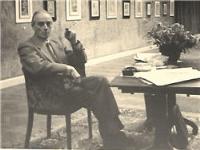 Pavel Petrovich Ivanov, also known as Paul Mak or Pavel Ivanov Mak, was born in 1891 in Russia. He gained recognition for his miniatures in Persian style, portraits, and caricatures. His life took an unconventional turn when his drawing talent saved him from execution by the Bolsheviks in 1917. After spending time in jail, he sketched the prison chief's portrait, leading to his release. In 1921, he left Russia and settled in Tehran, where he learned Persian miniature painting and gained fame. Mak later moved to Belgium, where he spent the rest of his life and exhibited his works at various galleries. His artistic career flourished in the 20th century, with his diverse talents showcased in portraits, caricatures, designs for the theatre, illustrations, and Persian-style miniatures.
Biography from Sovcom
The famous cartoonist Pavel Petrovich Ivanov worked under the pseudonym Paul Mack. Graphic designer, set designer, painter. He received his art education in the 1910s at the private School-Studio of K. F. Yuon in Moscow. In 1912–1913 he collaborated in the Moscow satirical magazine “Theater in Caricatures” and the St. Petersburg “Satyricon”, where he met N.V. Remizov (Re-mi) and V.V. Lebedev. He worked in St. Petersburg and Moscow as a portrait painter and fashion designer. He directed a dance studio in Moscow, specializing in tango. In 1914 he entered the Kiev Military School. Member of the First World War; served in the Death's Head hussar regiment, was wounded, and had military awards. In 1918 he was demobilized with the rank of captain. In 1918, he was arrested for refusing to take off the Tsar’s uniform and spent six months in Butyrka prison in Moscow. In 1920–1921 he worked at the Theater of Revolutionary Satire in Moscow. In 1922, through Turkestan and Afghanistan, he left for Persia (Iran). He worked as a racehorse trainer for several years. In the 1920s and early 1930s he lived in Tehran and mastered the technique of Persian miniature painting. In the late 1920s he was introduced to Reza Shah and received the title of his court artist; executed the coronation portrait of the Shah on the “Peacock Throne”. He worked in the field of book graphics, created illustrations for the books “Scheherazade”, “Tamerlane”, “Genghis Khan”, “A Thousand and One Nights”, and made drawings depicting the life of the Mongols, Turkmens and Persians. In recent years, he painted allegorical paintings on modern themes, turning to images of Russian mythology (“Sirin”, “Alkonost”, “Gamayun”, “St. George the Victorious”). In 1929 he made a trip to Paris and London, where he exhibited his works at the Paris Salon, the Royal Academy and the Leicester Gallery in London. In the mid-1930s, after a short stay in Athens and Cairo, he moved to Belgium and lived in Brussels. After the Second World War, he took an active part in exhibitions in Belgium: almost every year he held personal exhibitions in Brussels and the surrounding area. He was awarded a gold medal at the World Exhibition in Brussels in 1958, where his works were exhibited in the Iranian pavilion. In Mak's work, the features of Art Nouveau art of the early twentieth century and the tradition of Persian miniatures are closely intertwined. The formation of his individual style was significantly influenced by the work of O. Beardsley, the masters of the World of Art, especially A. Ya. Golovin, I. Ya. Bilibin and V. M. Vasnetsov. The artist’s works are distinguished by their extraordinary decorativeness, colorfulness, and sophistication of graphic design. Mak can be considered one of the newly discovered names of Russian art; his works are little known in Russia, and the study of his creative heritage has yet to be carried out. Some of the artist's works are in the Pushkin Museum. A. S. Pushkin, St. Petersburg Museum of Theater and Musical Art (former collection of N. D. and N. Lobanov-Rostovsky).