Page loaded successfully. Showing biography for Peder Balke.
Peder Balke BIOGRAPHY
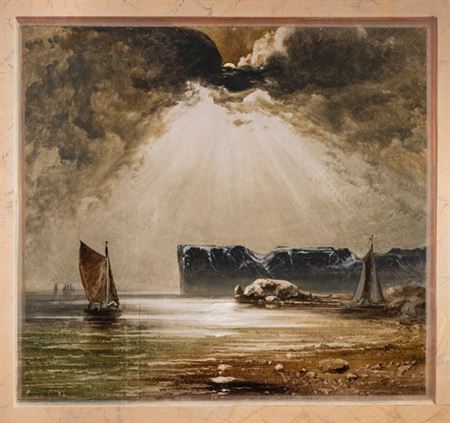
1804 Helgoya in Nes, Hedmark, Norway - 1887 Christiana, Norway. Known for: Romantic landscape and marine painting.
Born in poverty on the island of Helgoya in Nes in Hedmark, Norway, Peder Balke became a landscape artist who was largely forgotten after his death in 1887 until a 1914 Centennial Exhibition when he... Read full biography
Born in poverty on the island of Helgoya in Nes in Hedmark, Norway, Peder Balke became a landscape artist who was largely forgotten after his death in 1887 until a 1914 Centennial Exhibition when he was rediscovered. Today "he is considered one of the most original Norwegian artists." (270) His... Read full biography
Born in poverty on the island of Helgoya in Nes in Hedmark, Norway, Peder Balke became a landscape artist who was largely forgotten after his death in 1887 until a 1914 Centennial Exhibition when he was rediscovered. Today "he is considered one of the most original Norwegian artists." (270) His early landscapes were traditional in style and had a pinkish, brown palette, but later he evolved into a distinctive, late Romantic style and did marine scenes as well as landscapes. As a young man, he... Read full biography
Born in poverty on the island of Helgoya in Nes in Hedmark, Norway, Peder Balke became a landscape artist who was largely forgotten after his death in 1887 until a 1914 Centennial Exhibition when he was rediscovered. Today "he is considered one of the most original Norwegian artists." (270) His early landscapes were traditional in style and had a pinkish, brown palette, but later he evolved into a distinctive, late Romantic style and did marine scenes as well as landscapes. As a young man, he apprenticed to a local craftsman and painter, but moved to Oslo, then called Christiana, in 1827 when he was 23 so that he could obtain more formal education in painting and decorating. He also attended the Royal School of Drawing, and this exposure... Read full biography
Born in poverty on the island of Helgoya in Nes in Hedmark, Norway, Peder Balke became a landscape artist who was largely forgotten after his death in 1887 until a 1914 Centennial Exhibition when he was rediscovered. Today "he is considered one of the most original Norwegian artists." (270) His early landscapes were traditional in style and had a pinkish, brown palette, but later he evolved into a distinctive, late Romantic style and did marine scenes as well as landscapes. As a young man, he apprenticed to a local craftsman and painter, but moved to Oslo, then called Christiana, in 1827 when he was 23 so that he could obtain more formal education in painting and decorating. He also attended the Royal School of Drawing, and this exposure centered his interest on painting. In 1829, he went to the Academy in Stockholm, because advanced art education was not availab... Read full biography
Artist Biography
Biography page for Peder Balke ((1804 - 1887)), known for Romantic landscape and marine painting. Showing 1 biographical entries and 0 sample artworks.
Peder Balke - Artist Info
About Peder Balke
Biography from the Archives of askART
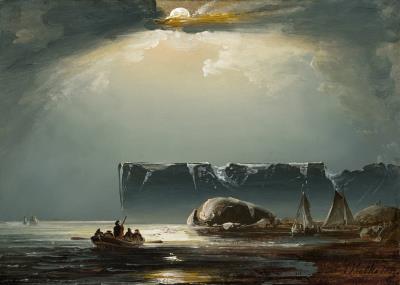 Born in poverty on the island of Helgoya in Nes in Hedmark, Norway, Peder Balke became a landscape artist who was largely forgotten after his death in 1887 until a 1914 Centennial Exhibition when he was rediscovered. Today "he is considered one of the most original Norwegian artists." (270) His early landscapes were traditional in style and had a pinkish, brown palette, but later he evolved into a distinctive, late Romantic style and did marine scenes as well as landscapes.
As a young man, he apprenticed to a local craftsman and painter, but moved to Oslo, then called Christiana, in 1827 when he was 23 so that he could obtain more formal education in painting and decorating. He also attended the Royal School of Drawing, and this exposure centered his interest on painting. In 1829, he went to the Academy in Stockholm, because advanced art education was not available in Norway, which did not have an art academy until 1909. He studied with C.J. Fahlcrantz (1774-1861).
In 1832, he took a trip along the Norwegian coast from Trondheim. "The impressions gleaned from this journey remained with him for life", and he continuously reworked them on his canvases. In 1835-1836, he studied with J.C. Dahl in Dresden, and at that time also became much influenced by C.D. Friedrich (1774-1840). He returned to Dresden, staying from 1843 to 1844, and from 1845 to 1847, he was in Paris to execute a large commission for King Louis-Philippe. Known as 'the citizen king', he had visited Norway when he was in exile, and he requested Balke to recreate in paintings some of the scenery he had grown to love during that period. However, the February Revolution of 1848 interfered with the completion, but 28 paintings as well as sketches and drawings by Balke from that period are in the Louvre.
Balke returned to Norway, and from 1850 made his home in Christiana. He became involved in politics and social issues and built an estate of housing for workers and craftsmen called Balkeby. During this time, his signature romantic style evolved, but it was not appreciated during his lifetime. "His simplified, monochrome and evocative rendering of nature was a far cry from the realistic idiom then in vogue." (270)
However, as stated above, his talent was much appreciated after his death, when time had passed and Norwegians had gained more exposure to non-traditional movements.
Source:
Torsten Gunnarsson; Malgne Malmanger, et all; A Mirror of Nature: Nordic Landscape Painting 1840-1910, Exhibition Catalogue, 2007. (Ateneum Art Museum, Helsinki; National Museum, Stockholm; Statens Museum for Kunst, Copenhagen; The Minneapolis Institute of Arts; The National Museum of Art, Architecture and Design, Oslo.