Page loaded successfully. Showing biography for Peter Halley.
Peter Halley BIOGRAPHY
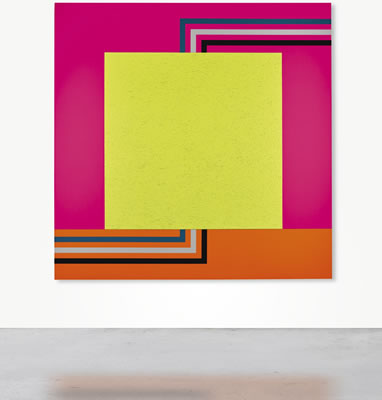
Born 1953 New York City. Known for: Neo-conceptual abstract painting, printmaking, teaching.
Peter Halley, (b.1953, New York City), is an American artist who came to prominence as a central figure of the Neo-Conceptualist movement of the 1980s. His paintings redeploy the language of... Read full biography
Peter Halley, (b.1953, New York City), is an American artist who came to prominence as a central figure of the Neo-Conceptualist movement of the 1980s. His paintings redeploy the language of geometric abstraction to explore the organization of social space in the digital era. Since the 1980s,... Read full biography
Peter Halley, (b.1953, New York City), is an American artist who came to prominence as a central figure of the Neo-Conceptualist movement of the 1980s. His paintings redeploy the language of geometric abstraction to explore the organization of social space in the digital era. Since the 1980s, Halley’s lexicon includes three elements: “prisons” and “cells”, connected by “conduits”, which are used in his paintings to explore the technologically determined space and pathways that regulate daily... Read full biography
Peter Halley, (b.1953, New York City), is an American artist who came to prominence as a central figure of the Neo-Conceptualist movement of the 1980s. His paintings redeploy the language of geometric abstraction to explore the organization of social space in the digital era. Since the 1980s, Halley’s lexicon includes three elements: “prisons” and “cells”, connected by “conduits”, which are used in his paintings to explore the technologically determined space and pathways that regulate daily life. Using fluorescent color and Roll-a-Tex, a commercial paint additive that provides ready made texture, Halley embraces materials that are anti-naturalistic and commercially manufactured. Halley is known for his essays on art and culture, written... Read full biography
Peter Halley, (b.1953, New York City), is an American artist who came to prominence as a central figure of the Neo-Conceptualist movement of the 1980s. His paintings redeploy the language of geometric abstraction to explore the organization of social space in the digital era. Since the 1980s, Halley’s lexicon includes three elements: “prisons” and “cells”, connected by “conduits”, which are used in his paintings to explore the technologically determined space and pathways that regulate daily life. Using fluorescent color and Roll-a-Tex, a commercial paint additive that provides ready made texture, Halley embraces materials that are anti-naturalistic and commercially manufactured. Halley is known for his essays on art and culture, written in the 1980s and 90s, exploring themes from French critical theory and the influence of burgeoning digital technology. His... Read full biography
Artist Biography
Biography page for Peter Halley ((Born 1953)), known for Neo-conceptual abstract painting, printmaking, teaching. Showing 2 biographical entries and 0 sample artworks.
Peter Halley - Artist Info
About Peter Halley
Biography from the Archives of askART
 Peter Halley, (b.1953, New York City), is an American artist who came to prominence as a central figure of the Neo-Conceptualist movement of the 1980s. His paintings redeploy the language of geometric abstraction to explore the organization of social space in the digital era.
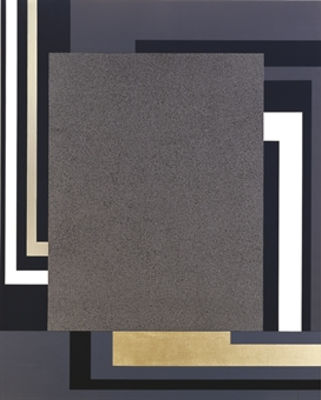
Since the 1980s, Halley’s lexicon includes three elements: “prisons” and “cells”, connected by “conduits”, which are used in his paintings to explore the technologically determined space and pathways that regulate daily life. Using fluorescent color and Roll-a-Tex, a commercial paint additive that provides ready made texture, Halley embraces materials that are anti-naturalistic and commercially manufactured.
Halley is known for his essays on art and culture, written in the 1980s and 90s, exploring themes from French critical theory and the influence of burgeoning digital technology. His Selected Essays, 1981 – 2001, was published by Edgewise Press, New York, in 2013. Halley’s writings have been translated to Spanish, French, and Italian.
He was awarded the Frank Jewett Mather Award for art criticism from the College Art Association in 2001. From 1996 to 2005, Halley published INDEX magazine, which featured in-depth interviews with emerging and established cultural figures.
Halley served as professor and Director of Graduate Studies in Painting at the Yale University School of Art from 2002 to 2011. Among his outstanding students are three MacArthur grant winners: Mary Reid Kelly, Titus Kaphar, and Njideka Akunyili Crosby.
Since 1995, Halley has produced multi-media, site-specific installations, in which he pioneered the use of wall-sized digital prints in conjunction with other elements. Major installations have included Dallas Museum of Art (1995), Museum Folkwang, Essen (1999), Schirn Kunsthalle, Frankfurt (2016), Lever House Art Collection, New York (2018), and The Academy of Fine Arts Gallery, Venice (2019).
A catalogue raisonné, Peter Halley: Paintings of the 1980s, was published in 2018 by JRP Ringier.
One-person museum exhibitions have included capcMusée d’art contemporain, Bordeaux, France (1991), Museum of Modern Art, New York (1997-98), Museum Folkwang Essen, Germany (1998), Musée d’Art Moderne et Contemporain, Saint-Étienne, France (2014), Santa Barbara Museum of Art, California (2015), and Musée d’Art Moderne Grand-Duc Jean (Mudam), Luxembourg (2023).
Source/Submitted by: Shayna MillerBiography from the Archives of askART
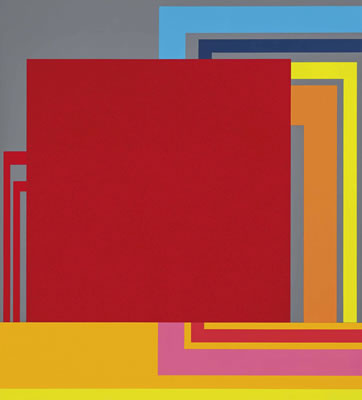 A painter of post-modern geometric expression dubbed by critics as "Neo-Geo," Peter Halley is also a printmaker and Director of Painting and Printmaking at the graduate school of art at Yale University.
His primary studio is in the Chelsea district of Manhattan, and from there he creates large rectilinear compositions that use Day-Glo and acrylic paints and areas of stucco texture to create subtle or brilliant effects. Many of his works are large-scale wall pieces.
Peter Halley was born in New York, where he was raised on the 16th floor of a mid-town Manhattan building. He studied at Yale University, where he gained his BA in 1975, and received his MFA in 1978 at the University of New Orleans, and remained in that city for two. His first solo exhibition was at the Contemporary Art Center in New Orleans in 1978.
He returned to New York to live in 1980. From 1984 to 1987, he was a member of the gallery, International with Monument, with Ashley Bickerton, Jeff Koons and Meyer Vaisman.
Halley's work was included in the 1987 Whitney Biennial. Museum surveys include Museum Haus Esters, Krefeld, Germany (1989);capc Musée d'art contemporain de Bordeaux (1991); Museum of Modern Art, New York (1997); and Kitakyushu Municipal Museum of Art, Japan (1998).
Installations have been exhibited at Galerie Thaddaeus Ropac, Paris (1995), the University of Buffalo, New York (1997) and Museum Folkwang, Essen (1998). His published critical writings include two collections of essays from the 1980s and 1990s.
Sources include:
Lonnie Pierson Dunbier, Studio Visit, May 2007
Waddington Galleries, www.waddington-galleries.com.htm
Jean-Michel Ribettes, "Art at the Turn of the Millenium