Page loaded successfully. Showing biography for Pierre Jerome.
Pierre Jerome BIOGRAPHY
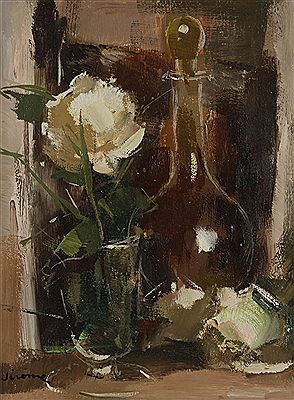
1905 Dunkirk, France - 1982 Paris, France. Known for: Expressive still life, landscape and portrait painting, teaching.
Pierre Jerome, born January 20, 1905 in Dunkirk, and died March 11, 1982 in Paris, was a French painter. He was laureate of the Prix de Rome in 1934 and professor at the Académie de la Grande... Read full biography
Pierre Jerome, born January 20, 1905 in Dunkirk, and died March 11, 1982 in Paris, was a French painter. He was laureate of the Prix de Rome in 1934 and professor at the Académie de la Grande Chaumière and at the École polytechnique in Paris. Pierre Émile Henri Jérôme was the son of Arthur Alfred... Read full biography
Pierre Jerome, born January 20, 1905 in Dunkirk, and died March 11, 1982 in Paris, was a French painter. He was laureate of the Prix de Rome in 1934 and professor at the Académie de la Grande Chaumière and at the École polytechnique in Paris. Pierre Émile Henri Jérôme was the son of Arthur Alfred Henri Jérôme and Jeanne Marie Louis Boulanger. His ancestry, both paternal and maternal, is Picardy. In 1910, his family moved to Paris. Pierre Jérôme attended the communal school on rue Damrémont in... Read full biography
Pierre Jerome, born January 20, 1905 in Dunkirk, and died March 11, 1982 in Paris, was a French painter. He was laureate of the Prix de Rome in 1934 and professor at the Académie de la Grande Chaumière and at the École polytechnique in Paris. Pierre Émile Henri Jérôme was the son of Arthur Alfred Henri Jérôme and Jeanne Marie Louis Boulanger. His ancestry, both paternal and maternal, is Picardy. In 1910, his family moved to Paris. Pierre Jérôme attended the communal school on rue Damrémont in the Montmartre district. In 1914, his father was mobilized from the first days of the First World War and his mother's only resource was the military allowance. When Paris was bombed, she took refuge with her children in Amboise, then in Caen, where... Read full biography
Pierre Jerome, born January 20, 1905 in Dunkirk, and died March 11, 1982 in Paris, was a French painter. He was laureate of the Prix de Rome in 1934 and professor at the Académie de la Grande Chaumière and at the École polytechnique in Paris. Pierre Émile Henri Jérôme was the son of Arthur Alfred Henri Jérôme and Jeanne Marie Louis Boulanger. His ancestry, both paternal and maternal, is Picardy. In 1910, his family moved to Paris. Pierre Jérôme attended the communal school on rue Damrémont in the Montmartre district. In 1914, his father was mobilized from the first days of the First World War and his mother's only resource was the military allowance. When Paris was bombed, she took refuge with her children in Amboise, then in Caen, where Pierre Jerome works with an attorney. The family then returned to Paris. Pierre Jérôme and his mother worked for the insurance company La... Read full biography
Artist Biography
Biography page for Pierre Jerome ((1905 - 1982)), known for Expressive still life, landscape and portrait painting, teaching. Showing 1 biographical entries and 0 sample artworks.
Pierre Jerome - Artist Info
About Pierre Jerome
Biography from the Archives of askART
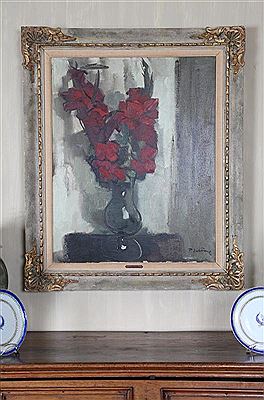 Pierre Jerome, born January 20, 1905 in Dunkirk, and died March 11, 1982 in Paris, was a French painter. He was laureate of the Prix de Rome in 1934 and professor at the Académie de la Grande Chaumière and at the École polytechnique in Paris.
Pierre Émile Henri Jérôme was the son of Arthur Alfred Henri Jérôme and Jeanne Marie Louis Boulanger. His ancestry, both paternal and maternal, is Picardy. In 1910, his family moved to Paris. Pierre Jérôme attended the communal school on rue Damrémont in the Montmartre district. In 1914, his father was mobilized from the first days of the First World War and his mother's only resource was the military allowance. When Paris was bombed, she took refuge with her children in Amboise, then in Caen, where Pierre Jerome works with an attorney. The family then returned to Paris.
Pierre Jérôme and his mother worked for the insurance company La Paix; he was a courier until the demobilization of his father, in 1918. One evening, going up the rue de Maubeuge with his mother, he passed an art supply shop where reproductions of drawings of masters were exhibited. His mother bought some of them, as well as a box of pencils and drawing paper. From then on, Pierre Jérôme's hobbies were exclusively devoted to copying these models.
Returning from the war in 1919, his father agreed to provide him some lessons so that he could run for the admission contest of the École Bernard Palissy (now École Duperré) in Paris, where he was received. In the second year, he chose the decorative painting workshop and obtained the second prize. Tempering an inclination for painting that could only lead to a career too random, his father decided to train him to a profession immediately lucrative and enrolled in apprenticeship at the Chambre Syndicale de la Bijouterie, Jewelry, Goldsmith and Watchmaking.
Pierre stayed there six months and then worked at a fairground jewelry manufacturer in the Temple district. It was then that his vocation as a painter was decided. He regularly took evening classes while working as a jewelry designer at several manufacturers, especially a carver and a jeweler.
In 1924, his father had a serious operation, and Pierre Jerome replaced him for a year as representative of a textile factory. However, he continued to attend evening classes. From 1925 to 1926, he carried out a military service of eighteen months. During his leave, he sought and found a place of half-time drawing who made his project of admission to the School of Fine Arts in Paris possible. He failed the entrance examination in 1927.
He was nevertheless admitted to the galleries where he drew after the Antique. Later, he entered as a free student in the studio of the painter Jean-Pierre Laurens. For a few years, Pierre Jérôme continued to meet the orders of creations of a workshop that works for several jewelers of the street of Peace, while staying assiduous, every morning, the workshop of the Beaux-Arts.
He sent his first painting to the Salon des Artistes Français in 1930, where he received an honorable mention and a prize from the Institute. In 1932, the death of his workshop boss Jean-Pierre Laurens deeply affected him. He then followed the advice of Pierre Laurens' brother, Paul Albert Laurens, who took over from the Beaux-Arts. In the Prix de Rome competition, he was awarded the second prize with L'Enfance de Jésus. He also won a silver medal at the Salon des Artistes Français with Pierre Laurens on his deathbed (Musée des Beaux-Arts de Chartres).
In 1933, Pierre's new attempt for the Prix de Rome was rewarded with the first second prize awarded to Suzanne and The Old Men. He finally won the first prizes in Rome in 1934 with Ulysses at the Nymph Calypso. He became a resident of the Villa Medici in Rome in 1935, but a serious illness forced him to rest in a village in Abruzzo, San Vito Romano, where he painted a great composition inspired by the peasants of the village. He returned to the villa after a year, where he befriended the Farnesians, mostly Normals. A trip to Greece gives him a taste of Classicism.
Pierre Jerome was back in Paris in 1938. His works executed in Rome was exhibited at the Musée de l'Orangerie in Paris. In 1939, he was commissioned by the Beaux-Arts directorate to decorate one of the four entrances to the Water Pavilion in Liège. He also painted a frieze composition evoking the provinces of the North and East of France, intended for the Exposition of Social Progress in Lille. On his return from a trip to the Netherlands, where he admired the Flemish and Dutch masters, he destroyed all his paintings, about eighty, as well as his drawings.
He often met Raoul Dufy and befriends the chemical engineer Marc Havel and the painter Jacques Maroger. His new friends encourage him to research the technical processes of the Old Masters. This interest helps him in the teaching, which forms the second part of his existence.
Pierre Jérôme was mobilized in 1940 from the first day of the Second World War. He joined his section in Bethel. The city of Paris buys him a painting. Demobilized in 1941 and returned to Paris, he is without resources. He underwent the occupation, gave some lessons and created some rare portraits.
He won the gold medal at the Salon des Artistes Français in 1944 with the portrait of Father Heidsieck. His entry to the Salon caused the meeting with Christiane Fuchs, his future wife. His friend, the engraver Lemagny, made him obtain a professorship in Paris at a painting academy on Boulevard Saint-Germain, directed by Mademoiselle Joubert. Subsequently, this academy merged with the Académie Julian, rue du Dragon, where Pierre Jérôme creates a pictorial composition course. In attendance is Jean Bernheim, who welcomed him into his gallery.
In 1946, Mr. Torré, curator of the Legion of Honor Museum, commissioned him to paint the portraits of several generals: Edgard de Larminat and Jean de Lattre de Tassigny. In parallel, he made other portraits including those of Admiral Georges Durand-Viel, Jefferson Caffery, US Ambassador, Charles Tillon, former Minister of Aviation, who becomes a friend of his. He is named an assistant jury member of the competition for the Rome Grand Prix.
In 1948, by decree of the Minister of War, he was appointed design master at École Polytechnique. The Bernheim Jeune gallery of the faubourg Saint-Honoré shelters its first exhibition in 1949. The exhibitions in this gallery follow one another (1950, 1953, 1955, 1958 and 1959). He exhibited at the Salon of drawing and painting with water, Paris. In 1954 he met a great American collector, Nathan Cummings, who bought him many paintings, and became a member of the Salon d'Automne that year. His first exhibition in Liège in Belgium took place in 1955. He executed three large decorations for the new Post Office hotel in Reims (historical subjects, three panels of 3.50 × 1.75 m).
He was appointed Knight of the Legion of Honor in 1956. On June 14, 1957, Pierre Jérôme married Christiane Hélène Fuchs at the Town Hall of the 18th arrondissement of Paris. He decorated a school in Troyes in 1958 with two panels of 3 × 2.50 m. His first exhibition in Canada, in Toronto, took place in 1959. The following year he exhibited in New York, Vercel Gallery. In 1962, 1963 and 1964, he exhibited again at the Romanet-Vercel Gallery (New York and Palm Beach, Florida). The Atelier Matignon in Paris exposes it in 1961.
He was named knight of the Palmes Académiques. He traveled to Israel in 1964. The country impressed him a lot, especially the city of Jaffa. In return, he paints a series of brightly colored canvases of more abstract tendency. In 1965, he paints The Strange Carnival at the request of a collector. The Gallery of the Ancients and Moderns exhibited in 1967 in Paris. That year, he met Hervé Loilier, a student of the École Polytechnique, who became his spiritual heir and his first biographer. In 1968 are held exhibitions in Thouars (Deux-Sèvres) and Le Havre (Seine-Maritime). Pierre Jérôme took over the management of a painting and composition workshop at the Académie de la Grande Chaumière, in the rue of the same name, in Paris, where a plaque still retains the memory of his teaching.
He was promoted to Academic Palms and Merit Officer in 1969. In 1970, following a trip to Brittany, he painted a series of studies that directed him to a new and freer way. He retired from the École Polytechnique in June 1972 and exhibited at the Air France gallery in the Montparnasse district of Paris. The museums of Dunkirk, Dieppe, Le Mans show his works in 1976, and the following year he exhibited at the Museum of Fine Arts in Besançon. The Octavio-Paz Library, Avenue Marceau in Paris, exhibits it in 1979.
Pierre Jérôme dies at his home at No. 15 rue Hégésippe-Moreau in Paris on March 11, 1982.
Submitted by Elmar Oliveira, whose source is "Pierre Jerome," Wikipedia, Google Translate, 2017
Google Translate for Business:Translator ToolkitWebsite Translator