Page loaded successfully. Showing biography for Ralph Earl.
Ralph Earl BIOGRAPHY
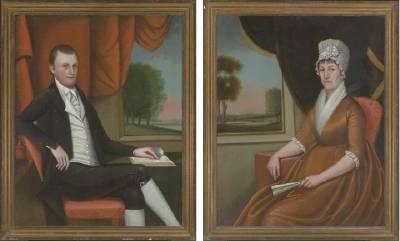
1788 New York City - 1838 Nashville, Tennessee. Known for: Political figure portraits and landscape painting.
Portrait painter Ralph Eleaser Whiteside Earl is thought to have been born in 1788 in New York City. He was the son of the well-known portrait painter of the Revolutionary Period, Ralph Earl,... Read full biography
Portrait painter Ralph Eleaser Whiteside Earl is thought to have been born in 1788 in New York City. He was the son of the well-known portrait painter of the Revolutionary Period, Ralph Earl, 1751-1801, who probably taught his son the painter's art. Earl's first-known portrait was painted in 1802,... Read full biography
Portrait painter Ralph Eleaser Whiteside Earl is thought to have been born in 1788 in New York City. He was the son of the well-known portrait painter of the Revolutionary Period, Ralph Earl, 1751-1801, who probably taught his son the painter's art. Earl's first-known portrait was painted in 1802, and his 1804 family portrait is in the National Gallery, Washington, D.C. His work became increasingly sophisticated in 1809, it was apparent he had increased his grasp of anatomy and... Read full biography
Portrait painter Ralph Eleaser Whiteside Earl is thought to have been born in 1788 in New York City. He was the son of the well-known portrait painter of the Revolutionary Period, Ralph Earl, 1751-1801, who probably taught his son the painter's art. Earl's first-known portrait was painted in 1802, and his 1804 family portrait is in the National Gallery, Washington, D.C. His work became increasingly sophisticated in 1809, it was apparent he had increased his grasp of anatomy and three-dimensional modeling. His progress is credited to his studies in London, England in 1809 with John Trumbull and Benjamin West. The next year, he returned to Norwich, Connecticut, where he lived for four years, before again leaving for England in 1814. While in... Read full biography
Portrait painter Ralph Eleaser Whiteside Earl is thought to have been born in 1788 in New York City. He was the son of the well-known portrait painter of the Revolutionary Period, Ralph Earl, 1751-1801, who probably taught his son the painter's art. Earl's first-known portrait was painted in 1802, and his 1804 family portrait is in the National Gallery, Washington, D.C. His work became increasingly sophisticated in 1809, it was apparent he had increased his grasp of anatomy and three-dimensional modeling. His progress is credited to his studies in London, England in 1809 with John Trumbull and Benjamin West. The next year, he returned to Norwich, Connecticut, where he lived for four years, before again leaving for England in 1814. While in Norwich, Earl painted portraits, including that of General John Money, who had been his father's patron. Earl spent a year in Paris, Fra... Read full biography
Artist Biography
Biography page for Ralph Earl ((1788 - 1838)), known for Political figure portraits and landscape painting. Showing 2 biographical entries and 0 sample artworks.
Ralph Earl - Artist Info
About Ralph Earl
Biography from the Archives of askART
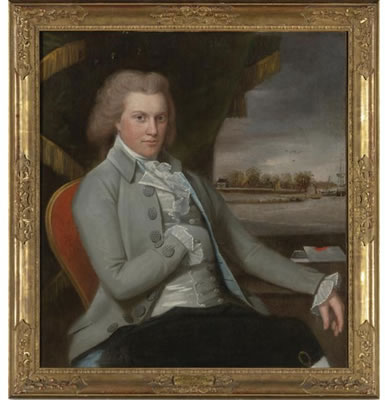 Portrait painter Ralph Eleaser Whiteside Earl is thought to have been born in 1788 in New York City. He was the son of the well-known portrait painter of the Revolutionary Period, Ralph Earl, 1751-1801, who probably taught his son the painter's art.
Earl's first-known portrait was painted in 1802, and his 1804 family portrait is in the National Gallery, Washington, D.C. His work became increasingly sophisticated in 1809, it was apparent he had increased his grasp of anatomy and three-dimensional modeling. His progress is credited to his studies in London, England in 1809 with John Trumbull and Benjamin West. The next year, he returned to Norwich, Connecticut, where he lived for four years, before again leaving for England in 1814. While in Norwich, Earl painted portraits, including that of General John Money, who had been his father's patron.
Earl spent a year in Paris, France, 1814-1815, where he met figure painter John Vanderlyn, and studied the masterworks of the Louvre Museum. Earl returned to the United States, arriving in Savannah, Georgia in December 1815, when he proceeded to travel around the South painting portraits to include in a history painting of the Battle of New Orleans. However, the work was never completed. Earl met General Andrew Jackson, however, whom he would follow to the White House in Washington upon the General's election as President of the United States, and subsequent two terms, 1829-1837. Earl painted so many portraits (over two dozen) of President Jackson, who became a friend and life-long patron, that he would become known as the "Court Painter," or "King's Painter," terms that no doubt referred, in part, to the power that Jackson exerted through his use of the veto.
Initially, in January 1817, Earl had visited Jackson's home, The Hermitage, in Nashville, Tennessee, where he painted portraits of the General, his family, and friends. He married Mrs. Jackson's niece, Jane Caffery, on May 19, 1819, but she died tragically in childbirth in 1820, just a year later. When General Jackson's wife died in 1828, Earl became the General's closest companion and lived at The Hermitage. After eight years as President, Jackson and Earl returned to The Hermitage in 1837, where the artist died on September 16, 1838, a little over a year and a half after their return.
Ralph Eleaser Whiteside Earl's paintings may be found in the collections of the Metropolitan Museum of Art, New York City, which holds his portrait of Mrs. Williams, 1837; the National Gallery of Art, Washington D.C.; and National Portrait Gallery, Washington D.C., where one of his portraits of Andrew Jackson hangs, showing Jackson in military uniform, recalling his early fame as the general who defeated the British at New Orleans during the War of 1812. Earl's painting of The Ephraim Hubbard Foster Family, c. 1825, interestingly an oil painted on mattress ticking, is in the collection of the Cheekwood Art Museum, Nashville. Many of Earl's portraits of Andrew Jackson may be found at "The Hermitage" hotel, in Nashville.
Bibliographic references to the life and work of Ralph Eleaser Whiteside Earl include:
Eleanor Fleming Morrissey's, Portraits in Tennessee Painted Before 1866, National Society of Colonial Dames of America in Tennessee, Nashville, 1964; Jerome R. MacBeth's "Portraits by Ralph E. W. Earl," published in Antiques 100 magazine, September 1971; The American Earls. Ralph Earl, James Earl, R. E. W. Earl, an exhibition catalogue published by the William Benton Museum of Art, University of Connecticut, Storrs, 1972; Deborah Chotner's, American Naive Paintings (with Julie Aronson, Sarah D. Cash, and Laurie Weitzenkorn), The Collections of the National Gallery of Art Systematic Catalogue. Washington, D.C., 1992.
Source:
http://www.nga.gov/cgi-bin/pbio?9600
http://www.artcyclopedia.com/artists/earl_ralph_eleaser_whiteside.html
http://www.artlex.com/ArtLex/p/portrait.1701-1800.html
http://www.cheekwood.org/art/collection/iacollect/art2/FosterFam/FFArea3.htmlBiography from Charleston Renaissance Gallery
RALPH ELEASER WHITESIDE EARL (1788-1838)
Ralph E. W. Earl was born into a family of painters. Both his father, Ralph Earl (1751-1801), and uncle, James Earl (1761-1796), painted widely through the new American nation, creating enduring images of many of the founding fathers and their families. His cousin, Augustus Earle (1793-1839), was also a painter of international renown.
Born in England, Ralph E. W. first studied art with his father in Northampton, Massachusetts. In 1809-1810, he was in London, where he took lessons from the portraitists and history painters Benjamin West and John Trumbull. Earl then returned to the United States, settling in Norwich, Connecticut for a four-year stay before traveling abroad once again. He spent a year in Paris, studying the great works of European art that Napoleon Bonaparte had collected during military campaigns.
Earl's artistic career took an important turn in 1817 when he visited Nashville, Tennessee to paint a portrait of General Andrew Jackson, hero of the 1815 Battle of New Orleans. He subsequently married Mrs. Jackson's niece and became an integral part of the extended family based at the Hermitage plantation. When Jackson went to Washington as president in 1829, Earl went with him, recording the president's likeness numerous times over two terms in office. After eight years as president, Jackson and Earl, roundly recognized as Jackson's closest companion, returned to the Hermitage, where the artist died only a year and a half later.
This essay is copyrighted by the Charleston Renaissance Gallery and may not be reproduced or transmitted without written permission from Hicklin Galleries, LLC.