Page loaded successfully. Showing biography for Richard Diebenkorn.
Richard Diebenkorn BIOGRAPHY
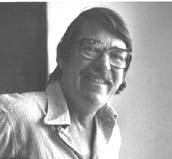
1922 Portland, Oregon - 1993 Berkeley, California. Known for: Bay-Area figurative and abstract expressionist painting.
RICHARD CLIFFORD DIEBENKORN JR. (1922- 1993). Born in Portland, Oregon, Richard Diebenkorn became a key figure in the Bay Area (San Francisco, Oakland) figurative and abstract school of painting.... Read full biography
RICHARD CLIFFORD DIEBENKORN JR. (1922- 1993). Born in Portland, Oregon, Richard Diebenkorn became a key figure in the Bay Area (San Francisco, Oakland) figurative and abstract school of painting. When he was two, his family moved to San Francisco. His grandmother encouraged Diebenkorn's early art... Read full biography
RICHARD CLIFFORD DIEBENKORN JR. (1922- 1993). Born in Portland, Oregon, Richard Diebenkorn became a key figure in the Bay Area (San Francisco, Oakland) figurative and abstract school of painting. When he was two, his family moved to San Francisco. His grandmother encouraged Diebenkorn's early art talent, and he remembered often drawing locomotives on shirt cardboards as a child. He was also intrigued with medieval heraldry and the French Bayeux Tapestries. Late in life, he reminisced about the... Read full biography
RICHARD CLIFFORD DIEBENKORN JR. (1922- 1993). Born in Portland, Oregon, Richard Diebenkorn became a key figure in the Bay Area (San Francisco, Oakland) figurative and abstract school of painting. When he was two, his family moved to San Francisco. His grandmother encouraged Diebenkorn's early art talent, and he remembered often drawing locomotives on shirt cardboards as a child. He was also intrigued with medieval heraldry and the French Bayeux Tapestries. Late in life, he reminisced about the tapestries: "The main events are central and in flanking panels above and below, … dead men and coats of arms; dialogues paralleling one another, horizontally." (C.Horsley). In 1940 he entered Stanford University, where he studied oil painting with... Read full biography
RICHARD CLIFFORD DIEBENKORN JR. (1922- 1993). Born in Portland, Oregon, Richard Diebenkorn became a key figure in the Bay Area (San Francisco, Oakland) figurative and abstract school of painting. When he was two, his family moved to San Francisco. His grandmother encouraged Diebenkorn's early art talent, and he remembered often drawing locomotives on shirt cardboards as a child. He was also intrigued with medieval heraldry and the French Bayeux Tapestries. Late in life, he reminisced about the tapestries: "The main events are central and in flanking panels above and below, … dead men and coats of arms; dialogues paralleling one another, horizontally." (C.Horsley). In 1940 he entered Stanford University, where he studied oil painting with Victor Arnautoff and Daniel Mendelowitz. In 1946 he enrolled at the California School of Fine Art, where he m... Read full biography
Artist Biography
Biography page for Richard Diebenkorn ((1922 - 1993)), known for Bay-Area figurative and abstract expressionist painting. Showing 5 biographical entries and 0 sample artworks.
Richard Diebenkorn - Artist Info
About Richard Diebenkorn
Name variants
Richard Clifford Diebenkorn
Biography from the Archives of askART
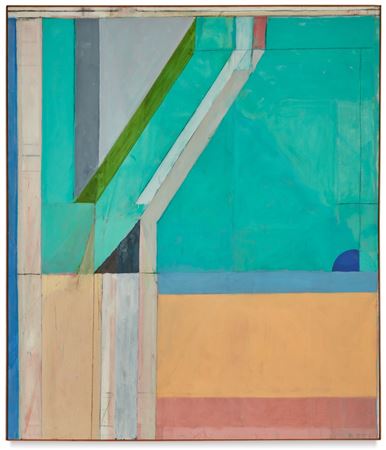 RICHARD CLIFFORD DIEBENKORN JR. (1922- 1993)
Born in Portland, Oregon, Richard Diebenkorn became a key figure in the Bay Area (San Francisco, Oakland) figurative and abstract school of painting.
When he was two, his family moved to San Francisco. His grandmother encouraged Diebenkorn's early art talent, and he remembered often drawing locomotives on shirt cardboards as a child. He was also intrigued with medieval heraldry and the French Bayeux Tapestries. Late in life, he reminisced about the tapestries: "The main events are central and in flanking panels above and below, … dead men and coats of arms; dialogues paralleling one another, horizontally." (C.Horsley).
In 1940 he entered Stanford University, where he studied oil painting with Victor Arnautoff and Daniel Mendelowitz. In 1946 he enrolled at the California School of Fine Art, where he met artists David Park and Elmer Bischoff. At the CSFA Diebenkorn was befriended by Park, both an artist and teacher, who was wary of some New York artists' 'egocentrism' that he found in 'The Doctrine of Action Painting' and Abstract Expressionism. Diebenkorn's work from this period was first exhibited at a solo exhibition at the California Palace of the Legion of Honor in 1948.
In the 1940's, Diebenkorn also traveled to New York, immersing himself in the Abstract Expressionist milieu, and becoming familiar with the works of Robert Motherwell, Bradley Tomlin Walker, and William Baziotes. In New York he also became interested in jazz, even to the point of taking up, briefly, the trombone.
Diebenkorn received his undergraduate degree from Stanford in 1949, and in 1950 left the Bay Area to attend University of New Mexico at Albuquerque, where he received his MFA in 1951. While in New Mexico, he became fascinated with aerial vistas.
He served in the active reserves during World War II, and in 1953 returned to study some more at Berkeley, where he remained for several years. There he studied with abstract expressionist, Hans Hofmann. Other artists who were influential to Diebenkorn include Edward Hopper, Paul Cezanne, Piet Mondrian, Arshile Gorky, Willem de Kooning, Mark Rothko and Henri Matisse.
During these years, Diebenkorn made trips with his wife, Phyllis, to the Phillips Collection in Washington D.C., where visitors could sit, smoke (at that time), talk and absorb the works of Albert Pinkham Ryder, Pierre Bonnard and Matisse, among others. Diebenkorn was particularly stuck by the pentimenti (traces of underlying pigment) in some of the Matisse pictures.
Pentimenti are frequently found in Diebenkorn's works, and these and other 'human touches' could almost appear as errors, or mistakes, but rather are very important to his art, adding a painterly touch. His 'crudities', as he called his intentionally left splotches and pentimenti, are his touchstones of frailty, perhaps even frustration.
His renunciation of abstraction for more realistic figures was the beginning of the Bay Area figurative school, an alternative to the mainstream. A typical Diebenkorn figure is usually a woman in a room, often with his wife, Phyllis, posed as the model. Usually the figures are expressionless, lonely, and acquiescent seeming.
David A. Ross, the director of the Whitney Museum, observed that "Diebenkorn emerges at the century's end as an artist who restored to late modernism the sense of the sublime that seemed to fade with each successive decade after World War II."
Diebenkorn made a switch from abstractions to figurative work for most of the 1960's. Then, in the late 1960s, he returned to abstraction, shifting planes of color, inspired by seeing Matisses at the Hermitage in Russia. This influence led to his noted Ocean Park series, begun in 1967 after moving to Santa Monica, and which he continued to work on for decades, ultimately resulting in close to 200 works. He began teaching at UCLA in 1966 and remained there until 1973. In 1978 he represented the United States at the Venice Biennale.
In the early 1980s, he began the closing chapter to his work, which included the depiction of heraldic emblems in collage and gouache. Diebenkorn moved in 1988 from Santa Monica to Healdsburg in northern California, where he continued to create primarily small works, some of them drawings, until his death in 1993. He experimented with different materials and smaller scale, sometimes executing paintings on cigar box covers.
His technique also changed and some of the works seemed to have a fluid undercurrent and a sort of Byzantine, or Sienese, sense of ornamentation. Two years before his death in 1993, he painted Untitled No. 10, a horizontal work that is a design for a beautiful flag, a new vision that might have led to a major series important as Ocean Park. In 1991 he was the recipient of the National Medal of Art, and his work was the subject of a major retrospective exhibition.
Sources:
Michael David Zellman, 300 Years of American Art
website of the Allen Memorial Art Museum of Oberlin College
website of the Whitney Museum of Art
Carter B. Horsley, author of Strength in Reserve -Tension Beneath Calm; website of thecityreview.com.Biography from GallArt.com
Richard Clifford Diebenkorn, Jr. was born in April, 1922 in Portland, Oregon. When he was two years old, his father, who was a hotel supply sales executive, relocated the family to San Francisco. Diebenkorn attended Lowell High School from 1937-40, and entered Stanford University in 1940. There he concentrated in studio art and art history, studying under Victor Arnautoff and Daniel Mendelowitz. The latter encouraged his interest in such American artists as Arthur Dove, Charles Sheeler and, most seminally, Edward Hopper. Mendelowitz also took his promising student to visit the home of Sarah Stein, sister-in-law of Gertrude Stein, where he saw works by Paul Cézanne, Pablo Picasso and Henri Matisse; this early exposure to European modernism opened doors that continued to beckon in the future. In June, 1943, Diebenkorn married fellow Stanford student Phyllis Gilman; they would have two children, Gretchen (born 1945) and Christopher (born 1947).
Diebenkorn served in the U.S. Marine Corps from 1943 until 1945. While stationed in Quantico, Virginia, he visited a number of important collections of modern art, including the Museum of Modern Art in New York, the Gallatin Collection at the Philadelphia Museum of Art, and, most often, the Phillips Collection in Washington, DC. He internalized influences from Cézanne, Julio González, Paul Klee, Joan Miró, Mark Rothko and Kurt Schwitters; certain key paintings, such as Matisse's 1916 Studio, Quai St. Michel at the Phillips Collection were especially compelling for him. During this time he experimented with abstract watercolor as well as making the representational sketches that would continue when he was stationed in Hawaii, and these constitute his "wartime" work.
Returning from military duty to San Francisco, in 1946 Diebenkorn took advantage of the G.I. bill to study at the California School of Fine Arts, where he met many serious contemporaries who would remain friends and artistic colleagues, and a slightly older one, David Park, who would have an especially important influence on him. In the fall of 1946, he received the Albert Bender Grant-in-Aid fellowship, allowing him to spend nearly a year in Woodstock, New York, in an environment where serious abstract artists (among them the sculptor Raoul Hague and the painter Melville Price) were finding their experimental ways. In New York City, he had his first contact with William Baziotes and Bradley Walker Tomlin. Diebenkorn's relatively small canvases of this period reflect these sources, many of whom were greatly influenced by Picasso.
Diebenkorn and his wife, Phyllis, returned to San Francisco in 1947; they settled in Sausalito, and the artist became a faculty member at the California School of Fine Arts. Fellow teachers there included Clyfford Still, Elmer Bischoff, Hassel Smith, Edward Corbett and David Park. His first one-person exhibition was held at the California Palace of the Legion of Honor in 1948, a singular distinction for so young a painter. In 1949, he was awarded his B.A. degree from Stanford. It was during this period—1947 to late 1949—that his first "period"—the Sausalito Period—took shape.
In 1950 Diebenkorn enrolled at the University of New Mexico, Albuquerque, wanting to take advantage of the G.I. Bill benefits still available to him, and to try out a new environment for his visual imagination. He and his family remained in Albuquerque for two and a half years; halfway through his tenure there, he presented a cycle of paintings as his master's degree exhibition. The "Albuquerque Period" represents the first mature statement of Richard Diebenkorn's distinctive, and powerful, presence on the American avant-garde art scene.
During the Albuquerque years, Diebenkorn visited and was greatly impacted by a retrospective exhibition of Arshile Gorky at the San Francisco Museum of Art. This and an epiphanic experience viewing the landscape from the perspective of a rather low-flying plane, shaped his own work in the ensuing months. He combined landscape influence, aerial perspective, and a private, calligraphic language, into an artistic style that flowered in myriad directions, and whose ideas ramified in virtually all of his work in subsequent periods. At this time, he established his life-long pattern of working simultaneously in large-scale oil paintings, and ambitious, if often restlessly experimental, works on paper.
Diebenkorn's first in-depth exposure to the work of Henri Matisse happened in the summer of 1952, when he saw the retrospective exhibition organized by Alfred Barr for the Museum of Modern Art, New York, in its venue at the Municipal Art Gallery in Los Angeles. In the fall of that year, he moved with his family to Urbana, Illinois, having accepted a teaching position at the University of Illinois. The work made at that time is known as the "Urbana Period"; it is characterized by a continuation of his subtle abstract/calligraphic style, but with a richer, more intense palette.
In the summer of 1953, he visited New York, where, among many other artists, he first met Franz Kline. In September, he returned with his family to Berkeley, settling there for a number of years. The paintings and drawings of the "Berkeley Period" established the artist as an abstract painter of uncommon authority and bravura. In the fall of 1953, Diebenkorn received an Abraham Rosenberg Traveling Fellowship for advanced study in art, and was able to work in his studio on a full-time basis.
In late 1955, Diebenkorn suddenly launched upon a path that veered dramatically from his extended early abstract period: he began to work in a "representational" mode, painting and drawing landscapes, figure studies and still lifes. With fellow artists David Park, Elmer Bischoff and later Frank Lobdell, he regularly worked on figure drawing from models; one of his largest bodies of work comprises exhaustively experimental figure drawings. He was also prolific in the still life genre: some of his nearly monochromatic still life drawings are among the most distinctive, and ravishing, in twentieth century art. But it was the figurative and landscape paintings of this period (1956-67) that created an ever increasing audience for his work. In March, 1956, he had the first of nine exhibitions at the Poindexter Gallery in New York; these were duly noted by the East Coast art establishment and helped further his national reputation.
In the academic year 1963-64, the artist left his teaching activity at the San Francisco Art Institute (formerly the California School of Fine Arts) and accepted an artist-in-residence stint at Stanford University. This period produced an especially concentrated and lyrical group of figure drawings, in addition to paintings. In 1964 he was invited to visit the Soviet Union on a Cultural Exchange Grant from the U.S. State Department. On that (somewhat harrowing) trip, he was able to see the great Matisse paintings at the Hermitage in Leningrad and the Pushkin Museum in Moscow, which had been unavailable to most of the world for decades. This experience fed his work of the next period. In 1965, he began the late figurative works, characterized by relatively flat, planar areas of color, geometric compositions, and occasionally smaller areas of decorative figuration. In 1966, he saw the Matisse retrospective at the University of California, Los Angeles Art Gallery which included View of Notre Dame and Open Window, Collioure.
It was in 1966, too, that he and Phyllis moved from Berkeley to Santa Monica, where Diebenkorn accepted a teaching position at UCLA. Within several months of beginning work in his first Santa Monica studio, located in a neighborhood near the beach known as Ocean Park, the artist embarked on the great cycle of paintings and drawings known as the Ocean Park works. In doing so, he definitively ended his figurative approach, to invent a unique abstract language he would develop until 1988. In 1971, he had his first exhibition at the Marlborough Gallery in New York; these three shows became much-anticipated opportunities to observe the unfolding of the Ocean Park vocabulary. In 1977, he moved to New York's M. Knoedler & Co., Inc, where, over the course of the next decade—working with gallery director Larry Rubin—he exhibited nearly annually. This would become a series of events perhaps even more appreciated than his earlier Ocean Park shows at Marlborough. Both the drawings and paintings became ever more richly chromatic and compositionally complex.
In 1976-77, the Albright-Knox Art Gallery in Buffalo, New York, organized a major retrospective exhibition which traveled to Washington, DC, New York City, Cincinnati, Los Angeles and Oakland. By now Diebenkorn was generally regarded as a well-established American master; his association with California would always remain, but his stature as a world-class modern artist was secure.
In 1980 and 1981, Diebenkorn temporarily changed direction, producing a rather eccentric group of works on paper known as the "Clubs and Spades" drawings. When these were shown at Knoedler, the reaction was somewhat perplexed; with time, however, these images have become some of the most highly prized of his works. They were, at least in part, inspired by the artist's lifelong interest in heraldic imagery, and their explorations of form would reappear in modified form at the very end of his life.
In late 1988, and continuing as a traveling exhibition throughout 1989, Diebenkorn's works on paper were organized into a major show and book by the Museum of Modern Art's curator John Elderfield. This was a landmark event for the artist and his public, including, as it did, the entire range of his stylistic journey right through the late 1980s.
In the spring of 1988, Richard and Phyllis Diebenkorn moved from Santa Monica to Healdsburg, California, to a rural home near the Russian River, overlooking vineyards and scrub-oak hillsides. In his Healdsburg studio he worked in mostly small scale, producing some of the most gem-like, quirkily decorative, and perfectly executed, works of his life. Though he experienced serious health problems during much of his time in Healdsburg, he was able to continue his restless exploration of form and color and poetic metaphor. Virtually all of the Healdsburg work was abstract. However, in one of his last ambitious print series, done in 1990, he represented variations on the theme of a coat on a hanger. The late etchings, meant to illustrate a luxury edition book of poems by W.B. Yeats published by San Francisco's Arion Press, constitute a kind of valedictory gesture.
In late 1992, the Diebenkorns were forced to take up residence at their Berkeley apartment in order to be nearer to medical treatment. They looked forward to returning to Healdsburg, but were never able to do so. Richard Diebenkorn died there on March 30, 1993.
(Courtesy of Diebenkorn.org)Biography from Hollis Taggart Galleries
Richard Diebenkorn's abstractions balance depth and surface, structure and field. His Ocean Park series stands among the most eloquent and luminous paintings of the 1960s and 70s.
Raised in San Francisco, Diebenkorn developed an early interest in art, particularly in the work of illustrators Howard Pyle and N.C. Wyeth. His service in World War II interrupted his education at Stanford University; after the war he continued his studies at the California School of Fine Arts (CSFA), where his teachers included David Park, who became an important influence and a close friend. During this period, Diebenkorn learned of the innovations of the New York School, and he gained first-hand knowledge of contemporary abstraction when he joined the faculty of the CSFA. His colleagues there included Clyfford Still and Mark Rothko.
During a period in Albuquerque in the early 1950s, he created abstracted paintings defined by linear planes and pinks and browns inspired by the local landscape. In the mid-1950s, Diebenkorn was exploring Abstract Expressionism through strong gesture and washes of color; the sense of landscape predominates in these compositions. Later in the decade, Diebenkorn returned to more figurative work-- a move that distinguished his paintings from the abstract idioms that dominated the avant-garde art world. Along with his colleagues Park, Elmer Bischoff, and Nathan Oliveira, among others, Diebenkorn became known as a founder of the Bay Area figurative school. His images of people and interiors from this period are often structured by rectangular shapes and squared-off forms. These would develop into the grids that the artist would continue to employ as an organizing and anchoring principle for his work.
It was Diebenkorn's move to Southern California to take a teaching position at UCLA that inspired his best-known work. Beginning in 1967, he created more than 140 paintings in what became his Ocean Park series, named after his Santa Monica neighborhood. The skeletal scaffolding of these paintings create interlocking planes, overlaid with pale transparent color, that suggest, by turns, roads, horizon lines, and the ocean. Diebenkorn acknowledged the influence of Matisse in his oeuvre; the subtly bright palette and planar ambiguities of the Ocean Park paintings testify to this appreciation.
Diebenkorn left the Los Angeles area in 1988 and moved back to northern California, where he built a studio in Healdsburg, in Sonoma County. In ill health in his last years, he created small-scale gouaches and etchings, including an extensive series based on an image of a coat and a group of prints intended to illustrate a publication of W. B. Yeats' poetry. He died in Berkeley in 1993.
© Copyright 2010 Hollis Taggart GalleriesBiography from Leslie Sacks Fine Art
Born in Portland, Oregon, Richard Diebenkorn became a key figure in the Bay Area (San Francisco, Oakland) figurative school of painting. Richard Diebenkorn studied at Stanford University and later at the University of California, Berkeley. While at Berkeley, he studied with but was not greatly influenced by Abstract Expressionist, Hans Hofmann. Richard Diebenkorn credited Edward Hopper, Paul Cezanne, and Arshile Gorky as major influences on his painting.
In the 1950's, Richard Diebenkorn's work was largely abstract with emphasis on gestural brushwork and strong composition. His figurative work was marked by vibrant colors forming spaces into which Richard Diebenkorn would place a simplified or seated figure. The figurative work of Richard Diebenkorn helped mark the beginning of the Bay Area figurative school.
In the mid-1960's, Richard Diebenkorn settled in Santa Monica, CA. Around this time, he turned away from imagery and focused on the abstract with his "Ocean Park" series. These paintings are geometric abstractions of line and space with visible reminders of all the underlying reworking. The influence of California - it's light and color, and coastal allusions to sky, ocean, seaside and sun - can be seen in these works.
In 1988 Richard Diebenkorn left Santa Monica to return to the Bay Area, where he built a studio in Healdsburg, in the vineyards north of San Francisco. After a heart attack in 1989, followed by a series of operations and illnesses, he gave up working on his characteristically large canvases to concentrate on a series of gouache drawings and two beautifully refined etchings made at Crown Point Press, San Francisco, in 1991 and 1992.Biography from Modern Art Dealers
Richard Clifford Diebenkorn (1922 – 1993)
Childhood
Richard Clifford Diebenkorn, Jr. (1922-1993) was born to Mr. and Mrs. Richard Diebenkorn in April, 1922 in Portland, Oregon. At the age of two, his dad, who was in supply sales for a hotel, migrated the family to San Francisco. Richard Diebenkorn was enrolled at Lowell High School from 1937 to 1940. In spite of the fact that his parents were not especially receptive of his enthusiasm for the arts, Diebenkorn had support from his grandma, an artist, and civil rights legal counselor, encouraged his visual creative ability by giving him illustrated books, taking him to visit neighborhood art galleries, and creating in him a love for European heraldic symbolism.
Richard Diebenkorn frustrated his dad by deciding to study craftsmanship and art history instead of the more down to earth quest for medicine or law at Stanford University, where he started his undergrad studies in 1940. There he studied art history and studio art, tutored by Daniel Mendelowitz and Victor Arnautoff. The former strengthened his enthusiasm for such American artists as Charles Sheeler, Arthur Dove and, most especially, Edward Hopper. Daniel Mendelowitz, one of his art history educators and guides, acquainted the yearning painter with the work of pioneers whose works would become developmental to the advancement of Richard Diebenkorn paintings.
Mendelowitz likewise took him on a trip to see the home of Sarah Stein, sister-in-law of Gertrude Stein, where he viewed works by Pablo Picasso, Paul Cézanne and Henri Matisse – cutting edge artists who additionally roused the creative advancement of Richard Diebenkorn’s art.
Early Training
Richard Diebenkorn got married to a fellow student at Stanford, Phyllis Gilman in June 1943, she bore him two kids, Gretchen and Christopher. He enlisted shortly after in the U.S. Marine Corps where he served two years from 1943 until 1945. During his station at the base in Quantico, Virginia, Richard Diebenkorn took the chance to explore the East Coast’s most revered modern day art collection, such as The Philadelphia Museum of Art, The Museum of Modern Art and The Phillips Collection in Washington, D.C.
All this time he tried different things with dynamic watercolor and in addition making the representational artwork that would persist when he was stationed in Hawaii, and these make up his “wartime” paintings.
Upon returning to San Francisco in 1946, Richard Diebenkorn exploited the G.I. Bill by registering at the California School of Fine Arts. The next year, 1946, he became one of the school’s faculty members when he got the Albert Bender Grant-in-Aid which afforded him the ability use a winter painting in the lively artistic surroundings of Woodstock, New York.
It was here where genuine abstract painters (among them the painter Melville Price and the sculptor Raoul Hague) were discovering their exploratory ways. Then in New York City, Richard Diebenkorn met Bradley Walker Tomlin and William Baziotes. Diebenkorn’s generally little canvases of this period mirror these sources, a large portion of who were incredibly affected by Picasso.
His fellow instructors were Hassel Smith, Elmer Bischoff, Clyfford Still, Edward Corbett and David Park. In 1948, his initial sole exposition was done at the California Palace of the Legion of Honor, a spectacular qualification for so young a painter. He was honored with his Bachelor of Arts degree from Stanford in 1949. It was during this 1947 to late 1949 period that his foremost “phase”— the Sausalito Period—came to fruition.
Mature Era
Richard Diebenkorn’s first comprehensive contact with the work of Henri Matisse was during the late spring of 1952, when he saw the art show arranged by Alfred Barr for the Museum of Modern Art, New York, in its location at the Municipal Art Gallery, Los Angeles.
Continually searching for a change of landscape, in 1950, he relocated his family to Albuquerque to seek his Master of Fine Arts degree at the University of New Mexico. The acquaintances he made while traveling, educating, and learning at these distinctive universities had a tremendous effect on the youthful painter, who took an interest in an incredible trade of thoughts. During this time, when he was flying at low elevation in a plane between Albuquerque and California, he found himself able to see the countryside from above.
This occurrence had a noteworthy effect on the design of a large number of his pieces, both in New Mexico and California. The “Albuquerque Phase” symbolizes the first mature declaration of Diebenkorn’s particular, and intense, presence on the American modern artwork platform and was likewise where his Abstract Expressionist phase really started. This Abstract Expressionist phase kept going for approximately five years, through his relocation to Urbana, Illinois, (where he had agreed to a faculty post at the University of Illinois) and back again to California.
Richard Diebenkorn then resided in Berkeley between 1955 and 1966 (his “Berkeley Period”). From the fall of 1964 to the spring of 1965, Richard Diebenkorn voyaged all over Europe; specifically, he was conceded a cultural visa to visit imperative historical centers in the Soviet Union and visit their property of Matisse’s artistic creations.
Later Years
In the mid year of 1953, Richard Diebenkorn went to New York, where, among numerous artists, he met Franz Kline for the first time. In the fall of 1953, Diebenkorn got an Abraham Rosenberg Traveling Fellowship for cutting edge art studies, affording him the opportunity to work in his studio full-time. With other artists Elmer Bischoff, David Park and eventually Frank Lobdell, he consistently took a shot at figure drawing from models; one of his biggest assortments of work contains thoroughly exploratory figure drawings.
In March, 1956, he had the first of nine presentations at the Poindexter Gallery in New York; these were noted by the East Coast art foundation and promoted his national notoriety. In 1965, he started the late figurative works, described by generally level, planar zones of shading, geometric arrangements, and periodically smaller ranges of embellishing figuration. In 1966, he saw the Matisse review at the University of California, Los Angeles Art Gallery as well as a View of Notre Dame and Open Window, Collioure.
In 1967, Richard Diebenkorn and his wife relocated to Santa Monica, where he became an arts professor at UCLA, where he taught until he resigned in 1973. Amid the late 1960s and mid 1970s – alongside the companions he had made at different tutoring positions, counting David Park – Richard Diebenkorn became a focal member of the Bay Area Figurative Movement, which shunned Abstract Expressionism for figural representation. Evidently, the free will of composition and gesture in his Abstract Expressionist period was at last not to his taste.
In the long run, on the other hand, Diebenkorn came to strike a harmony between the utilization of figural and abstract components in his artwork. His Ocean Park series (1967-1988), for instance, comprising of 140 canvases made within a span of 21 years, skyrocketed the matured artist into national limelight. In 1980 and 1981, he briefly altered his course, creating a somewhat unusual group of art on paper referred as the “Clubs and Spades” drawings. All these pictures have ended up becoming probably some of his most exceptionally prized works.
In 1988, Richard Diebenkorn and his wife relocated to Healdsburg, California, close to the Russian River. There he chipped away at some small scale, yet stunning, drawings and sketches until he fell sick in 1992. In one of his last grand print series, completed in 1990, he embodied disparity on the theme of a coat on a hanger. The late drawings, intended to show an extravagant edition book of poems by W.B. Yeats distributed by San Francisco’s Arion Press, represent some sort of farewell signal.
Death
The couple were eventually compelled to move into their Berkeley apartment to be closer to medical treatment. Richard Diebenkorn passed on at the age of 71 on March 30, 1993, owing to complications from emphysema.
Although Richard Diebenkorn did not achieve the level of distinction of the Abstract Expressionists of the New York School, significant art shows in 1976 and 1997 helped springboard his notoriety to that of a noteworthy postwar American artist. His work is still examined and copied by art students till date. As the columnist John Elderfield stated, he is respected “for the diligence and durability of his accomplishment… he revives your faith in painting.”
© Copyright 2018 Modern Art Dealers, Carmel CA