Page loaded successfully. Showing biography for Roberto Chabet.
Roberto Chabet BIOGRAPHY
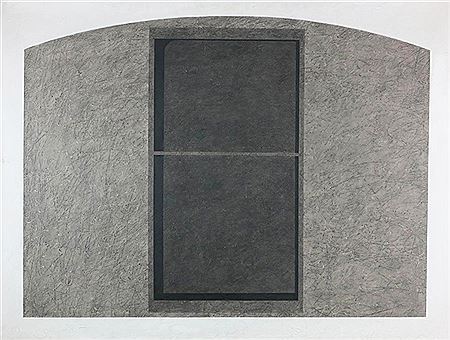
1937 Philippines - 2013 Philippines. Known for: Geometric and abstract expressionist painting, conceptual art.
Exhibition Review of Hyperallergic, by An Xiao, November 29, 2011. The Father of Filipino Conceptual Art\Little known outside Southeast Asia, Chabet is a rockstar amongst artists and art supporters... Read full biography
Exhibition Review of Hyperallergic, by An Xiao, November 29, 2011. The Father of Filipino Conceptual Art\Little known outside Southeast Asia, Chabet is a rockstar amongst artists and art supporters in the Philippines. MANILA, Philippines — Where does one start with Philippine contemporary art? So... Read full biography
Exhibition Review of Hyperallergic, by An Xiao, November 29, 2011. The Father of Filipino Conceptual Art\Little known outside Southeast Asia, Chabet is a rockstar amongst artists and art supporters in the Philippines. MANILA, Philippines — Where does one start with Philippine contemporary art? So little is known outside the country, even amongst foreign-born Filipinos. To introduce myself to some of the big names in the field, I stopped by Ateneo Art Gallery this week, one of Manila’s premiere... Read full biography
Exhibition Review of Hyperallergic, by An Xiao, November 29, 2011. The Father of Filipino Conceptual Art\Little known outside Southeast Asia, Chabet is a rockstar amongst artists and art supporters in the Philippines. MANILA, Philippines — Where does one start with Philippine contemporary art? So little is known outside the country, even amongst foreign-born Filipinos. To introduce myself to some of the big names in the field, I stopped by Ateneo Art Gallery this week, one of Manila’s premiere university galleries. The current show, Windows to Conversations, is part of Roberto Chabet: Fifty Years, a yearlong series on his work in partnership with a number of important galleries across Southeast Asia, including Osage in Hong Kong and ICA in... Read full biography
Exhibition Review of Hyperallergic, by An Xiao, November 29, 2011. The Father of Filipino Conceptual Art\Little known outside Southeast Asia, Chabet is a rockstar amongst artists and art supporters in the Philippines. MANILA, Philippines — Where does one start with Philippine contemporary art? So little is known outside the country, even amongst foreign-born Filipinos. To introduce myself to some of the big names in the field, I stopped by Ateneo Art Gallery this week, one of Manila’s premiere university galleries. The current show, Windows to Conversations, is part of Roberto Chabet: Fifty Years, a yearlong series on his work in partnership with a number of important galleries across Southeast Asia, including Osage in Hong Kong and ICA in Singapore. According to almost everyone I’ve spoken to in the field, Chabet is the father of Philippine concept... Read full biography
Artist Biography
Biography page for Roberto Chabet ((1937 - 2013)), known for Geometric and abstract expressionist painting, conceptual art. Showing 2 biographical entries and 0 sample artworks.
Roberto Chabet - Artist Info
About Roberto Chabet
Biography from the Archives of askART
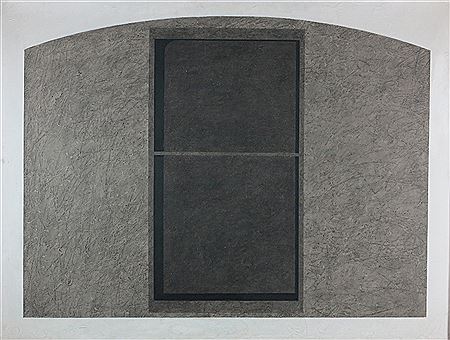 Exhibition Review of Hyperallergic, by An Xiao, November 29, 2011
The Father of Filipino Conceptual Art\Little known outside Southeast Asia, Chabet is a rockstar amongst artists and art supporters in the Philippines.
MANILA, Philippines — Where does one start with Philippine contemporary art? So little is known outside the country, even amongst foreign-born Filipinos.
To introduce myself to some of the big names in the field, I stopped by Ateneo Art Gallery this week, one of Manila’s premiere university galleries. The current show, Windows to Conversations, is part of Roberto Chabet: Fifty Years, a yearlong series on his work in partnership with a number of important galleries across Southeast Asia, including Osage in Hong Kong and ICA in Singapore.
According to almost everyone I’ve spoken to in the field, Chabet is the father of Philippine conceptual art and highly influential in the region. I first saw his installations in Hong Kong at Osage Gallery, where his stand-up mirrors within larger, boxed mirrors revealed a keen play on perception and space. He experiments often with materials like plywood and glass, creating spatial, abstracted installations.
At Ateneo, his use of neon light reflected his own interests in language and painting. “10,000 Paintings I Must Paint Before I Die” suggests a field of black canvases, existing only in potential. Even the use of English can be read as a mildly political statement in a country first colonized by Spaniards, followed by Japanese and Americans.
A detail of Chabet's "10,000 Paintings I Must Paint Before I Die", a conceptual installation of black plywood boxes suggesting the potential of the canvas. The use of "10,000" refers to a Zen concept of infinity.
I chatted with Ringo Bunoan, an artist and curator working with the Asia Art Archive in Hong Kong and an award-winning expert on Chabet’s works.
“There are too many things to talk about when it comes to Chabet’s work, because it’s so multifaceted,” she explained of the ongoing series. “This [particular exhibition] speaks about a certain period, the starting point is the 60s,” so the exhibit included the work of Lee Aguinaldo and Fernando Zóbel, two other conceptual artists and friends of Chabet.
Detail of a stunning mirror installation by Chabet that showed at Hong Kong's Osage Gallery in conjunction with the Hong Kong Art Fair.
Windows marks a turning point, as Chabet broke off from a painterly tradition into the more concept-based installations he is famous for.
Bunoan wrote a great introduction to Chabet’s work at PlantingRice.com, an online magazine of Philippine contemporary art, touching on her unique archival process, which focused on recreating much of Chabet’s temporal pieces.
Chabet’s works have been described as anti-museum because they are not collectible. As with a lot of conceptual artists, he often uses materials, which are makeshift and ephemeral, they were never meant to be permanent. He has always said that art is for the moment, after it becomes memory.
Of course, a question remains. As with Zhang Peili, the reputed father of Chinese video art, how much of Chabet’s work is of global interest versus a regional one (which is certainly no less important)? Regardless, Chabet’s work pushed Filipino artists to enter the global art dialogue and consider a more international audience.
A catalogue of Chabet’s pieces can be found on King Kong Gallery’s web site. I recommended clicking through and reading Bunoan’s essay for a look at Chabet’s installations and experiments with space.Biography from the Archives of askART
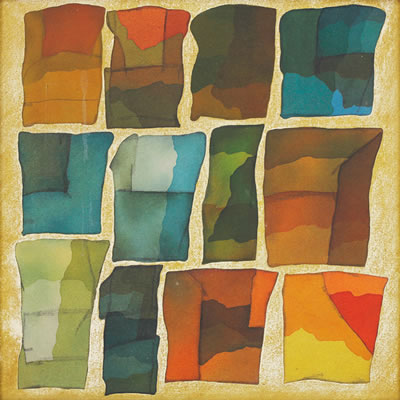 Roberto “Bobby” Rodríguez Chabet (March 29, 1937 — April 30, 2013) was an artist from the Philippines and widely acknowledged as the father of Philippine conceptual art.
Chabet studied architecture at the University of Santo Tomas where he graduated in 1961. He had his first solo exhibition at the Luz Gallery in the same year. He was the founding museum director of the Cultural Center of the Philippines and served there as curator from 1967–1970. He initiated the first 13 Artists Awards, giving recognition to young artists whose works ‘show a recentness, a turning away from the past and familiar modes of art-making’.
He led the 1970s conceptual art group called Shop 6 and taught for over 30 years at the UP College of Fine Arts, where he espoused an art practice that gave precedence to idea over form. Since the 1970s, he has been organizing landmark exhibitions featuring works by young artists.Chabet described his pieces as “creatures of memory” and himself as their “custodian.”
His works are the result of a process of unraveling of fixed notions about art and meaning. Highly allegorical, his drawings, collages, sculptures and installations question modernity. His works are meditations on space, the transitory nature of commonplace objects and the collisions that occur with their displacement.
Prolific and multifaceted, Chabet ventured into architecture, painting, printmaking, sculpture, stage designing, teaching, photography and writing.
Source:
Milena Olesinska Exposition Art Blog, 2020