Page loaded successfully. Showing biography for Roman Opalka.
Roman Opalka BIOGRAPHY
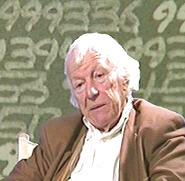
1931 Abbeville-Saint-Lucien, France - 2011 Rome, Italy. Known for: Conceptual art, metaphoric number painting, graphics, illustration, drawing.
Roman Opalka (27 August 1931 – 6 August 2011) was a French-born Polish painter, whose works are mostly associated with conceptual art. Opalka was born on 27 August 1931 in Abbeville-Saint-Lucien,... Read full biography
Roman Opalka (27 August 1931 – 6 August 2011) was a French-born Polish painter, whose works are mostly associated with conceptual art. Opalka was born on 27 August 1931 in Abbeville-Saint-Lucien, France, to Polish parents. The family returned to Poland in 1946 and Opalka studied lithography* at a... Read full biography
Roman Opalka (27 August 1931 – 6 August 2011) was a French-born Polish painter, whose works are mostly associated with conceptual art. Opalka was born on 27 August 1931 in Abbeville-Saint-Lucien, France, to Polish parents. The family returned to Poland in 1946 and Opalka studied lithography* at a graphics school before enrolling in the School of Art and Design in Lódz. He later earned a degree from the Academy of Fine Arts in Warsaw. He moved back to France in 1977. Opalka lived in Teille, near... Read full biography
Roman Opalka (27 August 1931 – 6 August 2011) was a French-born Polish painter, whose works are mostly associated with conceptual art. Opalka was born on 27 August 1931 in Abbeville-Saint-Lucien, France, to Polish parents. The family returned to Poland in 1946 and Opalka studied lithography* at a graphics school before enrolling in the School of Art and Design in Lódz. He later earned a degree from the Academy of Fine Arts in Warsaw. He moved back to France in 1977. Opalka lived in Teille, near Le Mans, and Venice. He died at age 79 after falling ill while on holiday in Italy. He was admitted to a hospital near Rome and died there a few days later, on 6 August 2011. Roman Opalka by Lothar Wolleh:. In 1965, in his studio in Warsaw, Opalka... Read full biography
Roman Opalka (27 August 1931 – 6 August 2011) was a French-born Polish painter, whose works are mostly associated with conceptual art. Opalka was born on 27 August 1931 in Abbeville-Saint-Lucien, France, to Polish parents. The family returned to Poland in 1946 and Opalka studied lithography* at a graphics school before enrolling in the School of Art and Design in Lódz. He later earned a degree from the Academy of Fine Arts in Warsaw. He moved back to France in 1977. Opalka lived in Teille, near Le Mans, and Venice. He died at age 79 after falling ill while on holiday in Italy. He was admitted to a hospital near Rome and died there a few days later, on 6 August 2011. Roman Opalka by Lothar Wolleh:. In 1965, in his studio in Warsaw, Opalka began painting numbers from one to infinity. Starting in the top left-hand corner of the canvas and finishing in the bottom righ... Read full biography
Artist Biography
Biography page for Roman Opalka ((1931 - 2011)), known for Conceptual art, metaphoric number painting, graphics, illustration, drawing. Showing 3 biographical entries and 0 sample artworks.
Roman Opalka - Artist Info
About Roman Opalka
Biography from the Archives of askART
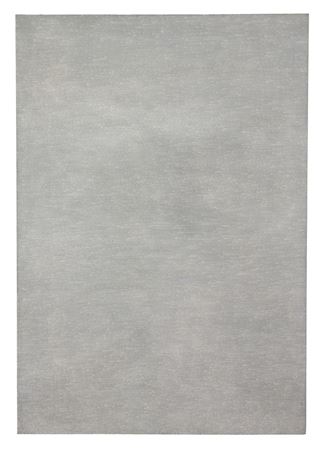 Roman Opalka (27 August 1931 – 6 August 2011) was a French-born Polish painter, whose works are mostly associated with conceptual art.
Opalka was born on 27 August 1931 in Abbeville-Saint-Lucien, France, to Polish parents. The family returned to Poland in 1946 and Opalka studied lithography* at a graphics school before enrolling in the School of Art and Design in Lódz. He later earned a degree from the Academy of Fine Arts in Warsaw. He moved back to France in 1977.
Opalka lived in Teille, near Le Mans, and Venice. He died at age 79 after falling ill while on holiday in Italy. He was admitted to a hospital near Rome and died there a few days later, on 6 August 2011.
Roman Opalka by Lothar Wolleh:
In 1965, in his studio in Warsaw, Opalka began painting numbers from one to infinity. Starting in the top left-hand corner of the canvas and finishing in the bottom right-hand corner, the tiny numbers were painted in horizontal rows. Each new canvas, which the artist called a "detail", took up counting where the last left off. Each "detail" has the same size (196 × 135 cm), the dimension of his studio door in Warsaw. All details have the same title, "1965 / 1 – 8"; the project had no definable end, and the artist pledged his life to its ongoing execution:
"All my work is a single thing, the description from number one to infinity. A single thing, a single life", "the problem is that we are, and are about not to be". He had contemplated and tried many different ways to visualize time before settling on this life's work.
Over the years there were changes to the process. In Opalka's first details he painted white numbers onto a black background. In 1968 he changed to a grey background "because it's not a symbolic colour, nor an emotional one", and in 1972 he decided that he would gradually lighten this grey background by adding 1% more white to the ground with each passing detail.
He expected to be painting virtually in white on white by the time he reached 7777777 (he did not use commas or number breaks in the works): "My objective is to get up to the white on white and still be alive." As of July 2004, he had reached 5.5 million.[2] Adopting this rigorously serialized approach, Opalka aligned himself with other artists of the time who explored making art through systems and mathematics, like Daniel Buren, On Kawara, and Hanne Darboven. He was represented in Paris and New York by Yvon Lambert and in Venice by Galleria Michela Rizzo.
In 1968 Opalka introduced to the process a tape recorder, speaking each number into the microphone as he painted it, and also began taking passport-style photographs of himself standing before the canvas after each day's work.
In 2007 Opalka participated at the symposium "Personal Structures Time–Space–Existence" a project initiated by the artist Rene Rietmeyer.
The final number he painted was 5607249.
Exhibitions
Opalka participated in many of the art world’s most important international exhibitions, including Documenta in Kassel, Germany, in 1977; the São Paulo Bienal in 1987; and the Venice Biennale, in 1995, 2003, 2011 and 2013.[4] He was represented in Paris and New York by Yvon Lambert, in Venice by Galleria Michela Rizzo and, for many years, at John Weber in New York.
In 2003, Les Rencontres d'Arles exhibited his work through "L’œuvre photographique"'s exhibition (the curator was Alain Julien-Laferrière).
In 2017, Opalka has made part of the exhibition "Il mio corpo nel tempo / Lüthi Ontani Opalka", Galleria d'Arte Moderna, Verona 2017. Catalogue Manfredi Edizioni.
Collections
Opalka's works can be found in the permanent collections of the Centre Pompidou in Paris and New York’s Museum of Modern Art among others.
* For more in-depth information about the terms in this biography that have an asterisk* see AskART.com. Glossary http://www.askart.com/AskART/lists/Art_Definition.aspx
Source:
Wikipedia, 2023Biography from the Archives of askART
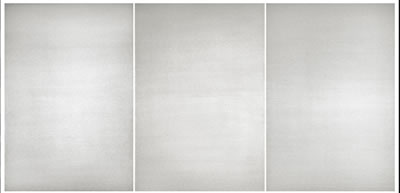 Following is The New York Times obituary of the artist:
Roman Opalka, an Artist of Numbers, Is Dead at 79
By WILLIAM GRIMES
Published: August 9, 2011
Roman Opalka, a leading conceptual artist who, beginning with the numeral one in 1965, methodically painted consecutive numbers on canvas in a march toward infinity, died on Saturday near Rome. He was 79.
The death was confirmed by Jean Poderos, his publisher. Agence France-Presse reported that Slawomir Boss, his agent, told Polish newspapers that Mr. Opalka had fallen ill while in Italy and died of a "generalized infection" at a hospital near Rome.
Mr. Opalka, who had lived and worked in France since 1977, embarked on his quixotic project while working as an artist in Warsaw. Starting at the top left of a canvas measuring a little over four by six feet, and using acrylic paint, he used a fine brush (No. 0) to inscribe 20,000 to 30,000 white numerals on a black background in neat rows that ended at the bottom right corner. Each succeeding canvas, or "detail" as he called it, picked up where the previous one left off. As of July 2004, he had reached 5.5 million.
In 1968 Mr. Opalka changed his background color to gray, and four years later, as he passed the one million mark, he began adding a tiny amount of white paint to the background color after each canvas to lighten it gradually. By 2008 he was painting white numerals on a white background whose color he called "blanc merité," or "well-earned white."
In 1972 he also began speaking each number into a tape recorder as he worked and taking passport-style photographs of himself in front of each canvas at the end of each work session. All the paintings in the series bore the same title, Opalka 1965/1 — 8.
"All my work is a single thing, the description from one to infinity," Mr. Opalka once wrote. "A single thing, a single life."
Roman Opalka was born on Aug. 27, 1931, to Polish émigrés in Hocquincourt, in northern France. The family returned to Poland in 1935, only to be deported to Germany after the Nazi invasion.
After being liberated by the United States Army, they returned to Poland, where Mr. Opalka studied lithography at a graphics school before enrolling in the School of Art and Design in Lodz. He later earned a degree from the Academy of Fine Arts in Warsaw and began producing white monochrome paintings.
Five years after executing his first numeral painting, he ceased all other work and devoted himself fulltime to the pursuit of infinity. In 2010, Christie's sold three of his number paintings as a unit for $1.3 million.
In anticipation of his 80th birthday, several exhibitions were organized in France and Italy and a collection of his self-portraits was published by Éditions Courts et Longues.
Mr. Opalka, who lived in Teillé, near Le Mans, and Venice, is survived by his wife, Marie-Madeleine.
Though his artistic quest might have seemed bloodless and abstract, Mr. Opalka described it, passionately, as a grand metaphor for human existence. "Time as we live it and as we create it embodies our progressive disappearance," he wrote in an essay in 1987. "We are at the same time alive and in the face of death — that is the mystery of all living beings."
Source:
http://www.nytimes.com/2011/08/10/arts/design/roman-opalka-conceptual-artist-with-numerical-focus-is-dead-at-79.html?ref=obituariesBiography from Desa Unicum
He spent the war in Germany, returned to France in 1945, and a year later he came to Poland. In 1950 he graduated from the PWSSP in Lódz, and in the years 1950-56 he studied at the Academy of Fine Arts in Warsaw.
From 1965 he worked in France. Representative of conceptualism. Initially, he created etchings (including the Describing the World series); later, spatial compositions made of canvas, called "hovercraft"; and from 1965 he began to cover the canvases, which he called "details", with rows of successive numbers, starting with one (the first one was written with numbers from 1 to 35327), which was supposed to reflect the passage of time.
The canvases were accompanied by a photograph of the artist's face showing the signs of aging and a recording of his voice. He is the winner of many awards, including: Art Criticism Award. CK Norwid. He took part in the Sao Paulo