Page loaded successfully. Showing biography for Rudolf Bonnet.
Rudolf Bonnet BIOGRAPHY
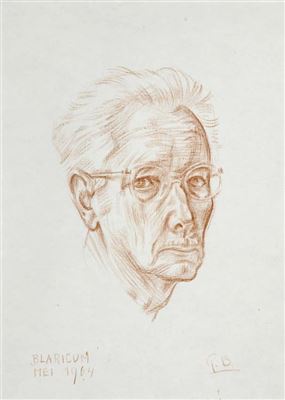
1895 Amsterdam, Holland - 1978 Laren, Holland. Known for: Portrait, figure and genre painting.
Johan Rudolf Bonnet was born into a Dutch family of Huguenot descent, who had been bakers by trade for generations. As a student of the Rijksacademie van Beeldende Kunsten in Amsterdam, he was... Read full biography
Johan Rudolf Bonnet was born into a Dutch family of Huguenot descent, who had been bakers by trade for generations. As a student of the Rijksacademie van Beeldende Kunsten in Amsterdam, he was initiated into drawing and painting in the academic tradition of the early 20th century. In 1920, he left... Read full biography
Johan Rudolf Bonnet was born into a Dutch family of Huguenot descent, who had been bakers by trade for generations. As a student of the Rijksacademie van Beeldende Kunsten in Amsterdam, he was initiated into drawing and painting in the academic tradition of the early 20th century. In 1920, he left Holland for Italy, where he would spend the best part of the next eight years, mostly in the village of Anticoli Corrado South of Rome. It was in Italy too that he first heard of Bali from... Read full biography
Johan Rudolf Bonnet was born into a Dutch family of Huguenot descent, who had been bakers by trade for generations. As a student of the Rijksacademie van Beeldende Kunsten in Amsterdam, he was initiated into drawing and painting in the academic tradition of the early 20th century. In 1920, he left Holland for Italy, where he would spend the best part of the next eight years, mostly in the village of Anticoli Corrado South of Rome. It was in Italy too that he first heard of Bali from Nieuwenkamp, the illustrator of the island's culture. It was his brother and sister whom Rudolf Bonnet first visited with his parents after a journey to Dutch Indies on the S.S. 'Jan Pieterszoon Coen'. Once in Semarang, however, the memory of the photographs... Read full biography
Johan Rudolf Bonnet was born into a Dutch family of Huguenot descent, who had been bakers by trade for generations. As a student of the Rijksacademie van Beeldende Kunsten in Amsterdam, he was initiated into drawing and painting in the academic tradition of the early 20th century. In 1920, he left Holland for Italy, where he would spend the best part of the next eight years, mostly in the village of Anticoli Corrado South of Rome. It was in Italy too that he first heard of Bali from Nieuwenkamp, the illustrator of the island's culture. It was his brother and sister whom Rudolf Bonnet first visited with his parents after a journey to Dutch Indies on the S.S. 'Jan Pieterszoon Coen'. Once in Semarang, however, the memory of the photographs Nieuwenkamp had shown him in Italy drew him further east, and he decided to visit Bali, arriving there at the end of January 1929. But he was soon... Read full biography
Artist Biography
Biography page for Rudolf Bonnet ((1895 - 1978)), known for Portrait, figure and genre painting. Showing 3 biographical entries and 0 sample artworks.
Rudolf Bonnet - Artist Info
About Rudolf Bonnet
Name variants
Johan Rudolf Bonnet
Biography from the Archives of askART
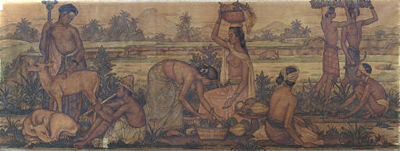 Johan Rudolf Bonnet was born into a Dutch family of Huguenot descent, who had been bakers by trade for generations. As a student of the Rijksacademie van Beeldende Kunsten in Amsterdam, he was initiated into drawing and painting in the academic tradition of the early 20th century. In 1920, he left Holland for Italy, where he would spend the best part of the next eight years, mostly in the village of Anticoli Corrado South of Rome. It was in Italy too that he first heard of Bali from Nieuwenkamp, the illustrator of the island's culture.
It was his brother and sister whom Rudolf Bonnet first visited with his parents after a journey to Dutch Indies on the S.S. 'Jan Pieterszoon Coen'. Once in Semarang, however, the memory of the photographs Nieuwenkamp had shown him in Italy drew him further east, and he decided to visit Bali, arriving there at the end of January 1929. But he was soon enthused by the dance and pageantry and so decided to stay. After two months in Tampaksiring he moved to Peliatan to a pavilion rented from the punggawa of Peliatan. Through whom Bonnet was introduced to all the right people in the area, in particular Walter Spies and the princes of the House of Ubud like Tjokorda Gede Agung Sukawati and Tjokorda Raka Sukawati. Friendship was immediate, and when Spies moved to a new house in Campuhan, Bonnet took over his water palace in Ubud and set up his studio there.
Following the Japanese landing Bonnet was not immediately imprisoned. But this did not last. When a new officer took charge, he had the Dutchmen arrested and shipped to Sulawesi in 1943. Bonnet thus spent the rest of the war in internment camps in different places, in Paréparé, in Bolong and finally in Makassar.
In 1947 Bonnet found himself back in Ubud after a short stay in Makassar. Part of the important Dutch community of the Indies had disappeared in the turmoil of the war, but those who escaped intended to stay. Bonnet, among them, had not other idea than resuming his pre-war action. In 1948, even though some Balinese artists had taken to the mountains and the conditions were far from secure, he held in Denpasar the first post-war Balinese exhibition under the auspices of the Republik Indonesia Timur. It was during this post-war period that Bonnet's influence reached its peak. With Bonnet in Ubud, and Ubud back on the map of tourism, the reasons, which had led to the creation of Pita Maha before the war, were still present. In 1951 Bonnet attempted to create an association with similar purposes, called the Golongan Pelukis Ubud. This organization was more limited in scope and only involved artists from the Ubud area, around the figures of I Gusti Nyoman Lempad and Anak Agung Gede Sobrat. The Golongan Pelukis Ubud, though failed to achieve durable success to recreate the equivalent of Pita Maha's.
President Soekarno turned the island into the window of Indonesia and had a palace built for himself in Tampaksiring, overlooking the Balinese nymphs at bath. Bonnet knew Soekarno, who used to visit him in his studio and had a close contact with him, dating back from an exhibition in Jakarta in 1951, when the President ordered Bonnets paintings to his palace. One does not know why Bonnet did not use this connection to look for protection, for he later complained later of constant difficulties with immigration.
Bonnet spent much of his time and energy dealing with the legacy of the Pita Maha years: collecting and researching the works, looking for funds for what was to be the Museum Puri Lukisan in Ubud, planning its construction, making its inventory, preparing its catalogue, etc. He remained for this purpose in constant contact with Tjokorda Gede Agung Sukawati, who tried several times to have him come back to the island. The conditions did not allow it before 1972, when Bonnet could finally come with a three-month grant from the Dutch government to make an inventory of the museum and complete its catalogue. He returned the following years (1973-1975-1976) with a similar purpose and literally set up the collection of the Museum Puri Lukisan.
Meanwhile his action gained an increase in recognition, earning him awards and medals and a mythical image with the Balinese. Burdened by age and illness, he could never complete the catalogue. He passed peacefully away in Laren, Holland in 1978. It is in Bali, though, that his soul was released, when in 1979 accompanied his friend Tjokorda Gede Agung to the realm of the gods in one of the greatest cremations to date.
Source:
Museum Puri Lukisan
http://www.mpl-ubud.com/history_rudolbonet1.htmlBiography from Tobin Reese Fine Art
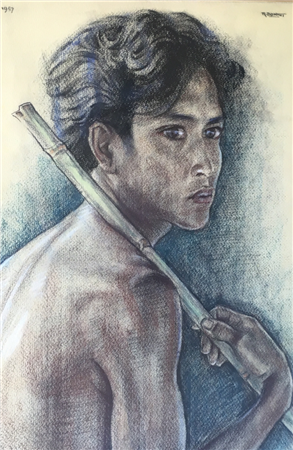 Johan Rudolf Bonnet (1895-1978) was a Dutch painter best known for his depictions of everyday life that he painted during his time living in Ubud, Bali, Indonesia. His artistic and philanthropic efforts in Bali ushered in a new artistic flourishing in Bali, and his artwork remains in the most prominent Indonesian art galleries to this day.
Bonnet was born in Amsterdam into a baking family. He began studying art in high school and continued his studies at the Rijksakademie van Beeldende Kunsten (State Academy of Fine Arts) in Amsterdam. In 1920, he moved to Anticoli Corrado, Italy to further his art studies, learning everything he could about Renaissance painters. Here, he encountered depictions of Bali after a meeting with the artist Wijnand Otto Jan Nieuwenkamp and moved there in 1928, captivated by Balinese culture. He met artist Walter Spies and the two formed a close artistic partnership and friendship, exploring the cultural nuances of Ubud. Together, they became inculcated in the artistic and social aspects of Bali, forming the Pita Maha Bali artist group in order to further the artistic talent present on the island; together, Bonnet and Spies taught art to several young Balinese artists, creating a new generation of painters in Bali.
Unfortunately for Bonnet, his idyllic life in Bali was not to last. The outbreak of war caused the political situation in Bali to change drastically. Bonnet first moved to Sulawesi in 1943 and spent the next four years in Japanese camps throughout Indonesia. Free again in 1947, he returned to Ubud, Bali where he attempted to restart the artist group he had formed with Spies; known as Pita Maha Ubud, he tried to focus more on the artists of Ubud rather than Bali as a whole, but this group was significantly less popular than his previous group.
Bonnet's art began to gain significant attention, eventually attracting the eye of the newly appointed president of unified Indonesia, Sukarno. Sukarno was so taken with Bonnet's art that he purchased "Harvest", adding it to his collection in Bogor Palace. However, instead of forming a close friendship with the president, Bonnet took little interest in the president's patronage of his art. Bonnet was eventually asked to leave Indonesia in 1957 when he refused to sell one of his paintings to Sukarno.
Returning to the Netherlands, Bonnet's love of Bali never abated, and he attempted to gather funds to build an art museum in Ubud; these funds would eventually make their way to the Museum Puri Lukisan. Despite efforts by close friend and former president of the State of East Indonesia, Cokorda Gde Raka Sukawati, Bonnet was unable to return to deliver these funds. After Sukarno was ousted in 1967, new president Suharto pardoned Bonnet and he was able to return to Bali in 1972. Although he kept his primary residence in the Netherlands, he returned to Bali several times before his death, almost every year. Despite his best efforts, his failing health prevented him from setting up the new museum or a catalog of Balinese art on which he had been working.
He died in 1978; his body was taken to Ubud in 1979 where he was cremated in a traditional ceremony along with his friend, Sukawati. Their ashes were mixed and spread at sea off the coast of Bali.
Source: Ian Martyn for Tobin Reese Fine ArtBiography from Roseberys
Rudolf Bonnet first moved to Bali in 1929 and lived much of his life in the town of Ubud, producing innumerable images of the people and lifestyle that surrounded him. Bonnet formed the Pita Maha ('Great Spirit') in 1936 with I Gusti Nyoman Lempad and Cokorde Gde Agung Sukawati, which encouraged local interest in and production of higher standards in art.
Bonnet helped establish the Museum Puri Lukisan Ubud - a museum of fine, Balinese art - in 1953 alongside the Prince of Ubud, Tjokorda Gde Agung Sukawati.