Page loaded successfully. Showing biography for Rufus Porter.
Rufus Porter BIOGRAPHY
1792 West Boxford, Massachusetts - 1884 New Haven, Connecticut. Known for: Naive wall fresco-landscape, portrait.
Born in West Boxford, Massachusetts to a farm family, itinerant painter Rufus Porter has been described by folk-art historian Jean Lipman as America's "chief early mural painter and one of our... Read full biography
Born in West Boxford, Massachusetts to a farm family, itinerant painter Rufus Porter has been described by folk-art historian Jean Lipman as America's "chief early mural painter and one of our outstanding native artists. a mobile one-man factory for original portraiture and interior decoration"... Read full biography
Born in West Boxford, Massachusetts to a farm family, itinerant painter Rufus Porter has been described by folk-art historian Jean Lipman as America's "chief early mural painter and one of our outstanding native artists. a mobile one-man factory for original portraiture and interior decoration" (149-150). His landscape murals earned him wide attention, and from 1824 to 1845, he completed more than 150 murals, a combination of freehand and stencils. Placed over mantles and entire walls, his... Read full biography
Born in West Boxford, Massachusetts to a farm family, itinerant painter Rufus Porter has been described by folk-art historian Jean Lipman as America's "chief early mural painter and one of our outstanding native artists. a mobile one-man factory for original portraiture and interior decoration" (149-150). His landscape murals earned him wide attention, and from 1824 to 1845, he completed more than 150 murals, a combination of freehand and stencils. Placed over mantles and entire walls, his murals were especially appreciated because he did natural settings of local views instead of the traditional elaborate classical or historical scenes with enhanced decoration. Because of his focus on regional scenes, he is credited as the first American... Read full biography
Born in West Boxford, Massachusetts to a farm family, itinerant painter Rufus Porter has been described by folk-art historian Jean Lipman as America's "chief early mural painter and one of our outstanding native artists. a mobile one-man factory for original portraiture and interior decoration" (149-150). His landscape murals earned him wide attention, and from 1824 to 1845, he completed more than 150 murals, a combination of freehand and stencils. Placed over mantles and entire walls, his murals were especially appreciated because he did natural settings of local views instead of the traditional elaborate classical or historical scenes with enhanced decoration. Because of his focus on regional scenes, he is credited as the first American Scene painter. In 1825, he published a book, "Curious Arts", as an instruction manual for various types of artwork, and one of the... Read full biography
Artist Biography
Biography page for Rufus Porter ((1792 - 1884)), known for Naive wall fresco-landscape, portrait. Showing 1 biographical entries and 0 sample artworks.
Rufus Porter - Artist Info
About Rufus Porter
Biography from the Archives of askART
 Born in West Boxford, Massachusetts to a farm family, itinerant painter Rufus Porter has been described by folk-art historian Jean Lipman as America's "chief early mural painter and one of our outstanding native artists. . . .a mobile one-man factory for original portraiture and interior decoration" (149-150).
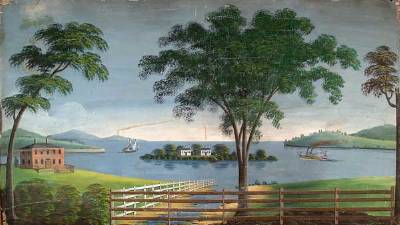
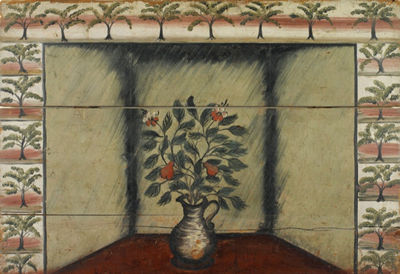
His landscape murals earned him wide attention, and from 1824 to 1845, he completed more than 150 murals, a combination of freehand and stencils. Placed over mantles and entire walls, his murals were especially appreciated because he did natural settings of local views instead of the traditional elaborate classical or historical scenes with enhanced decoration.
Because of his focus on regional scenes, he is credited as the first American Scene painter. In 1825, he published a book, "Curious Arts", as an instruction manual for various types of artwork, and one of the book's sections was 'Landscape Painting on Walls of Rooms'.
As a portraitist, he pioneered the idea of doing quick and inexpensive portraits so that common people could afford them. He made a camera obscura that enabled him to make silhouettes in less than 15 minutes. His method was to focus the silhouette of the sitter on a sheet of paper and then sketch and rapidly fill in the facial features. Priced at 20 cents apiece, the silhouettes sold quickly. He also did full face and profile miniatures and portraits on ivory.
Porter's itinerant life style began when he was nine years old and his family moved to Maine. The next year he began six months of study in the Fryeburg Academy in Maine and then for several years earned money as a hired-hand farmer and amateur fiddler. To steer him away from fiddling towards something they regarded as practical, his parents apprenticed him to his older brother, who was a shoemaker. However Porter soon tired of that and walked to Portland where he spent several years playing the violin for dances and the fife for military companies. Other jobs included house and sign painter, painter of gunboats and drummer and teacher of drumming. In 1814, he joined the Portland Light Infantry, and then he taught school and built grist mills before moving to New Haven, Connecticut where he ran a dancing school and began portrait painting. It is also reported but not verifed that he spent two years, 1817 to 1819, on a trading voyage to Hawaii.
He married Eunice Twombly in 1815, and they had ten children. In spite of these increasing responsibilities, he traveled continuously throughout New England, the mid-Atlantic states and the South, going into Virginia.
In 1849, his wife having died the previous year, he remarried and fathered six more children from this union. At this time, he added journalism to his activities and edited the "New York Mechanic," "American Mechanic," and "Scientific American."
Described as having the outstanding trait of "total independence of the more conventional ideas and fashions of his day" (152), he also was also notable as an inventor. He created devlices that improved locomotion and even drew plans for automobiles, elevated trains, and flying ships, the largest model being 20-feet long. In 1849, timed for the California Gold Rush, he published a book titled "Aerial Navigation, the Practicability of Traveling Pleasantly and Safely from New York to California in Three Days." Although he never flew, he was the "first man in the world to plan and try out the possibilities of a power-driven passenger plane". (152)
Rufus Porter, one of the more diverse and fiercely independent personalities in the world of American art, died at age 92 in New Haven, Connecticut. Apparently, even at that advanced age, he was still itinerant as shortly before his death at the home of a son, he was in Bristol, Connecticut.
Source:
Essay by Jean Lipman in "American Folk Painters of Three Centuries", Edited by Jean Lipman and Tom Armstrong.