Page loaded successfully. Showing biography for Samir Rafi.
Samir Rafi BIOGRAPHY
1926 Cairo, Egypt - 2004. Known for: Figurative, cubism, abstract painting, decorative arts, surrealism.
Samir Rafi, a prominent Egyptian modernist, was widely known for combining international trends with traces of Pharaonic art in compositions that poignantly depicted modern day Egypt. After obtaining... Read full biography
Samir Rafi, a prominent Egyptian modernist, was widely known for combining international trends with traces of Pharaonic art in compositions that poignantly depicted modern day Egypt. After obtaining a bachelor's degree from the School of Fine Arts in Cairo, where he focused on the decorative arts,... Read full biography
Samir Rafi, a prominent Egyptian modernist, was widely known for combining international trends with traces of Pharaonic art in compositions that poignantly depicted modern day Egypt. After obtaining a bachelor's degree from the School of Fine Arts in Cairo, where he focused on the decorative arts, he went on to complete a PhD in art history from the Sorbonne in Paris in 1953. Returning to Egypt a midst the fervor of pan-Arab nationalism, he exhibited extensively in Cairo and worked alongside a... Read full biography
Samir Rafi, a prominent Egyptian modernist, was widely known for combining international trends with traces of Pharaonic art in compositions that poignantly depicted modern day Egypt. After obtaining a bachelor's degree from the School of Fine Arts in Cairo, where he focused on the decorative arts, he went on to complete a PhD in art history from the Sorbonne in Paris in 1953. Returning to Egypt a midst the fervor of pan-Arab nationalism, he exhibited extensively in Cairo and worked alongside a number of artists who were seeking to express a national identity through the symbolic, and whose aesthetic had fully divorced itself from the legacy of colonialism. After teaching decorative arts at the School of Fine Arts in Cairo, he later moved... Read full biography
Samir Rafi, a prominent Egyptian modernist, was widely known for combining international trends with traces of Pharaonic art in compositions that poignantly depicted modern day Egypt. After obtaining a bachelor's degree from the School of Fine Arts in Cairo, where he focused on the decorative arts, he went on to complete a PhD in art history from the Sorbonne in Paris in 1953. Returning to Egypt a midst the fervor of pan-Arab nationalism, he exhibited extensively in Cairo and worked alongside a number of artists who were seeking to express a national identity through the symbolic, and whose aesthetic had fully divorced itself from the legacy of colonialism. After teaching decorative arts at the School of Fine Arts in Cairo, he later moved to Algeria, where he taught art history. Rafi was among a number of influential pioneers who chose to focus on images and... Read full biography
Artist Biography
Biography page for Samir Rafi ((1926 - 2004)), known for Figurative, cubism, abstract painting, decorative arts, surrealism. Showing 2 biographical entries and 0 sample artworks.
Samir Rafi - Artist Info
About Samir Rafi
Name variants
Samir Rafie
Biography from Olympia Auctions (form. 25 Blythe Road Ltd.)
Samir Rafi, an Egyptian artist, was a member of the Contemporary Art Group and known for his unique aesthetic style and technique. Praised by art critic Aimé Azar for his originality, Rafi fully developed his artistic vision after experimenting with Egyptian Surrealism in the late 1940s. He incorporated elements of Egyptian vernacular culture into his artwork, showcasing a bright and expressive style.Biography from Ayyam Gallery
Samir Rafi, a prominent Egyptian modernist, was widely known for combining international trends with traces of Pharaonic art in compositions that poignantly depicted modern day Egypt. After obtaining a bachelor's degree from the School of Fine Arts in Cairo, where he focused on the decorative arts, he went on to complete a PhD in art history from the Sorbonne in Paris in 1953.
Returning to Egypt a midst the fervor of pan-Arab nationalism, he exhibited extensively in Cairo and worked alongside a number of artists who were seeking to express a national identity through the symbolic, and whose aesthetic had fully divorced itself from the legacy of colonialism.
After teaching decorative arts at the School of Fine Arts in Cairo, he later moved to Algeria, where he taught art history. Rafi was among a number of influential pioneers who chose to focus on images and scenes of everyday life rather than the romanticized or embellished portraits of the upper echelons of Egyptian society that had dominated local art prior to Gamal Abdel Nasser's revolution.
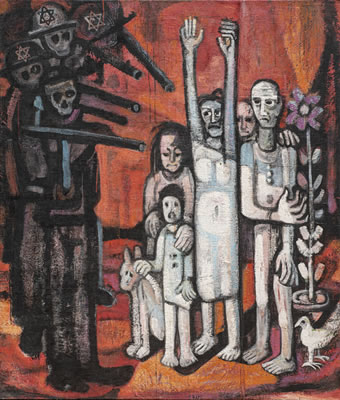
When placed within this important historical context, in which Egypt was experiencing radical cultural transformations with artists and intellectuals often at the helm, his seemingly modest compositions, are in fact quite earth shattering. The manner in which he depicted his subjects is also striking, as they exude a certain foreboding and their melancholy dispositions seem to point to a cautious (almost apprehensive) outlook towards Egypt's future.