Page loaded successfully. Showing biography for Samuel Rothbort.
Samuel Rothbort BIOGRAPHY
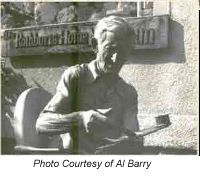
1882 Volkavisk, Russia - 1971 Brooklyn, New York. Known for: Flower still life and cityscape painting, wood sculpture, folk art.
SAMUEL ROTHBORT (1882-1971). Samuel Rothbort became known for his work in oil, watercolor, and sculpture in wood and stone. His accomplished pen and ink drawings are yet to be exhibited. He named his... Read full biography
SAMUEL ROTHBORT (1882-1971). Samuel Rothbort became known for his work in oil, watercolor, and sculpture in wood and stone. His accomplished pen and ink drawings are yet to be exhibited. He named his impressionistic style “Direct Art” and which he “equated with truth”. This separated him from the... Read full biography
SAMUEL ROTHBORT (1882-1971). Samuel Rothbort became known for his work in oil, watercolor, and sculpture in wood and stone. His accomplished pen and ink drawings are yet to be exhibited. He named his impressionistic style “Direct Art” and which he “equated with truth”. This separated him from the French Impressionists since he always completed a work on site; never in his or any other studio. Samuel Rothbort was born in November 1882 in Valkovisk (Polesia), White Russia. His father was a... Read full biography
SAMUEL ROTHBORT (1882-1971). Samuel Rothbort became known for his work in oil, watercolor, and sculpture in wood and stone. His accomplished pen and ink drawings are yet to be exhibited. He named his impressionistic style “Direct Art” and which he “equated with truth”. This separated him from the French Impressionists since he always completed a work on site; never in his or any other studio. Samuel Rothbort was born in November 1882 in Valkovisk (Polesia), White Russia. His father was a scholar and his mother was the breadwinner, operating a flour and grain stand. As a seven year old child he was molding and sculpting with his mother’s dough when she baked. During his youth, Samuel worked as a Cantor and traveled to various towns and... Read full biography
SAMUEL ROTHBORT (1882-1971). Samuel Rothbort became known for his work in oil, watercolor, and sculpture in wood and stone. His accomplished pen and ink drawings are yet to be exhibited. He named his impressionistic style “Direct Art” and which he “equated with truth”. This separated him from the French Impressionists since he always completed a work on site; never in his or any other studio. Samuel Rothbort was born in November 1882 in Valkovisk (Polesia), White Russia. His father was a scholar and his mother was the breadwinner, operating a flour and grain stand. As a seven year old child he was molding and sculpting with his mother’s dough when she baked. During his youth, Samuel worked as a Cantor and traveled to various towns and villages acquiring many impressions of daily Jewish life. Poverty as well as political unrest,... Read full biography
Artist Biography
Biography page for Samuel Rothbort ((1882 - 1971)), known for Flower still life and cityscape painting, wood sculpture, folk art. Showing 2 biographical entries and 0 sample artworks.
Samuel Rothbort - Artist Info
About Samuel Rothbort
Biography from the Archives of askART
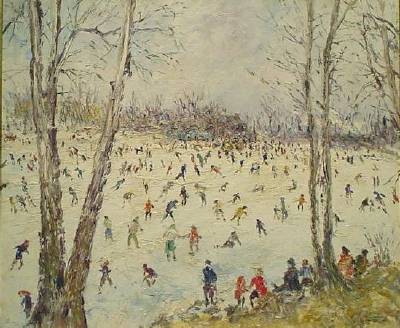 There was an exhibition of Samuel Rothbort’s Jewish watercolors at the Boca Raton Museum of Art In Florida. These paintings were memories of the artists childhood in Volkovisk, Russia in the late 1800’s. The exhibition took place from September, 2015 to January 2016.
Source: Janice CabanBiography from the Archives of askART
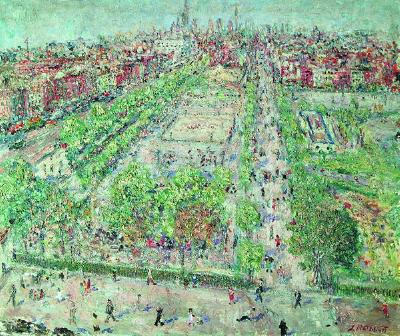 SAMUEL ROTHBORT (1882-1971)
Samuel Rothbort became known for his work in oil, watercolor, and sculpture in wood and stone. His accomplished pen and ink drawings are yet to be exhibited. He named his impressionistic style “Direct Art” and which he “equated with truth”. This separated him from the French Impressionists since he always completed a work on site; never in his or any other studio.
Samuel Rothbort was born in November 1882 in Valkovisk (Polesia), White Russia. His father was a scholar and his mother was the breadwinner, operating a flour and grain stand. As a seven year old child he was molding and sculpting with his mother’s dough when she baked. During his youth, Samuel worked as a Cantor and traveled to various towns and villages acquiring many impressions of daily Jewish life. Poverty as well as political unrest, despite never personally seeing a pogrom, led him to becoming a Bundist for a short time (the Jewish Socialist Movement). The political unrest led to his immigration to the United States in 1904.
After arriving in the United States he became a watchman of new houses being constructed in Brooklyn, New York and began to draw them as well as the surrounding scenery. He also had a bout of homesickness and created several memory paintings of his childhood. He left this behind when his employer encouraged him and he learned to create the rococo designs in the new houses and, eventually, began to paint murals.
In 1909 he married Rose Kravitz. It also marked the beginning of his career as a serious artist. He stated that on the day before his wedding, a still life he had painted put him on the path he was to follow for the rest of his life. By 1919 art critic Hamilton Easter Field reviewed and raved about his work. As time and success evolved, Rothbort began to believe Field was in love with his wife and went into a partnership raising chickens the Catskill area of New York. He continued to travel and work in the city while his work worked the farm. The farm failed financially and the Rothborts returned to Rosedale, Queens, New York.
In 1917 he had his first exhibition with the Society of Independent Artists in New York City. After this exhibit, the noted art critic Hamilton Easter Field served as his artistic patron until Field’s tragic death in 1919. By the time the 1929 Depression occurred there was no money for oil paint, so he returned to watercolor, driftwood and stone. These works conveyed a sharp sense of humor as well as a humble and rich appreciation for the natural world. Most of his sculptures were made from raw materials washed ashore the beaches of Coney Island. In the 1930’s he began to exhibit the driftwood sculptures becoming the first artist to exhibit in this medium and was labled “the fencepost artist.”
After 1938 Kristallnacht, in addition to continuing his “Direct Art”, he also began to record the daily life of the Eastern European Jew. He stated if it isn’t recorded, it didn’t exist. By the 1940’s, the Rothborts comprised of a family of 6 purchased a home in Flatbush Brooklyn. It was at that time that Samuel Rothbort became a permanent exhibitor and client of the Charles Barzansky Galleries until their closing in 1960.
In 1960, dealer Harriet Barry saw one of his watercolors that depicted an event in the daily life of the Eastern European Jew. When asking what it was since it looked so
different from his “Direct Art”, he explained the event that had taken place.
She discovered that he had produced a collection of almost 600 11x14 watercolors of the daily life of the Eastern European Jew. 215 11x14 watercolors were filmed to produce the prizewinning Edinburgh Film Festival documentary MEMORIES of the SHTETL and was completed in 1961. It also became the only visual color record allowing Jerome Robbins to produce sets and costumes for FIDDLER on the ROOF.
In 1955 Rothbort was also represented by Harriet Semegram-Barry under the contractual name of Albert Barry & Associates until 1974 3 years after his death in December 1971. Samuel Rothbort is also known for his historic recording of the ever changing face of New York through his impressionist Direct Art paintings. His work is “stunning”, “strong”, “poetic”, “nostalgic” as well as some he painted with humor. It was stated “the layman dreams of lords and ladies, but, Samuel Rothbort paints the rich reality of the common man.”
Source/Submitted by: Harriet Semegran Barry