Page loaded successfully. Showing biography for Simon Faibisovich.
Simon Faibisovich BIOGRAPHY
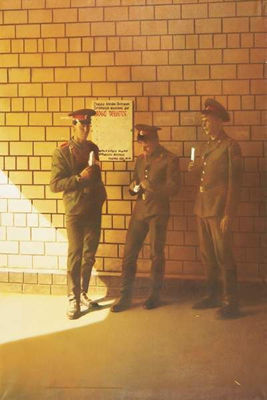
Born 1949. Known for: Painting.
Semyon Faibisovich is known as a Russian painter, prose-writer and journalist . A sharp, ironic style is used to depict the paradoxes of Russia's newly-born democracy and the metamorphoses going on... Read full biography
Semyon Faibisovich is known as a Russian painter, prose-writer and journalist . A sharp, ironic style is used to depict the paradoxes of Russia's newly-born democracy and the metamorphoses going on in the political, social and everyday urban life. In the 80s, Faibisovich was one of Russia's... Read full biography
Semyon Faibisovich is known as a Russian painter, prose-writer and journalist . A sharp, ironic style is used to depict the paradoxes of Russia's newly-born democracy and the metamorphoses going on in the political, social and everyday urban life. In the 80s, Faibisovich was one of Russia's "unofficial painters," meaning that his work was not accepted by the Soviet government as officially sanctioned art. After Gorbachev's reforms, it was possible for Russian nonconformist art to enter the... Read full biography
Semyon Faibisovich is known as a Russian painter, prose-writer and journalist . A sharp, ironic style is used to depict the paradoxes of Russia's newly-born democracy and the metamorphoses going on in the political, social and everyday urban life. In the 80s, Faibisovich was one of Russia's "unofficial painters," meaning that his work was not accepted by the Soviet government as officially sanctioned art. After Gorbachev's reforms, it was possible for Russian nonconformist art to enter the international art arena, which is when this painting was purchased for the Castellani collections. However, Faibisovich, like many other Russian artists, had deep ambivalence about this final "acceptance" of his work into the commercial arena. As this... Read full biography
Semyon Faibisovich is known as a Russian painter, prose-writer and journalist . A sharp, ironic style is used to depict the paradoxes of Russia's newly-born democracy and the metamorphoses going on in the political, social and everyday urban life. In the 80s, Faibisovich was one of Russia's "unofficial painters," meaning that his work was not accepted by the Soviet government as officially sanctioned art. After Gorbachev's reforms, it was possible for Russian nonconformist art to enter the international art arena, which is when this painting was purchased for the Castellani collections. However, Faibisovich, like many other Russian artists, had deep ambivalence about this final "acceptance" of his work into the commercial arena. As this painting shows, Faibisovich is known for his grim portrayals of average Soviet citizens. Recently, the artist has turned to using actual photography... Read full biography
Artist Biography
Biography page for Simon Faibisovich ((Born 1949)), known for Painting. Showing 1 biographical entries and 0 sample artworks.
Simon Faibisovich - Artist Info
About Simon Faibisovich
Name variants
Semyon Faibisovich
Biography from RoGallery
Semyon Faibisovich is known as a Russian painter, prose-writer and journalist . A sharp, ironic style is used to depict the paradoxes of Russia's newly-born democracy and the metamorphoses going on in the political, social and everyday urban life. In the 80s, Faibisovich was one of Russia's "unofficial painters," meaning that his work was not accepted by the Soviet government as officially sanctioned art. After Gorbachev's reforms, it was possible for Russian nonconformist art to enter the international art arena, which is when this painting was purchased for the Castellani collections. However, Faibisovich, like many other Russian artists, had deep ambivalence about this final "acceptance" of his work into the commercial arena. As this painting shows, Faibisovich is known for his grim portrayals of average Soviet citizens. Recently, the artist has turned to using actual photography instead of a photorealist painting style.
CRITICAL EXCERPTS
Curatorial assistance, Exhibition statement, Forbidden Art: The Postwar Russian Avant-garde [Faibisovich was included in this exhibition], 9/00
"'Nonconformist,' 'Dissident,' and 'Unofficial' art are terms that encompass a large slice of contemporary Russian [art History. ...It includes not only artists who were in direct confrontation with the state but also individual artists who simply worked on their own outside the official artistic system. The work that falls underneath this title can be found to be as diverse and complex as the Russian political arena, the binary opposite it reflects and rejects."
Alisa Barstow, Lifestyle [Moscow periodical], 12/01
"The scenes that make up the field of his vision are reassembled and reinterpreted into pictures depicting people outside stations, in buses and metros, on the streets and the beaches. Although they were formed in a period that is passing, their relevance is timeless, for while Faibisovich's art is concerned to a significant degree with the actual, there is often a precisely indicated invitation to consider that what is apparently real, is almost certainly illusory. Or vice versa. He is not beyond playing a game with mirror images, using window reflections to remove his subjects from their previously perceived environment into one that occupies several spaces at one and the same time. "