Page loaded successfully. Showing biography for Simon Segal.
Simon Segal BIOGRAPHY
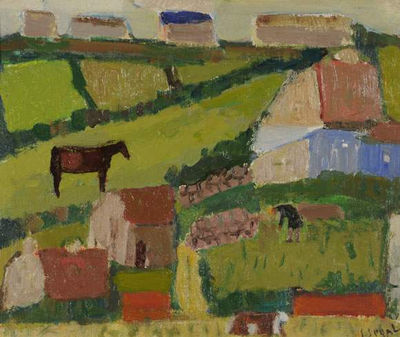
1898 - 1969. Known for: Painting.
Simon Segal was born in 1898 and passed away in 1969. Simon Segal was a Polish painter of Jewish origin. Segal was a École de Paris member in France and worked in the style of figurativeism. Segal... Read full biography
Simon Segal was born in 1898 and passed away in 1969. Simon Segal was a Polish painter of Jewish origin. Segal was a École de Paris member in France and worked in the style of figurativeism. Segal was born into a wealthy Jewish family in Bialystok. Little is known about his period of life in... Read full biography
Simon Segal was born in 1898 and passed away in 1969. Simon Segal was a Polish painter of Jewish origin. Segal was a École de Paris member in France and worked in the style of figurativeism. Segal was born into a wealthy Jewish family in Bialystok. Little is known about his period of life in Bialystok.[1] His father owned commercial warehouses. Segal's cousin, Molli Chwat (1888–1979), was also a painter. In 1915, together with his family, Segal moved to Tver, where he studied at a Russian... Read full biography
Simon Segal was born in 1898 and passed away in 1969. Simon Segal was a Polish painter of Jewish origin. Segal was a École de Paris member in France and worked in the style of figurativeism. Segal was born into a wealthy Jewish family in Bialystok. Little is known about his period of life in Bialystok.[1] His father owned commercial warehouses. Segal's cousin, Molli Chwat (1888–1979), was also a painter. In 1915, together with his family, Segal moved to Tver, where he studied at a Russian polytechnic school. After the end of the First World War, Segal and his family returned to his native Bialystok, but in 1918 he left for Berlin, where he painted his first portrait. He became involved with a group of artists, mainly from Russia and... Read full biography
Simon Segal was born in 1898 and passed away in 1969. Simon Segal was a Polish painter of Jewish origin. Segal was a École de Paris member in France and worked in the style of figurativeism. Segal was born into a wealthy Jewish family in Bialystok. Little is known about his period of life in Bialystok.[1] His father owned commercial warehouses. Segal's cousin, Molli Chwat (1888–1979), was also a painter. In 1915, together with his family, Segal moved to Tver, where he studied at a Russian polytechnic school. After the end of the First World War, Segal and his family returned to his native Bialystok, but in 1918 he left for Berlin, where he painted his first portrait. He became involved with a group of artists, mainly from Russia and centered around Vladimir Mayakovsky and Sergei Yesenin. He began illustrating Spolochi, an avant-garde Berlin periodical of Russian emigr... Read full biography
Artist Biography
Biography page for Simon Segal ((1898 - 1969)), known for Painting. Showing 1 biographical entries and 0 sample artworks.
Simon Segal - Artist Info
About Simon Segal
Biography from the Archives of askART
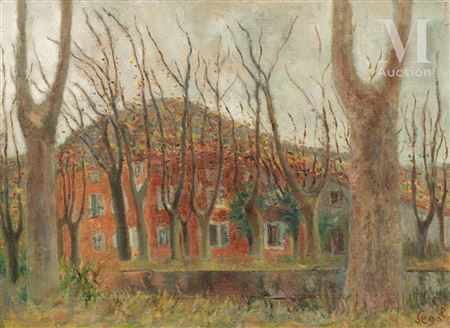 Simon Segal was born in 1898 and passed away in 1969. Simon Segal was a Polish painter of Jewish origin. Segal was a École de Paris member in France and worked in the style of figurativeism.
Segal was born into a wealthy Jewish family in Bialystok. Little is known about his period of life in Bialystok.[1] His father owned commercial warehouses. Segal's cousin, Molli Chwat (1888–1979), was also a painter. In 1915, together with his family, Segal moved to Tver, where he studied at a Russian polytechnic school.
After the end of the First World War, Segal and his family returned to his native Bialystok, but in 1918 he left for Berlin, where he painted his first portrait. He became involved with a group of artists, mainly from Russia and centered around Vladimir Mayakovsky and Sergei Yesenin. He began illustrating Spolochi, an avant-garde Berlin periodical of Russian emigration.
In 1924 Segal went to Vienna to his mother's sister, then joined the wandering corpse of circus workers. In 1925 Segal moved to Paris, where he initially led the carefree life of the bohemian, he was a regular visitor to the cafes: Dôme, Rotonde and La Coupole.
In 1926, Segal left for Toulon, where he meets Bruno Bassano, a political refugee and opponent of Mussolini, a marshand who was his friend for the rest of his life].[2]
After the family stopped funding him, Segal was forced to work as a librarian, a worker at Citroën's car factory and stylist with fashion designer Paul ?[in other languages]Poiret.
In 1929, the first exhibition of Segal’s works took place in the Tulon gallery. In 1933 he returned to Paris, where in 1935 he exhibited about 30 gwaszówgouashes Visions of War in the Billet-Worms gallery (the work was purchased by American collector Frank ?[in other languages]Altschul).
He spent World War II in Crouste near Aubusson, where he worked as an agricultural worker and an upholstery worker. He married. After the war, he returned briefly to Paris to settle in Jobourg near Cap de la Hague. In 1949 he was granted French citizenship. In 1953, after his wife left, he returned to Paris. In the following years, he participates in numerous exhibitions in this city. After 1960, he moved to a small studio on Montmartre. He traveled to the Netherlands, Italy and Spain. He died on the night of August 2 to 3, 1969. He was buried in Arcachon. After the publication of information about Segal's death in the local press, a rabbi from Bialystok, who was on vacation in France, appeared at the funeral and said a prayer for his compatriot.
Exhibitions in life:
1929 – Toulon – Trentin Gallery
1935 – Paris – Billiet-Worms Gallery
1950 – Paris – Drouant-David Gallery
1951 – Toulon
1953–1955 – Paris – Bruno Bassano Gallery
1956 – Albi – Musée Toulouse-Lautrec (retrospective)
1957 – Paris – Bruno Bassano Gallery
1959 – Paris – Musée Bourdelle ?[in other languages]?
1960 – São Paulo – Museum of Modern Arts
1961 – London – Grosvenor Gallery
1963 – Milan – Stendhal Gallery
1964 – Paris – Bruno Bassano Gallery
1968 – Paris – Drouant Gallery
Post-mortem exhibitions:
1971 – Brest – Palais des Arts et de la Culture (retrospective)
1972 – Valréas – Château de Simiane (retrospective)
1982 – Paris – Salon de la Rose-Croix (retrospective)
1989 – Paris – Musée du Luxembourg ?[in other languages](retrospective, 160 works)
1990 – Paris – Salon du Dessin & de la Peinture à l'eau (30 works)
1997 – Arcachon (retrospective, 50 works)
1999 – Cherbourg – Musée Thomas Henry (70 works)
2010 – Bialystok – Podlaskie Museum in Bialystok (retrospective The Mysterious Child of Bialystok, 90 works, the only exhibition of Segal’s works in Poland so far)
Museum:
In the town of Aups in the south of France, in the 12th century Cistercian monastery, there is the Simon Segal Museum presenting many of his works and paintings by other painters from the École de Paris.
Footnotes:
Town hall, contemporary appearance – Podlaskie Museum in Bialystok [online], museum.bialystok.pl [accessed 2017-11-26].pol.
"Nieszawer & Princ Bureau d’expertise [online], ecoledeparis.org [accessed 2017-11-26] [archived from address 2010-11-25](ang.).
Source: Wikipedia, December 2025
Submitted by: Dr Joanna Tomalska