Page loaded successfully. Showing biography for Stass Paraskos.
Stass Paraskos BIOGRAPHY
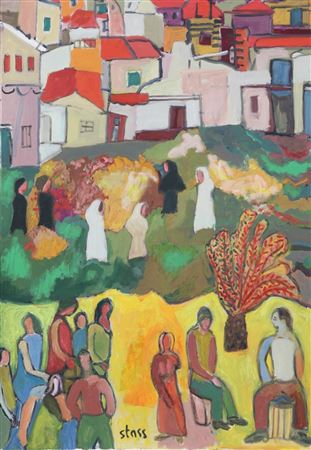
Born 1933 Anaphotia, Cyprus. Known for: Naive-sophisticated genre and figure painting, teaching.
Stass Paraskos was born in Anaphotia, on the Mediterranean island of Cyprus in 1933, the son of a shepherd farmer. He went to England in 1953 and became a cook in his brother's restaurant in the city... Read full biography
Stass Paraskos was born in Anaphotia, on the Mediterranean island of Cyprus in 1933, the son of a shepherd farmer. He went to England in 1953 and became a cook in his brother's restaurant in the city of Leeds. This was a popular haunt of the local art students who encouraged Paraskos to enroll for... Read full biography
Stass Paraskos was born in Anaphotia, on the Mediterranean island of Cyprus in 1933, the son of a shepherd farmer. He went to England in 1953 and became a cook in his brother's restaurant in the city of Leeds. This was a popular haunt of the local art students who encouraged Paraskos to enroll for classes at Leeds College of Art. Despite not having the usual entry qualifications, Paraskos was spotted by the college's inspirational Head of Fine Art, Harry Thubron, who made certain Paraskos was... Read full biography
Stass Paraskos was born in Anaphotia, on the Mediterranean island of Cyprus in 1933, the son of a shepherd farmer. He went to England in 1953 and became a cook in his brother's restaurant in the city of Leeds. This was a popular haunt of the local art students who encouraged Paraskos to enroll for classes at Leeds College of Art. Despite not having the usual entry qualifications, Paraskos was spotted by the college's inspirational Head of Fine Art, Harry Thubron, who made certain Paraskos was accepted. In 1966 Paraskos was involved in a notorious court case in which it was alleged he displayed paintings that were 'lewd and obscene', in contravention of the Vagrancy Act of 1823. The court case was one of a number of important legal... Read full biography
Stass Paraskos was born in Anaphotia, on the Mediterranean island of Cyprus in 1933, the son of a shepherd farmer. He went to England in 1953 and became a cook in his brother's restaurant in the city of Leeds. This was a popular haunt of the local art students who encouraged Paraskos to enroll for classes at Leeds College of Art. Despite not having the usual entry qualifications, Paraskos was spotted by the college's inspirational Head of Fine Art, Harry Thubron, who made certain Paraskos was accepted. In 1966 Paraskos was involved in a notorious court case in which it was alleged he displayed paintings that were 'lewd and obscene', in contravention of the Vagrancy Act of 1823. The court case was one of a number of important legal challenges to the freedom of the arts in the 1960s and 70s, starting with the Lady Chatterley trial in 1960, and ending with the... Read full biography
Artist Biography
Biography page for Stass Paraskos ((Born 1933)), known for Naive-sophisticated genre and figure painting, teaching. Showing 1 biographical entries and 0 sample artworks.
Stass Paraskos - Artist Info
About Stass Paraskos
Biography from Psatharis Auctions
Stass Paraskos was born in Anaphotia, on the Mediterranean island of Cyprus in 1933, the son of a shepherd farmer. He went to England in 1953 and became a cook in his brother's restaurant in the city of Leeds. This was a popular haunt of the local art students who encouraged Paraskos to enroll for classes at Leeds College of Art. Despite not having the usual entry qualifications, Paraskos was spotted by the college's inspirational Head of Fine Art, Harry Thubron, who made certain Paraskos was accepted.
In 1966 Paraskos was involved in a notorious court case in which it was alleged he displayed paintings that were 'lewd and obscene', in contravention of the Vagrancy Act of 1823. The court case was one of a number of important legal challenges to the freedom of the arts in the 1960s and 70s, starting with the Lady Chatterley trial in 1960, and ending with the OZ magazine trial in 1971. Despite luminaries of the art world speaking in Paraskos' defense, including Sir Herbert Read and Norbert Lynton, and messages of support from Britain's Home Secretary Roy Jenkins, Paraskos lost the trial and was fined five pounds.
After this Paraskos started teaching at Leeds College of Art, and later at Leicester polytechnic, before becoming a Lecturer in Fine Art at Canterbury College of Art. When Canterbury College of Art became Kent Institute of Art & Design, he was appointed a Senior Lecturer in Fine Art and then Head of Painting, before returning to Cyprus to run the Cyprus College of Art on a full-time basis.
Paraskos has exhibited widely, including in Cyprus, Britain, Greece, the United States, Brazil, India, Denmark and elsewhere, and in 2003 was the subject of a book by the distinguished art historian Norbert Lynton, published by the Orange Press.