Page loaded successfully. Showing biography for Ted (Thierry Benoit) Benoit.
Ted (Thierry Benoit) Benoit BIOGRAPHY
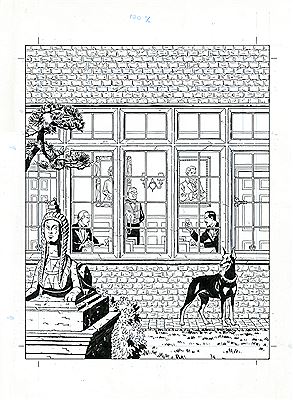
Born 1947 France. Known for: Comic illustration.
During the eighties, Ted Benoît was a prominent representative of the École Pigalle scene. With the other artists of this movement, like François Avril, Petit-Roulet and Dupuy-Berbérian, he shared a... Read full biography
During the eighties, Ted Benoît was a prominent representative of the École Pigalle scene. With the other artists of this movement, like François Avril, Petit-Roulet and Dupuy-Berbérian, he shared a taste for the classic clear line style - a style employed in his anti-hero playboy comics set in the... Read full biography
During the eighties, Ted Benoît was a prominent representative of the École Pigalle scene. With the other artists of this movement, like François Avril, Petit-Roulet and Dupuy-Berbérian, he shared a taste for the classic clear line style - a style employed in his anti-hero playboy comics set in the fifties. Benoît followed courses in cinematographic techniques and went to work for television afterwards. In 1971, he joined the editorial team of Actuel, an alternative magazine in which he also... Read full biography
During the eighties, Ted Benoît was a prominent representative of the École Pigalle scene. With the other artists of this movement, like François Avril, Petit-Roulet and Dupuy-Berbérian, he shared a taste for the classic clear line style - a style employed in his anti-hero playboy comics set in the fifties. Benoît followed courses in cinematographic techniques and went to work for television afterwards. In 1971, he joined the editorial team of Actuel, an alternative magazine in which he also published his first comics works. Upon meeting Nikita Mandryka in 1975, Benoît began a collaboration with the magazine L'Écho des Savanes. He made his album debut in 1979 with 'Hôpital', published by Les Humanoïdes Associés'. In the 1980s he exchanged... Read full biography
During the eighties, Ted Benoît was a prominent representative of the École Pigalle scene. With the other artists of this movement, like François Avril, Petit-Roulet and Dupuy-Berbérian, he shared a taste for the classic clear line style - a style employed in his anti-hero playboy comics set in the fifties. Benoît followed courses in cinematographic techniques and went to work for television afterwards. In 1971, he joined the editorial team of Actuel, an alternative magazine in which he also published his first comics works. Upon meeting Nikita Mandryka in 1975, Benoît began a collaboration with the magazine L'Écho des Savanes. He made his album debut in 1979 with 'Hôpital', published by Les Humanoïdes Associés'. In the 1980s he exchanged his underground style for a Clear Line one, starting with the album 'Vers la Ligne Claire', collection of stories published in Libwww.lambiek.net... Read full biography
Artist Biography
Biography page for Ted (Thierry Benoit) Benoit ((Born 1947)), known for Comic illustration. Showing 1 biographical entries and 0 sample artworks.
Ted (Thierry Benoit) Benoit - Artist Info
About Ted (Thierry Benoit) Benoit
Biography from the Archives of askART
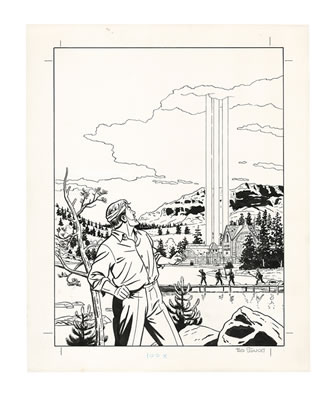 During the eighties, Ted Benoît was a prominent representative of the École Pigalle scene. With the other artists of this movement, like François Avril, Petit-Roulet and Dupuy-Berbérian, he shared a taste for the classic clear line style - a style employed in his anti-hero playboy comics set in the fifties. Benoît followed courses in cinematographic techniques and went to work for television afterwards. In 1971, he joined the editorial team of Actuel, an alternative magazine in which he also published his first comics works. Upon meeting Nikita Mandryka in 1975, Benoît began a collaboration with the magazine L'Écho des Savanes. He made his album debut in 1979 with 'Hôpital', published by Les Humanoïdes Associés'.
In the 1980s he exchanged his underground style for a Clear Line one, starting with the album 'Vers la Ligne Claire', collection of stories published in Libération and Métal Hurlant. The album featured the character 'Ray Banana' for the first time, and was an ode to Clear Line artists like Hergé and Joost Swarte. He also cooperated with À Suivre during this period, and these stories were collected in 'Histoires Vraies'. Also for À Suivre, he created 'Berceuse Électrique' and further episodes with 'Ray Banana'. In 1987, he conceived 'Bingo Bingo et son Combo Congolais' for Métal Hurlant and Métal Aventures.
In addition, Benoît wrote 'L'Homme de Nulle Part' for the artist Pierre Nedjar, which featured the memoires of Ray Banana's wife, Thelma Ritter. Benoît's character was also featured in 'L'Homme qui ne Transpirait Pas', a novel by Philippe Paringaux in 1994. Benoît's mastership of the Clear Line style made him one of the artists that revived Edgar P. Jacob's 'Blake & Mortimer' series from 1993.