Page loaded successfully. Showing biography for Tyeb Mehta.
Tyeb Mehta BIOGRAPHY
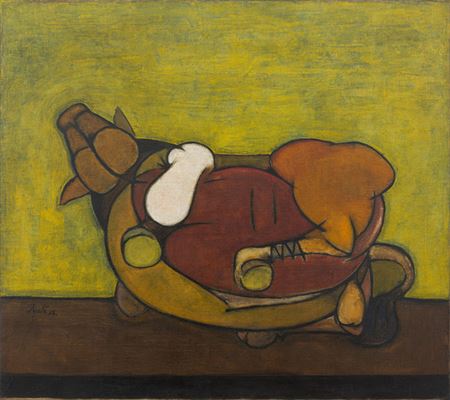
1925 Kapadvanj, Gujarat - 2009. Known for: Painting and sculpture, Indian culture and themes.
Born in Gujarat, Mehta spent his early years working as a film editor in a cinema laboratory. His love for painting and an introduction to the workings of the Bombay Progressive Artists Group... Read full biography
Born in Gujarat, Mehta spent his early years working as a film editor in a cinema laboratory. His love for painting and an introduction to the workings of the Bombay Progressive Artists Group redirected his path to the Sir J.J. School of Art where he graduated in 1952. From 1959 to 1964 he lived in... Read full biography
Born in Gujarat, Mehta spent his early years working as a film editor in a cinema laboratory. His love for painting and an introduction to the workings of the Bombay Progressive Artists Group redirected his path to the Sir J.J. School of Art where he graduated in 1952. From 1959 to 1964 he lived in London, and was awarded a Rockefeller Fellowship; it brought him to the United States in 1968, where his work went through several stylistic changes. He is regarded as one of India's greatest... Read full biography
Born in Gujarat, Mehta spent his early years working as a film editor in a cinema laboratory. His love for painting and an introduction to the workings of the Bombay Progressive Artists Group redirected his path to the Sir J.J. School of Art where he graduated in 1952. From 1959 to 1964 he lived in London, and was awarded a Rockefeller Fellowship; it brought him to the United States in 1968, where his work went through several stylistic changes. He is regarded as one of India's greatest artists, and his work has appeared in solo and group exhibitions around the world. He was first among Indian artists to sell work at auction for over $1 million. In his lifetime he was awarded the Prix Nationale in Cagne-sur-Mer, in 1974, and received the... Read full biography
Born in Gujarat, Mehta spent his early years working as a film editor in a cinema laboratory. His love for painting and an introduction to the workings of the Bombay Progressive Artists Group redirected his path to the Sir J.J. School of Art where he graduated in 1952. From 1959 to 1964 he lived in London, and was awarded a Rockefeller Fellowship; it brought him to the United States in 1968, where his work went through several stylistic changes. He is regarded as one of India's greatest artists, and his work has appeared in solo and group exhibitions around the world. He was first among Indian artists to sell work at auction for over $1 million. In his lifetime he was awarded the Prix Nationale in Cagne-sur-Mer, in 1974, and received the Kalidas Samman from the Madhya Pradesh State Government in 1988.He was also awarded Gold Medal by the President of India on the occasion of Lalit... Read full biography
Artist Biography
Biography page for Tyeb Mehta ((1925 - 2009)), known for Painting and sculpture, Indian culture and themes. Showing 3 biographical entries and 0 sample artworks.
Tyeb Mehta - Artist Info
About Tyeb Mehta
Biography from the Archives of askART
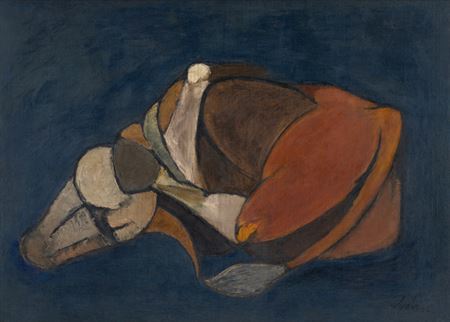 Born in Gujarat, Mehta spent his early years working as a film editor in a cinema laboratory. His love for painting and an introduction to the workings of the Bombay Progressive Artists Group redirected his path to the Sir J.J. School of Art where he graduated in 1952. From 1959 to 1964 he lived in London, and was awarded a Rockefeller Fellowship; it brought him to the United States in 1968, where his work went through several stylistic changes. He is regarded as one of India's greatest artists, and his work has appeared in solo and group exhibitions around the world. He was first among Indian artists to sell work at auction for over $1 million. In his lifetime he was awarded the Prix Nationale in Cagne-sur-Mer, in 1974, and received the Kalidas Samman from the Madhya Pradesh State Government in 1988.He was also awarded Gold Medal by the President of India on the occasion of Lalit Kala Akademie golden Jubilee Celebration in 2004. He passed in 2009.
Biography from Saffronart
Born in Kapadvanj, a town in Gujarat in 1925, Tyeb Mehta believed, "In art you have to go on for a long time before you can say 'I have done something.'" Initially a film editor, his interest in painting led him to the Sir J.J. School of Art in Mumbai from where he graduated in 1952. Between 1959 and 1964 Mehta lived and worked in London. He also visited the US on a Rockefeller Fund Scholarship in 1968. Like most other artists of the Progressive Artists Movement in India, Mehta could trace his influence to the European masters. His inspiration came from the macabre distortion used by artist Francis Bacon, which can be seen even in the handling of the face and the body of his most recent works, before his death in 2009. Of his early works, Mehta had this to say: "When you are young, you try to understand the world. As you grow old, you try to understand yourself. Your work then becomes the essence of these efforts." While Mehta was also known to have adopted the pictorial language of European art through the 1950s and 60s, Mehta turned to 'Indian' themes and subjects through the 70s and 80s. This return to Indianness had been a characteristic of most of his contemporaries. S.H. Raza returned time and again to the Tantric Bindu and Akbar Padamsee came back home to study Sanskrit and Hindu philosophy, a study that inspired his monochromatic metascapes. From painting images of rickshaw-wallahs and the trussed bull, Mehta had narrowed down his search for the eternal in the complex, layered images and concepts of Hindu mythology. Through the 90s Mehta's imagination was captured by the myth of the Devi (Goddess) - as Durga, Kali, Mahishasura Mardini, the slayer of the demon Mahishasura (the different incarnations of the goddess). Mehta's use of the flat planes of color to conjure space and the diagonal division of it were both devices that existed in the Indian miniature tradition and were his additions to the Baconian style of the macabre. About his own growth as an artist, Mehta said, "An artist comes to terms with certain images. He arrives at certain conventions by a process of reduction." He used the ancient Indian technique of creating multiple images to convey motion. This is obvious in the many arms of the Nataraja (the dancing God), which represent the movement of the hands in the Bharatanatyam dance form. Tyeb blended this with the radical vision he acquired in his days as a member of the Bombay Progressive Artists Group, using this ancient Indian treatment of motion to reflect the continuing decline in the price of a man's work in the face of the rising prices of other commodities. He used ancient images in a modern sense, blending the demon Mahishasura into the butcher's buffalo. Critics often laud his technical excellence that makes such complex meanings also clear. Having trained as a film editor and made one experimental film, Koodal (1970), Mehta applied the "freeze frame" technique from that medium to arrest the anarchy of movement in his canvases. He used violence not as a disturbance but as a resolution. Consequently, his paintings, even if they are turbulent, eventually leave a calming influence. "For me, Kali is an extremely benevolent goddess," said Mehta. "She's not destructive, she kills asuras (demons)." His work is characterized by matte surfaces, diagonal lines breaking his canvases, and images of anguish - a result of his preoccupation with formalist means of expression. Apart from several solo exhibitions Mehta had participated in international shows like Ten Contemporary Indian Painters at Trenton in the U.S. in 1965; Deuxieme Biennial Internationale de Menton, 1974; Festival Internationale de la Peinture, Cagnes-Sur-Mer, France 1974; Modem Indian Paintings at Hirschhom Museum, Washington 1982, and Seven Indian Painters at Gallerie Le Monde de U art, Paris 1994. He was awarded the Kalidas Samman by the Madhya Pradesh Government in 1988. Tyeb Mehta passed away on 2nd July, 2009.Biography from Sutlej Art Gallery
Born in Gujarat in 1925, Tyeb Mehta believes, "In art you have to go on for a long time before you can say 'I have done something.'" Initially a film editor, his interest in painting led him to the Sir J.J. School of Art, Mumbai from where he graduated in 1952. Between 1959 and 1964 he lived and worked in London. He also visited the US on a Rockefeller Fund Scholarship in 1968.
Like most other artists of the Progressive Artists Movement in India, Mehta could trace his influence to the European masters. His inspiration came from the macabre distortion used by artist Francis Bacon, which can be traced even today in his handling of the face or the body. Of his early works, Mehta has this to say: "When you are young, you try to understand the world. As you grow old, you try to understand yourself. Your work then becomes the essence of these efforts."
While he is also known to have adopted the pictorial language of European art through the 1950s and '60s, Mehta turned to 'Indian' themes and subjects through the '70s and '80s. This return to Indianness has been a characteristic of most of his contemporaries. S.H. Raza returns time and again to the Tantric Bindu and Akbar Padamsee came back home to study Sanskrit and Hindu philosophy, a study that inspired his monochromatic metascapes. From painting images of rickshaw-wallahs and the trussed bull, Mehta has narrowed down his search for the eternal in the complex, layered images and concepts of Hindu mythology. Through the '90s his imagination was captured by the myth of the Devi - as Durga, Kali, Mahishasura Mardini, the slayer of the demon Mahishasura.