Page loaded successfully. Showing biography for Vilmos Perlrott Csaba.
Vilmos Perlrott Csaba BIOGRAPHY
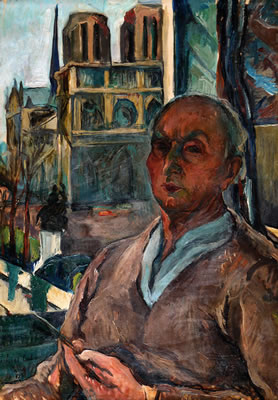
1880 - 1955. Known for: Fauves painting, expressionism, and drawing.
Hungarian painter and draughtsman, Vilmos Csaba began his artistic studies in 1904 at the Nagybnya Colony in a Neo-Impressionist style. In 1905 Perlrott Csaba went to Paris on a scholarship and a... Read full biography
Hungarian painter and draughtsman, Vilmos Csaba began his artistic studies in 1904 at the Nagybnya Colony in a Neo-Impressionist style. In 1905 Perlrott Csaba went to Paris on a scholarship and a year later studied under Matisse; he adopted the Fauvist style and exhibited at the Salon d'Automne... Read full biography
Hungarian painter and draughtsman, Vilmos Csaba began his artistic studies in 1904 at the Nagybnya Colony in a Neo-Impressionist style. In 1905 Perlrott Csaba went to Paris on a scholarship and a year later studied under Matisse; he adopted the Fauvist style and exhibited at the Salon d'Automne (1907 and 1911). He studied at the School of Industrial Drawing, then at József Koszta, and later in Nagybánya. He attended the Julian Academy, Paris, for some time where his masters were J.P. Laurens... Read full biography
Hungarian painter and draughtsman, Vilmos Csaba began his artistic studies in 1904 at the Nagybnya Colony in a Neo-Impressionist style. In 1905 Perlrott Csaba went to Paris on a scholarship and a year later studied under Matisse; he adopted the Fauvist style and exhibited at the Salon d'Automne (1907 and 1911). He studied at the School of Industrial Drawing, then at József Koszta, and later in Nagybánya. He attended the Julian Academy, Paris, for some time where his masters were J.P. Laurens and H. Matisse. After his journey Spain in 1911, he returned to Hungary. ?His early works (e.g. Gypsies in the Barn, 1904) reflect the style of the Nagybánya school, while his later works show the influence of Greco, Fauves and Cubism. Some of his... Read full biography
Hungarian painter and draughtsman, Vilmos Csaba began his artistic studies in 1904 at the Nagybnya Colony in a Neo-Impressionist style. In 1905 Perlrott Csaba went to Paris on a scholarship and a year later studied under Matisse; he adopted the Fauvist style and exhibited at the Salon d'Automne (1907 and 1911). He studied at the School of Industrial Drawing, then at József Koszta, and later in Nagybánya. He attended the Julian Academy, Paris, for some time where his masters were J.P. Laurens and H. Matisse. After his journey Spain in 1911, he returned to Hungary. ?His early works (e.g. Gypsies in the Barn, 1904) reflect the style of the Nagybánya school, while his later works show the influence of Greco, Fauves and Cubism. Some of his drawings are revolutionary experiments. The influence of Cézanne, and those of Braque are present in his landscapes and still-... Read full biography
Artist Biography
Biography page for Vilmos Perlrott Csaba ((1880 - 1955)), known for Fauves painting, expressionism, and drawing. Showing 1 biographical entries and 0 sample artworks.
Vilmos Perlrott Csaba - Artist Info
About Vilmos Perlrott Csaba
Name variants
Vilmos Perlrott-Csaba
Biography from RoGallery
Hungarian painter and draughtsman, Vilmos Csaba began his artistic studies in 1904 at the Nagybnya Colony in a Neo-Impressionist style. In 1905 Perlrott Csaba went to Paris on a scholarship and a year later studied under Matisse; he adopted the Fauvist style and exhibited at the Salon d'Automne (1907 and 1911).
He studied at the School of Industrial Drawing, then at József Koszta, and later in Nagybánya. He attended the Julian Academy, Paris, for some time where his masters were J.P. Laurens and H. Matisse. After his journey Spain in 1911, he returned to Hungary.
?His early works (e.g. Gypsies in the Barn, 1904) reflect the style of the Nagybánya school, while his later works show the influence of Greco, Fauves and Cubism. Some of his drawings are revolutionary experiments.
The influence of Cézanne, and those of Braque are present in his landscapes and still-lives, respectively. Later he returned to post-impressionism. The picture with nudes from the 1930s show Gaugain's influence.
His strong forms and clear colours, seen in such works as his portrait of Sandor Ziffer (1908; Budapest, N.G.), were entirely new when they appeared in Hungary. After he visited Spain in 1911, El Greco became a great influence on his work. In the following years his figures became expressive in form, and he began to use chiaroscuro (e.g. the Deposition, c. 1915; Budapest, N.G.). He exhibited at the Nagybnya colony Jubilee exhibition (1912), in spite of having joined the Kecskemt Colony by that time.