Page loaded successfully. Showing biography for Waldemar Lorentzon.
Waldemar Lorentzon BIOGRAPHY
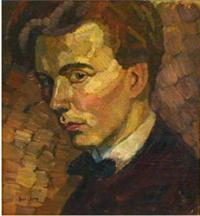
1899 - 1984. Known for: Painting.
Waldemar Lorentzon was born in Halmstad in 1899 and grew up in a farming family. The city remained faithful to him and he returned regularly to visit family and friends. It was in Halmstad that the... Read full biography
Waldemar Lorentzon was born in Halmstad in 1899 and grew up in a farming family. The city remained faithful to him and he returned regularly to visit family and friends. It was in Halmstad that the love of art was born and where the artist's friends Erik Olson, Axel Olson, Waldemar Lorentzon, Sven... Read full biography
Waldemar Lorentzon was born in Halmstad in 1899 and grew up in a farming family. The city remained faithful to him and he returned regularly to visit family and friends. It was in Halmstad that the love of art was born and where the artist's friends Erik Olson, Axel Olson, Waldemar Lorentzon, Sven Jonson, Stellan Mörner and Esaias Thorén became known as the Halmstad group. During the late 1910s and the beginning of the next decade, Lorentzon first studied at Wilhelmson's painting school in... Read full biography
Waldemar Lorentzon was born in Halmstad in 1899 and grew up in a farming family. The city remained faithful to him and he returned regularly to visit family and friends. It was in Halmstad that the love of art was born and where the artist's friends Erik Olson, Axel Olson, Waldemar Lorentzon, Sven Jonson, Stellan Mörner and Esaias Thorén became known as the Halmstad group. During the late 1910s and the beginning of the next decade, Lorentzon first studied at Wilhelmson's painting school in Stockholm and then for Axel Wallert at Althin's painting school. In 1921 he traveled on to Germany to explore the various currents that were emerging around Europe. He had not yet visited Paris, the city that came to characterize his art from the... Read full biography
Waldemar Lorentzon was born in Halmstad in 1899 and grew up in a farming family. The city remained faithful to him and he returned regularly to visit family and friends. It was in Halmstad that the love of art was born and where the artist's friends Erik Olson, Axel Olson, Waldemar Lorentzon, Sven Jonson, Stellan Mörner and Esaias Thorén became known as the Halmstad group. During the late 1910s and the beginning of the next decade, Lorentzon first studied at Wilhelmson's painting school in Stockholm and then for Axel Wallert at Althin's painting school. In 1921 he traveled on to Germany to explore the various currents that were emerging around Europe. He had not yet visited Paris, the city that came to characterize his art from the mid-1920s and where his Cubist idiom gained a foothold. Lorentzon's first trip to Paris in early 1924 was made possible by Ha... Read full biography
Artist Biography
Biography page for Waldemar Lorentzon ((1899 - 1984)), known for Painting. Showing 2 biographical entries and 0 sample artworks.
Waldemar Lorentzon - Artist Info
About Waldemar Lorentzon
Biography from Uppsala (also see Stockholms Auktionsverk)
Waldemar Lorentzon was born in Halmstad in 1899 and grew up in a farming family. The city remained faithful to him and he returned regularly to visit family and friends. It was in Halmstad that the love of art was born and where the artist's friends Erik Olson, Axel Olson, Waldemar Lorentzon, Sven Jonson, Stellan Mörner and Esaias Thorén became known as the Halmstad group.
During the late 1910s and the beginning of the next decade, Lorentzon first studied at Wilhelmson's painting school in Stockholm and then for Axel Wallert at Althin's painting school. In 1921 he traveled on to Germany to explore the various currents that were emerging around Europe. He had not yet visited Paris, the city that came to characterize his art from the mid-1920s and where his Cubist idiom gained a foothold. Lorentzon's first trip to Paris in early 1924 was made possible by Halmstad's mayor Bissmark, who also became his patron.
Together with his cousin Erik Olson, he arrived in the French capital and immediately registered as a student at Fernand Léger's Academy of painting. During the French master's learning, Lorentzon's painting now develops in a cubist spirit and he learns to dissolve the forms and reproduce them from different angles.
Amédée Ozenfant, who founded purism in 1918, also became Lorentzon's teacher during his time in Paris. In "Six seekers' journey - always on the move", Viveca Bosson describes the contemporary influence on her cousins Waldemar Lorentzon and Erik Olson: Carried by the hopeful will of the post-war period to build a new, more humane society, where beauty and function merged into one unit, Léger confessed to the 'new spirit', esprit nouveau, which from the demands of the times grew into a universalist movement. It had its headquarters in Montparnasse with the architect Le Corbusier and the painter Ozenfant, 'Fathers of Purism', who through the magazine 'Esprit Nouveau' 1920-25 sought to spread its manifestations in all branches of culture, including music, literature, film, science, design, etc. Hope stood for 'order, purity, clarity'.
At the bottom, the dream of creating a new, human-friendly urbanism, characterized by Le Corbusier's sculptural and functional architecture, fermented with the help of technological progress. It was also hoped to decorate the huge wall surfaces in bright colors to liven up the gray boredom of the cityscape.The auction's striking painting was carried out in the late 1920s and was exhibited at the famous exhibition in Halmstad in 1929.
The exhibition inaugurated by King Gustaf V was held at the Higher General School and in the area by the school was built a brand new city of wooden buildings designed by architect Uno Forthmeiier . The initiator of the exhibition was Halmstad's handicrafts and industry association, which wanted to showcase the county's handicrafts, industry and art. On the top floor hung the Halmstad Group's paintings that received a great deal of attention, including the auction's exquisite still lifes. The shape has dissolved in the painting and the white jug in the center of the image interacts with the surrounding objects through undulating shapes against the straight lines of the table topBiography from Bukowski Stockholm
In the early 1920s, Waldemar Lorentzon, known to friends as Walle, and Erik Olson traveled to Paris and began studying with Fernand Léger at his Academie Moderne. Perhaps as important as the lessons learnt at the academy was the spiritual climate around Léger, which Walle and Erik inhaled daily.
Buoyed by the post-war era's hopeful desire to build a new, more human society, where beauty and function merged into a single entity, Léger professed his belief in the 'new spirit', esprit nouveau, which grew out of the demands of the times into a universalist movement. It had its headquarters in Montparnasse with the architect Le Corbusier and the painter Ozenfant, the 'Fathers of Purism', who, through the magazine 'Esprit Nouveau' in 1920-25, sought to spread its manifestations in all areas of culture, including music, literature, film, science, design, etc.
The hope was for 'order, purity, clarity'. At the heart of it was the dream of using technological advances to create a new human-friendly urbanism, characterised by the sculptural and functional architecture of Le Corbusier. It was also hoped to decorate the vast wall surfaces in bright colours to liven up the grey boredom of the cityscape.
In the midst of this wave of enthusiasm and brilliant vision of the future lived Walle and Erik". Viveca Bosson, "Sex sökares vandring – alltid på väg".
Waldemar Lorentzon embraced Léger's post-cubism, where objects and figures were constructed from geometric shapes that were meant to look machine-made. Towards the end of the 1920s, Lorentzon became freer in his use of Léger's theories and produced a series of paintings centred on the human figure in motion. The figures have clear attributes that make them easily identifiable, whether they are athletes, farmers or, in this case, sailors, made up of rhythmic zigzag lines.
Waldemar Lorentzon's rare paintings from the second half of the 1920s are definitely a highlight of his career.