Page loaded successfully. Showing biography for Walter Clark.
Walter Clark BIOGRAPHY
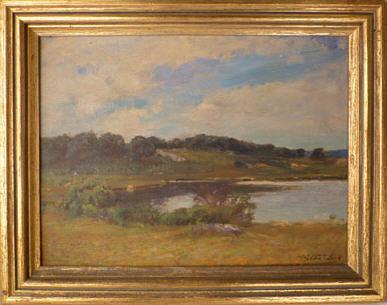
1848 Brooklyn, New York - 1917 Bronxville, New York. Known for: Tonalist landscape, marine amd genre painting, Indian sculpture.
Before settling into a career as an Impressionist* landscape painter, Walter Clark was a sculptor of portrait busts, and among his subjects were terra-cotta* depictions of American Indians. He... Read full biography
Before settling into a career as an Impressionist* landscape painter, Walter Clark was a sculptor of portrait busts, and among his subjects were terra-cotta* depictions of American Indians. He studied engineering at the Massachusetts Institute of Technology, traveled in Europe, India, China, and... Read full biography
Before settling into a career as an Impressionist* landscape painter, Walter Clark was a sculptor of portrait busts, and among his subjects were terra-cotta* depictions of American Indians. He studied engineering at the Massachusetts Institute of Technology, traveled in Europe, India, China, and Japan, and then spent time in Wyoming as a sheep herder. He returned to New York to study art at the National Academy of Design^ with Lemuel Wilmarth and for five years with Jonathan Scott Hartley. In... Read full biography
Before settling into a career as an Impressionist* landscape painter, Walter Clark was a sculptor of portrait busts, and among his subjects were terra-cotta* depictions of American Indians. He studied engineering at the Massachusetts Institute of Technology, traveled in Europe, India, China, and Japan, and then spent time in Wyoming as a sheep herder. He returned to New York to study art at the National Academy of Design^ with Lemuel Wilmarth and for five years with Jonathan Scott Hartley. In 1880, he came much under the influence of George Inness Sr., because of having a studio next to Inness. Beginning 1883, Clark was exhibiting landscapes at the National Academy of Design, and increasingly, he was turning from Tonalism* to... Read full biography
Before settling into a career as an Impressionist* landscape painter, Walter Clark was a sculptor of portrait busts, and among his subjects were terra-cotta* depictions of American Indians. He studied engineering at the Massachusetts Institute of Technology, traveled in Europe, India, China, and Japan, and then spent time in Wyoming as a sheep herder. He returned to New York to study art at the National Academy of Design^ with Lemuel Wilmarth and for five years with Jonathan Scott Hartley. In 1880, he came much under the influence of George Inness Sr., because of having a studio next to Inness. Beginning 1883, Clark was exhibiting landscapes at the National Academy of Design, and increasingly, he was turning from Tonalism* to Impressionism, influenced not only by Inness but by his friends John Twachtman, Edward Potthast, and Joseph DeCamp. During t... Read full biography
Artist Biography
Biography page for Walter Clark ((1848 - 1917)), known for Tonalist landscape, marine amd genre painting, Indian sculpture. Showing 2 biographical entries and 0 sample artworks.
Walter Clark - Artist Info
About Walter Clark
Name variants
Walter A Clark, William Clark
Biography from the Archives of askART
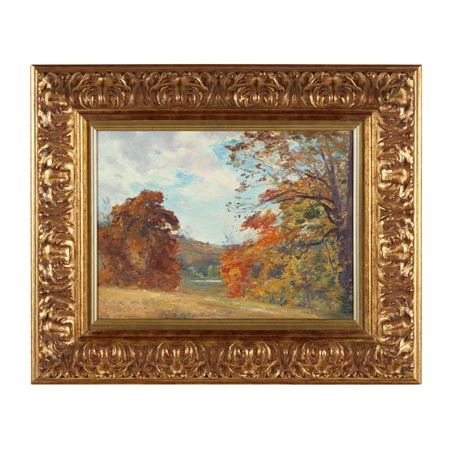 Before settling into a career as an Impressionist* landscape painter, Walter Clark was a sculptor of portrait busts, and among his subjects were terra-cotta* depictions of American Indians. He studied engineering at the Massachusetts Institute of Technology, traveled in Europe, India, China, and Japan, and then spent time in Wyoming as a sheep herder.
He returned to New York to study art at the National Academy of Design^ with Lemuel Wilmarth and for five years with Jonathan Scott Hartley. In 1880, he came much under the influence of George Inness Sr., because of having a studio next to Inness. Beginning 1883, Clark was exhibiting landscapes at the National Academy of Design, and increasingly, he was turning from Tonalism* to Impressionism, influenced not only by Inness but by his friends John Twachtman, Edward Potthast, and Joseph DeCamp.
During the summers, he painted in Cos Cob, Gloucester, and Ogunquit, Maine. In 1893, his paintings were exhibited at the Columbian Exposition* in Chicago; in 1901 at the Pan-American Exposition in Buffalo, New York; and 1904 at the St. Louis Exposition celebrating the Louisiana Purchase.
During his lifetime, he had a distinguished reputation. He was elected to the National Academy of Design, the Society of American Artists* and the Salmagundi Club*, and fittingly he won many awards including an Inness Gold Medal from the National Academy of Design.
Source:
David B. Dearinger, "Walter Clark", Paintings and Sculpture in the Collection of the National Academy of Design, Volume One, 1826-1925.
* For more in-depth information about these terms and others, see AskART.com Glossary http://www.askart.com/AskART/lists/Art_Definition.aspxBiography from Charleston Renaissance Gallery
Noted tonalist Walter Clark was educated as an engineer at the Massachusetts Institute of Technology before pursuing an artistic career. After completion of his class work at MIT in 1869, he traveled extensively in Europe studying art and architecture. He would eventually expand his travels to include the Far East as well.
Returning to New York, Clark entered the National Academy of Design in 1876, where he took instruction from Lemuel Wilmarth and Jonathan Hartley. In 1881, he came under the tutelage of George Inness at the Art Students League. Inness would have a profound influence on Clark, and the two artists occupied adjacent studios in the Holbein Building for many years.
Best known for his subdued, pastoral landscapes of Long Island, Chadds Ford, and other East Coast destinations, Clark enjoyed a successful career and distinguished reputation. He exhibited at the National Academy for nearly four decades, earning the Inness Gold Medal in 1902. He was featured in other important exhibitions as well, including shows at the Pennsylvania Academy of the Fine Arts, Art Institute of Chicago, Boston Art Club. Brooklyn Art Association, and the 1893 Chicago and 1904 St Louis World Fairs. Clark was a member of the most prestigious art associations of the day.
Encouraged by his friends John Twachtman, Edward Potthast, and Joseph DeCamp, Clark began working in an impressionist vein in the 1890s. He spent summers painting in the art colonies at Cos Cob and Old Lyme, Connecticut; Gloucester, Massachusetts; and Ogunquit, Maine. The father of artist Eliot Candee Clark, the two shared an aesthetic sensibility and studio space in New York's Van Dyke building.
This essay is copyrighted by the Charleston Renaissance Gallery and may not be reproduced or transmitted without written permission from the Hicklin Galleries, LLC