Page loaded successfully. Showing biography for Walter Spitzer.
Walter Spitzer BIOGRAPHY
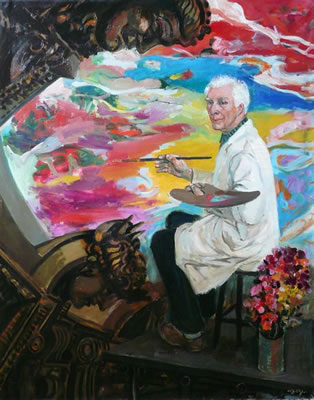
1927 Cieszyn, Poland - 2021. Known for: Figure, genre painting, illustration.
Walter Spitzer was born in Poland. His parents escaped the pogroms and the family stayed in hiding in France until 1944. In 1945, Spitzer was a student at the Ecole des Beaux Arts in Paris. At age... Read full biography
Walter Spitzer was born in Poland. His parents escaped the pogroms and the family stayed in hiding in France until 1944. In 1945, Spitzer was a student at the Ecole des Beaux Arts in Paris. At age 19, he was asked to make the scenery for the Edouard VII Theater in Paris, which was showing The... Read full biography
Walter Spitzer was born in Poland. His parents escaped the pogroms and the family stayed in hiding in France until 1944. In 1945, Spitzer was a student at the Ecole des Beaux Arts in Paris. At age 19, he was asked to make the scenery for the Edouard VII Theater in Paris, which was showing The Dibbouk of Ansky. In 1947 the same theater asked him to make the scenery for the Hill of Life ( Max Zveig). Spitzer has been a member of the Salon d'Automne since 1952. He is the only remaining survivor of... Read full biography
Walter Spitzer was born in Poland. His parents escaped the pogroms and the family stayed in hiding in France until 1944. In 1945, Spitzer was a student at the Ecole des Beaux Arts in Paris. At age 19, he was asked to make the scenery for the Edouard VII Theater in Paris, which was showing The Dibbouk of Ansky. In 1947 the same theater asked him to make the scenery for the Hill of Life ( Max Zveig). Spitzer has been a member of the Salon d'Automne since 1952. He is the only remaining survivor of the Montparnasse Ecole de Paris. Like Kikoine and Kremegne, Spitzer's works manifest excellence. Similar to Chagall, one of his main inspirations is the Old Testament/Talmud. Many of his themes have also reflected the horrors of the Holocaust.... Read full biography
Walter Spitzer was born in Poland. His parents escaped the pogroms and the family stayed in hiding in France until 1944. In 1945, Spitzer was a student at the Ecole des Beaux Arts in Paris. At age 19, he was asked to make the scenery for the Edouard VII Theater in Paris, which was showing The Dibbouk of Ansky. In 1947 the same theater asked him to make the scenery for the Hill of Life ( Max Zveig). Spitzer has been a member of the Salon d'Automne since 1952. He is the only remaining survivor of the Montparnasse Ecole de Paris. Like Kikoine and Kremegne, Spitzer's works manifest excellence. Similar to Chagall, one of his main inspirations is the Old Testament/Talmud. Many of his themes have also reflected the horrors of the Holocaust. Spitzer has also worked as an illustrator and author.&... Read full biography
Artist Biography
Biography page for Walter Spitzer ((1927 - 2021)), known for Figure, genre painting, illustration. Showing 2 biographical entries and 0 sample artworks.
Walter Spitzer - Artist Info
About Walter Spitzer
Name variants
Walter Spritzer
Biography from the Archives of askART
 Walter Spitzer was born in Poland. His parents escaped the pogroms and the family stayed in hiding in France until 1944.
In 1945, Spitzer was a student at the Ecole des Beaux Arts in Paris. At age 19, he was asked to make the scenery for the Edouard VII Theater in Paris, which was showing The Dibbouk of Ansky. In 1947 the same theater asked him to make the scenery for the Hill of Life ( Max Zveig).
Spitzer has been a member of the Salon d'Automne since 1952. He is the only remaining survivor of the Montparnasse Ecole de Paris.
Like Kikoine and Kremegne, Spitzer's works manifest excellence. Similar to Chagall, one of his main inspirations is the Old Testament/Talmud. Many of his themes have also reflected the horrors of the Holocaust.
Spitzer has also worked as an illustrator and author. Like Mariette Lydis, he has provided illustrations for works by Jean-Paul Sartre and several other notable authors, including Andre Malraux.
Spitzer is also an accomplished author in his own right, having written La Peinture and Saved by Design: Buchenwald.
Spitzer has received countless awards and prizes. He is well listed, and his works are in the collections of major museums throughout the world.
Submitted by Marsha Nivison.Biography from Dom Aukcyjny Ostoya
Walter Spitzer was born in 1927 in Cieszyn. He was the son of a Jewish liqueur manufacturer in Cieszyn. He painted from an early age. In 1943, he lost his parents and ended up in Auschwitz. He was painting there, captives and guards for food. After he moved to Buchenwald he found himself after the liberation in the American zone. In 1945, Spitzer began his studies in at the Parisian École des Beaux-Arts. To commemorate the death camps he made a series of engravings he donated to museums in France and Israel. In the 1960s he illustrated exclusive book editions. In the 70s he painted themes biblical and Jewish history. In 1993 he made a sculpture for Buchenwald.