Page loaded successfully. Showing biography for Walter Tandy Murch.
Walter Tandy Murch BIOGRAPHY
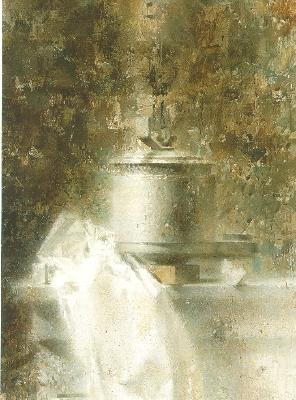
1907 Toronto, Canada - 1967. Known for: Still-life paintings of machine parts, other broken pieces, sound design.
In a century dominated by abstraction, Walter Murch was a sensitive realist, painting machine elements with a poetical tone and building up the paint surface in his pictures to the point that... Read full biography
In a century dominated by abstraction, Walter Murch was a sensitive realist, painting machine elements with a poetical tone and building up the paint surface in his pictures to the point that machines, motors, vises, light bulbs, etc assumed a transcendent reality, both magnificently physical and... Read full biography
In a century dominated by abstraction, Walter Murch was a sensitive realist, painting machine elements with a poetical tone and building up the paint surface in his pictures to the point that machines, motors, vises, light bulbs, etc assumed a transcendent reality, both magnificently physical and metaphorical. The artist, in his love of the materiality of objects, discovered their spiritual content. In a time where our humanity has often seemed overwhelmed by our technology, Murch found a way... Read full biography
In a century dominated by abstraction, Walter Murch was a sensitive realist, painting machine elements with a poetical tone and building up the paint surface in his pictures to the point that machines, motors, vises, light bulbs, etc assumed a transcendent reality, both magnificently physical and metaphorical. The artist, in his love of the materiality of objects, discovered their spiritual content. In a time where our humanity has often seemed overwhelmed by our technology, Murch found a way to humanize our machines. Perhaps a key moment in his artistic development was Murch's discovery, in the 1930s, of old photographs, their hazy effects and emotional resonance, which he may gradually have adapted for use in his paintings. But, in order... Read full biography
In a century dominated by abstraction, Walter Murch was a sensitive realist, painting machine elements with a poetical tone and building up the paint surface in his pictures to the point that machines, motors, vises, light bulbs, etc assumed a transcendent reality, both magnificently physical and metaphorical. The artist, in his love of the materiality of objects, discovered their spiritual content. In a time where our humanity has often seemed overwhelmed by our technology, Murch found a way to humanize our machines. Perhaps a key moment in his artistic development was Murch's discovery, in the 1930s, of old photographs, their hazy effects and emotional resonance, which he may gradually have adapted for use in his paintings. But, in order to pursue his very private and personal vision, Murch had to hire out as a commercial artist for nearly twenty years before he had manag... Read full biography
Artist Biography
Biography page for Walter Tandy Murch ((1907 - 1967)), known for Still-life paintings of machine parts, other broken pieces, sound design. Showing 3 biographical entries and 0 sample artworks.
Walter Tandy Murch - Artist Info
About Walter Tandy Murch
Name variants
Walter Munch
Biography from the Archives of askART
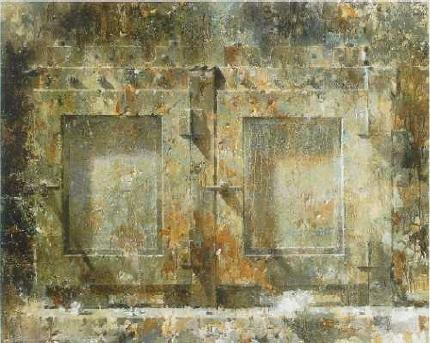 In a century dominated by abstraction, Walter Murch was a sensitive realist, painting machine elements with a poetical tone and building up the paint surface in his pictures to the point that machines, motors, vises, light bulbs, etc assumed a transcendent reality, both magnificently physical and metaphorical. The artist, in his love of the materiality of objects, discovered their spiritual content. In a time where our humanity has often seemed overwhelmed by our technology, Murch found a way to humanize our machines.
Perhaps a key moment in his artistic development was Murch's discovery, in the 1930s, of old photographs, their hazy effects and emotional resonance, which he may gradually have adapted for use in his paintings.
But, in order to pursue his very private and personal vision, Murch had to hire out as a commercial artist for nearly twenty years before he had managed to establish a reputation. He was no doubt aided by his friendship with the well-known Surrealist-Expressionist, Arshile Gorky (Murch had studied with Gorky), who may have opened art world doors that eventually allowed Murch to pass through to acceptance and relative financial independence. Murch never abandoned, however, his practice of teaching art at the university and college level.
Born in 1907 in Toronto, Canada, Murch studied architectural drafting and woodworking at the Technical High School there, before attending Ontario College of Art, where he received his first art training.
Later, in New York City, he studied at the Art Students League and then the Grand Central Art School where he met Arshile Gorky. Murch attended the League at night, working as an assistant stained-glass designer during the day.
He died in 1967.
Walter Murch's paintings are in the Albright-Knox Gallery of Art, Buffalo; the Barnes Foundation, Merion, Pennsylvania; Brooklyn Museum; Corcoran Gallery of Art and National Museum of American Art, Smithsonian Institution, Washington, D.C.; Metropolitan Museum of Art, Museum of Modern Art and Whitney Museum of American Art in New York City; and the Pennsylvania Academy of the Fine Arts, Philadelphia.
Source: Michael David Zellman, "300 Years of American Art"Biography from the Archives of askART
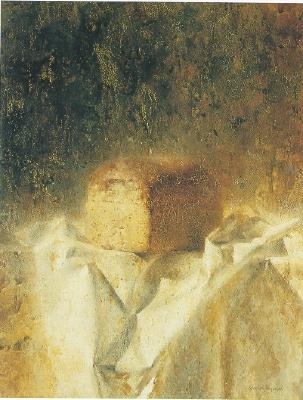 Walter Tandy Murch (1907–1967) is best known for his enigmatic, dreamlike still life paintings of everyday objects and mechanical devices in a style that falls between Magic Realist, Surrealist, and Realist. This volume offers the most comprehensive collection of his work, including his striking commercial work for magazines and his paintings from the extensive collection of George Lucas.
Lucas calls himself a “fanboy” of Murch’s art—paintings and drawings he describes as simultaneously “functional and dreamy, simple and complicated; they are quiet yet grab your attention.”
The tension of these opposing reactions draws viewers into Murch’s still lifes, which caught the attention of famed art dealer Betty Parsons, who also represented artists such as Jackson Pollock, Mark Rothko, Ellsworth Kelly, and Agnes Martin. Murch showed his work at Parsons’s gallery for nearly thirty years.
With illuminating essays and extensive plates sections displaying Murch’s works, this celebration of an exceptionally talented and visionary artist is long overdue.
Source:
Walter Tandy Murch: Paintings and Drawings, 1925-1967
Submitted 2024 by Winslow MyersBiography from Caldwell Gallery Hudson
Walter Murch went to Ontario College in 1925 until transferring briefly to the Art Students League in 1927. Following his academic courses, Murch studied with his friend and mentor Arshille Gorky. Upon his arrival in New York City, Murch worked as an assistant to a stained-glass designer. To earn a salary, Murch became an illustrator for fashion magazines and did murals for houses, hotels and department stores.
Gorky's influence is present in Murch's work but did not move him to abstraction. In fact, Murch developed his own unique style of painting still lifes and chosen objects as if they had a very aged patina about them, a technique that produced a Realist sense with Romantic overtones. Murch preferred unusual or mundane objects such as machine and motor parts, broken objects and light bulbs.
Murch also taught at several universities throughout his career.