Page loaded successfully. Showing biography for Wander Bertoni.
Wander Bertoni BIOGRAPHY
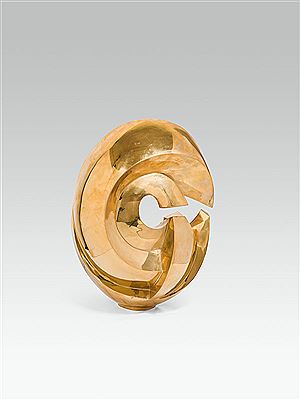
1925 Codisotto, Italy - 2019. Known for: Abstract figure sculpture and post-war sculpture restoration.
Wander Bertoni (born October 11, 1925 in Codisotto, Reggio Emilia, Italy) is an Austrian sculptor. He came to Austria in 1943 as a forced laborer. After the Second World War, he studied from 1946 to... Read full biography
Wander Bertoni (born October 11, 1925 in Codisotto, Reggio Emilia, Italy) is an Austrian sculptor. He came to Austria in 1943 as a forced laborer. After the Second World War, he studied from 1946 to 1952 at the Academy of Fine Arts Vienna under Fritz Wotruba. He belonged together with Anton Lehmden... Read full biography
Wander Bertoni (born October 11, 1925 in Codisotto, Reggio Emilia, Italy) is an Austrian sculptor. He came to Austria in 1943 as a forced laborer. After the Second World War, he studied from 1946 to 1952 at the Academy of Fine Arts Vienna under Fritz Wotruba. He belonged together with Anton Lehmden and Josef Mikl in 1947 to the founding fathers of the Art Club. The Federal Monuments Office paid a number of later important painters and sculptors for restorations fees that not only ensured... Read full biography
Wander Bertoni (born October 11, 1925 in Codisotto, Reggio Emilia, Italy) is an Austrian sculptor. He came to Austria in 1943 as a forced laborer. After the Second World War, he studied from 1946 to 1952 at the Academy of Fine Arts Vienna under Fritz Wotruba. He belonged together with Anton Lehmden and Josef Mikl in 1947 to the founding fathers of the Art Club. The Federal Monuments Office paid a number of later important painters and sculptors for restorations fees that not only ensured survival, but also offered the opportunity to continue on their artistic path, not neglecting their creative activity. To this circle also counted Wander Bertoni. The then head of the Federal Monuments Office Otto Demus transferred the young academy... Read full biography
Wander Bertoni (born October 11, 1925 in Codisotto, Reggio Emilia, Italy) is an Austrian sculptor. He came to Austria in 1943 as a forced laborer. After the Second World War, he studied from 1946 to 1952 at the Academy of Fine Arts Vienna under Fritz Wotruba. He belonged together with Anton Lehmden and Josef Mikl in 1947 to the founding fathers of the Art Club. The Federal Monuments Office paid a number of later important painters and sculptors for restorations fees that not only ensured survival, but also offered the opportunity to continue on their artistic path, not neglecting their creative activity. To this circle also counted Wander Bertoni. The then head of the Federal Monuments Office Otto Demus transferred the young academy students - first through the mediation of his friends Heinz Leinfellner and Maria Biljan Bilger and later, when they were satisfied wit... Read full biography
Artist Biography
Biography page for Wander Bertoni ((1925 - 2019)), known for Abstract figure sculpture and post-war sculpture restoration. Showing 2 biographical entries and 0 sample artworks.
Wander Bertoni - Artist Info
About Wander Bertoni
Biography from the Archives of askART
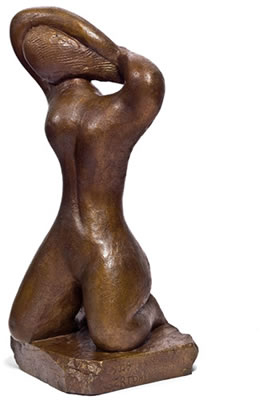 Wander Bertoni (born October 11, 1925 in Codisotto, Reggio Emilia, Italy) is an Austrian sculptor. He came to Austria in 1943 as a forced laborer.
After the Second World War, he studied from 1946 to 1952 at the Academy of Fine Arts Vienna under Fritz Wotruba. He belonged together with Anton Lehmden and Josef Mikl in 1947 to the founding fathers of the Art Club.
The Federal Monuments Office paid a number of later important painters and sculptors for restorations fees that not only ensured survival, but also offered the opportunity to continue on their artistic path, not neglecting their creative activity. To this circle also counted Wander Bertoni.
The then head of the Federal Monuments Office Otto Demus transferred the young academy students - first through the mediation of his friends Heinz Leinfellner and Maria Biljan Bilger and later, when they were satisfied with his work, immediately - a series of restoration orders to war-damaged monuments.
His first work was a prominent object: the damaged plague column at the Vienna Graben. At this important monument completed by Johann Bernhard Fischer von Erlach in 1694 as Trinity Column, the artist was to initiate the restoration and restoration of the group of figures Fides plunges allegory of plague into the abyss" by Paul Strudel. Lost details had to be reshaped, poured into artificial stone and finally mounted in the designated places.
Another order concerned the 1729/32 as a memorial and market fountain by Joseph Emanuel Fischer von Erlach built Vermählungsbrunnen on the Hoher Markt. Here was the head of St. Maria damaged and had to be restored. The angelic figures of Carrara Marble by Antonio Corradini standing in front of the Corinthian columns had completely lost their wings during the fighting. They were re-cast in artificial stone and they are more beautiful than the original ones ever were.
The high-baroque stone statue of Maria Immaculata on the façade of the former Hochholzerhof (BAWAG, Tuchlauben 5) was restored by Bertoni in 1949, where cut-off parts such as the angel's heads, which had been completely lost, were renewed. The most extensive and difficult task the artist undertook for the Bundesdenkmalamt was a sculpture totally destroyed by a bomb in the Burgtheater. It was the so-called Bacchus train of the sculptor Edmund Hofmann von Aspernburg, situated above the festivals on the Volksgarten side. The stairway to the auditorium leads to triumphal arches, which are framed by coupled Corinthian full columns and tympanone-like crowned by this Bacchus train.
Twelve sculptures, with the exception of one destroyed by the bomb, had to be re-cast as well as their surroundings. Since there were virtually no precise templates in which Bertoni could have orientated, the heads of the characters got their own life. His work prospered to the full satisfaction of the Federal Monuments Office.
Wander Bertoni, arguably the most important sculptor from the Wotruba school, is seeking new ways of expressing himself. He said: "we were free, free to everything, and it was about finding out what suited our facilities and possibilities best. The urge for abstraction was intuitive in me, but I did not know how to do it. Also for my then teacher Wotruba it was the problem. Contacts with foreign artists and their work, for example those of Giacometti or Arp, become points of contact for him."
One of Bertoni's first attempts to make an un-objective statement is the polychrome plaster relief created for the Milan Triennial in 1947, commissioned by architect Oswald Haerdtl. He wanted to convey the dynamics that Austria and his life at the time.
From 1965 to 1994, the year of his retirement, he was professor and head of a master class in sculpture at the University of Applied Arts Vienna. With his sculptures in the 1950s Bertoni took the step from the figurative to the abstraction, later to the symbolic.
In 1965, Bertoni bought a watermill in Winden am See, at the foot of the Leitha Mountains, which has been extensively restored, where numerous large sculptures of the artist stand in open ground. Furthermore, a separate exhibition pavilion with planning by architect Johannes Spalt 1999-2000 was built, where in a tour of his work in chronological order can be seen.
Bertoni was married to the deceased in 2002 Viennese actress Inge Konradi. Since 1992 he was married to the ophthalmologist Waltraud Bertoni, née Stanek.
The artist was invited in 2005 to open the 8th European Symposium Kaisersteinbruch with a speech. Participants were sculptors from France, Switzerland and Bosnia-Herzegovina.
Participation in international biennials and awards1950, 1952, 1954 and 1966: participation in the Venice Biennale
1953: 2nd Biennale of São Paulo
1958: Sculptor Award of the Biennale de São Paulo
1958: Prize of the City of Vienna for Fine Arts
1959, 1961 and 1963: Biennale Middelheim - Antwerp
1986: Medal of Honor of the City of Vienna in gold
1991: Great Decoration of the Land Burgenland
1999: Order of the Italian Republic "Cavaliere d 'Italia"
2005: Honorary Membership of the University of Applied Arts
2009: Austrian Cross of Honor for Science and Art, eulogy by architect Friedrich Kurrent.
Source:
Wikipedia, Google Translate, Jan. 2019Biography from Lehner Kunstauktionen
Wander Bertoni, at age 40, started to undertake far journeys. His trip to India made the biggest impression to him and this emotion lead him to the idea to create a comprehensive plastic and painted diary. The link between spirit and body by means of Hindu rites made such a great impression to the artist that he was inspired to create a new form of language. A key work relating to this phase is the so called Lingam.