Page loaded successfully. Showing biography for Wilhelm Blanke.
Wilhelm Blanke BIOGRAPHY
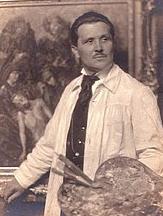
1873 Unruhstadt, Germany - 1943 Schwiebus, Germany. Known for: Expressive paintings of still-life, landscape, religious crowd gatherings, graphics.
Wilhelm Blanke (born March 11, 1873 in Unruhstadt, Province of Posen, † April 16, 1936 in Schwiebus) was a German painter and lithographer. Wilhelm Blanke was born as the sixth child of the married... Read full biography
Wilhelm Blanke (born March 11, 1873 in Unruhstadt, Province of Posen, † April 16, 1936 in Schwiebus) was a German painter and lithographer. Wilhelm Blanke was born as the sixth child of the married couple Johanna Karoline (née Neumann) and Ernst Johann Blanke. After his school days he was trained... Read full biography
Wilhelm Blanke (born March 11, 1873 in Unruhstadt, Province of Posen, † April 16, 1936 in Schwiebus) was a German painter and lithographer. Wilhelm Blanke was born as the sixth child of the married couple Johanna Karoline (née Neumann) and Ernst Johann Blanke. After his school days he was trained as a decorative painter by his eldest brother Ernst. After completing his apprenticeship in 1890, he went to Berlin to initially work in his profession. From 1892 to 1894 he undertook a two-year study... Read full biography
Wilhelm Blanke (born March 11, 1873 in Unruhstadt, Province of Posen, † April 16, 1936 in Schwiebus) was a German painter and lithographer. Wilhelm Blanke was born as the sixth child of the married couple Johanna Karoline (née Neumann) and Ernst Johann Blanke. After his school days he was trained as a decorative painter by his eldest brother Ernst. After completing his apprenticeship in 1890, he went to Berlin to initially work in his profession. From 1892 to 1894 he undertook a two-year study tour through Europe's art metropolises as far as Italy. Then he settled in Steglitz near Berlin and tried to gain recognition as a painter autodidactically. In March 1901 he married Anna Graf, the eldest daughter of the painter and court photographer... Read full biography
Wilhelm Blanke (born March 11, 1873 in Unruhstadt, Province of Posen, † April 16, 1936 in Schwiebus) was a German painter and lithographer. Wilhelm Blanke was born as the sixth child of the married couple Johanna Karoline (née Neumann) and Ernst Johann Blanke. After his school days he was trained as a decorative painter by his eldest brother Ernst. After completing his apprenticeship in 1890, he went to Berlin to initially work in his profession. From 1892 to 1894 he undertook a two-year study tour through Europe's art metropolises as far as Italy. Then he settled in Steglitz near Berlin and tried to gain recognition as a painter autodidactically. In March 1901 he married Anna Graf, the eldest daughter of the painter and court photographer Heinrich Graf, and in December 1901 their son Heinz (Henry) was born. At the beginning of his career Wilhelm Blanke was still cau... Read full biography
Artist Biography
Biography page for Wilhelm Blanke ((1873 - 1943)), known for Expressive paintings of still-life, landscape, religious crowd gatherings, graphics. Showing 2 biographical entries and 0 sample artworks.
Wilhelm Blanke - Artist Info
About Wilhelm Blanke
Biography from the Archives of askART
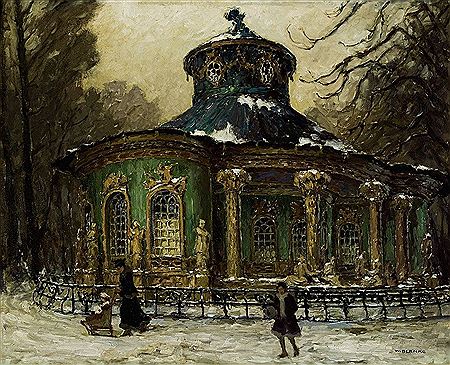 Wilhelm Blanke (born March 11, 1873 in Unruhstadt, Province of Posen, † April 16, 1936 in Schwiebus) was a German painter and lithographer.
Wilhelm Blanke was born as the sixth child of the married couple Johanna Karoline (née Neumann) and Ernst Johann Blanke. After his school days he was trained as a decorative painter by his eldest brother Ernst. After completing his apprenticeship in 1890, he went to Berlin to initially work in his profession. From 1892 to 1894 he undertook a two-year study tour through Europe's art metropolises as far as Italy. Then he settled in Steglitz near Berlin and tried to gain recognition as a painter autodidactically.
In March 1901 he married Anna Graf, the eldest daughter of the painter and court photographer Heinrich Graf, and in December 1901 their son Heinz (Henry) was born.
At the beginning of his career Wilhelm Blanke was still caught up in the academic style of painting, which he had mastered without an academy training, but he began early to deal with the different conceptions of painting and found his ideal means of expression in the impressionistically influenced painting style.
Willhelm Blanke was a very versatile painter. In the forty years that he has lived in Berlin-Steglitz, he has created an extensive oeuvre. He found many of his motifs in nature. The austere landscapes and colorful flower pieces, but also the depiction of religious themes or the interiors - all paintings convey great talent and skill and show his quality as a great colourist.
He was close friends with well-known Berlin painters, especially with the supporters of moderate Berlin Impressionism; Carl Kayser-Eichberg should be mentioned here as a representative. Similarities in the work of Wilhelm Blanke with the style of the Bracht school are therefore not accidental. There are also many similarities with his brother-in-law, the painter Gerhard Graf.
Honored on his 60th birthday in 1933, Wilhelm Blanke left Berlin-Steglitz soon afterwards in order to escape the political upheavals and changes in the capital's artistic life in his birthplace Unruhstadt. Wilhelm Blanke died on April 16, 1936 after a brief illness in the hospital in the district town of Schwiebus. In Unruhstadt he was carried to the grave with great sympathy by the painter friends who had traveled there.
Source:Wikipedia, Google Translate, 2020Biography from Auktionshaus Greve (formerly City Nord)
Wilhelm Blanke was a German painter and lithographer who trained as a decorative painter. He completed a study tour through Europe's art capitals as far as Italy from 1892 to 1894. Subsequently, he settled in Steglitz near Berlin and worked autodidactically as a painter.
Blanke's style evolved from a more academic style towards a visual language influenced by Impressionism. In addition to landscapes and flower pieces, he created religious scenes and interiors, mostly in strong colors.