Page loaded successfully. Showing biography for Wilhelm Busch.
Wilhelm Busch BIOGRAPHY
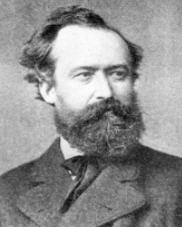
1832 Wiedensahl, Germany - 1908 Mechtshausen, Germany. Known for: Drawings with doggerel verse.
Wilhelm Busch, German painter and poet, was best known for his drawings, which were accompanied by wise, satiric, doggerel verse. His Bilderbogen (pictorial broadsheets) can be considered precursors... Read full biography
Wilhelm Busch, German painter and poet, was best known for his drawings, which were accompanied by wise, satiric, doggerel verse. His Bilderbogen (pictorial broadsheets) can be considered precursors of the comic strip. In 1859, after study at academies in Düsseldorf, Antwerp, and Munich, Busch... Read full biography
Wilhelm Busch, German painter and poet, was best known for his drawings, which were accompanied by wise, satiric, doggerel verse. His Bilderbogen (pictorial broadsheets) can be considered precursors of the comic strip. In 1859, after study at academies in Düsseldorf, Antwerp, and Munich, Busch began to contribute his series of comic sketches to Fliegende Blätter and Münchener Bilderbogen, the leading German weeklies. These were followed by his continuous pictorial narratives with short... Read full biography
Wilhelm Busch, German painter and poet, was best known for his drawings, which were accompanied by wise, satiric, doggerel verse. His Bilderbogen (pictorial broadsheets) can be considered precursors of the comic strip. In 1859, after study at academies in Düsseldorf, Antwerp, and Munich, Busch began to contribute his series of comic sketches to Fliegende Blätter and Münchener Bilderbogen, the leading German weeklies. These were followed by his continuous pictorial narratives with short verse-texts, including Max und Moritz, Der heilige Antonius von Padua, Die fromme Helene, Hans Huckebein, Dideldum!, and Herr und Frau Knopp. By 1910 more than half a million copies of Max und Moritz (which was the forerunner of The Katzenjammer Kids) had... Read full biography
Wilhelm Busch, German painter and poet, was best known for his drawings, which were accompanied by wise, satiric, doggerel verse. His Bilderbogen (pictorial broadsheets) can be considered precursors of the comic strip. In 1859, after study at academies in Düsseldorf, Antwerp, and Munich, Busch began to contribute his series of comic sketches to Fliegende Blätter and Münchener Bilderbogen, the leading German weeklies. These were followed by his continuous pictorial narratives with short verse-texts, including Max und Moritz, Der heilige Antonius von Padua, Die fromme Helene, Hans Huckebein, Dideldum!, and Herr und Frau Knopp. By 1910 more than half a million copies of Max und Moritz (which was the forerunner of The Katzenjammer Kids) had been printed in German, and his works had been translated into many languages. Busch’s wo... Read full biography
Artist Biography
Biography page for Wilhelm Busch ((1832 - 1908)), known for Drawings with doggerel verse. Showing 3 biographical entries and 0 sample artworks.
Wilhelm Busch - Artist Info
About Wilhelm Busch
Biography from the Archives of askART
 Wilhelm Busch, German painter and poet, was best known for his drawings, which were accompanied by wise, satiric, doggerel verse. His Bilderbogen (pictorial broadsheets) can be considered precursors of the comic strip.
In 1859, after study at academies in Düsseldorf, Antwerp, and Munich, Busch began to contribute his series of comic sketches to Fliegende Blätter and Münchener Bilderbogen, the leading German weeklies. These were followed by his continuous pictorial narratives with short verse-texts, including Max und Moritz, Der heilige Antonius von Padua, Die fromme Helene, Hans Huckebein, Dideldum!, and Herr und Frau Knopp.
By 1910 more than half a million copies of Max und Moritz (which was the forerunner of The Katzenjammer Kids) had been printed in German, and his works had been translated into many languages.
Busch’s work continues to be popular, and his writings are widely quoted in German-speaking countries. His style, copied by innumerable artists, was remarkable for its extreme simplicity. With a few rapid scrawls he conveyed the most complex contortions and the most transitory movement.
Source:
"Wilhelm Busch, German Painter and Poet," The Encyclopaedia Britannica, Web,Biography from Auctionata
Born in Wiedensahl, Lower Saxony, Wilhelm Busch rapidly became one of the most influential humoristic poets and illustrators in Germany. The artist studied painting in the fine arts academies of Düsseldorf, Antwerpen and Munich.
Next to his activity as poet and illustrator of picture stories, Wilhelm Busch leaves a comprehensive production of oil paintings behind. In his later work the artist detached himself from Dutch painting and developed a sketch-like stile that is unequivocally linked to his conceptions of landscape.Biography from Kunstauktionshaus Schloss Ahlden
Wilhelm Busch was born in 1832 in Wiedensahl, Germany. Busch made a career as a draftsman, poet and painter who has become famous for his picture stories. Busch studied from 1851 at the academies in Düsseldorf, Antwerp and Munich, where he joined the artists' association "Jung-München". The encounter with old Dutch painting in Antwerp - especially Brouwer and Ostade - was formative for his painterly oeuvre.