Page loaded successfully. Showing biography for Wilhelm Morgner.
Wilhelm Morgner BIOGRAPHY
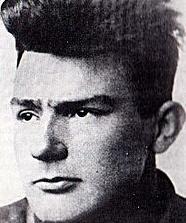
1891 Soest, German Empire - 1917 Langemarck, Belgium. Known for: Expressionist painting, graphic art.
“Nature is a product of my imagination through the collaboration of all kinds of artistic means of expression. I don't see why I should try to depict nature. Being is an illusion and I am truth.”... Read full biography
“Nature is a product of my imagination through the collaboration of all kinds of artistic means of expression. I don't see why I should try to depict nature. Being is an illusion and I am truth.” Wilhelm Morgner in a letter to Horst Tappert dated September 27, 1911, in: Knupp-Uhlenhaut, Christine,... Read full biography
“Nature is a product of my imagination through the collaboration of all kinds of artistic means of expression. I don't see why I should try to depict nature. Being is an illusion and I am truth.” Wilhelm Morgner in a letter to Horst Tappert dated September 27, 1911, in: Knupp-Uhlenhaut, Christine, Wilhelm Morgner. Letters and Drawings, Soest 1984, p. 33, . Wilhelm Morgner grew up in a middle-class family in Soest, Westphalia. The father, a former military musician, dies early, the mother would... Read full biography
“Nature is a product of my imagination through the collaboration of all kinds of artistic means of expression. I don't see why I should try to depict nature. Being is an illusion and I am truth.” Wilhelm Morgner in a letter to Horst Tappert dated September 27, 1911, in: Knupp-Uhlenhaut, Christine, Wilhelm Morgner. Letters and Drawings, Soest 1984, p. 33, . Wilhelm Morgner grew up in a middle-class family in Soest, Westphalia. The father, a former military musician, dies early, the mother would have liked to see her son as a pastor. But Morgner had other plans: Encouraged by the intercession of Otto Modersohn, also born in Soester and co-founder of the Worpswede painter's colony, he entered the private art school Georg Tappert in Worpswede... Read full biography
“Nature is a product of my imagination through the collaboration of all kinds of artistic means of expression. I don't see why I should try to depict nature. Being is an illusion and I am truth.” Wilhelm Morgner in a letter to Horst Tappert dated September 27, 1911, in: Knupp-Uhlenhaut, Christine, Wilhelm Morgner. Letters and Drawings, Soest 1984, p. 33, . Wilhelm Morgner grew up in a middle-class family in Soest, Westphalia. The father, a former military musician, dies early, the mother would have liked to see her son as a pastor. But Morgner had other plans: Encouraged by the intercession of Otto Modersohn, also born in Soester and co-founder of the Worpswede painter's colony, he entered the private art school Georg Tappert in Worpswede in 1908. He remained his artistic advisor and friend until Morgner's death. Morgner returned to his hometown of Soest as early as 1909, w... Read full biography
Artist Biography
Biography page for Wilhelm Morgner ((1891 - 1917)), known for Expressionist painting, graphic art. Showing 1 biographical entries and 0 sample artworks.
Wilhelm Morgner - Artist Info
About Wilhelm Morgner
Biography from Karl & Faber Kunstauktionen
“Nature is a product of my imagination through the collaboration of all kinds of artistic means of expression. I don't see why I should try to depict nature. Being is an illusion and I am truth.” Wilhelm Morgner in a letter to Horst Tappert dated September 27, 1911, in: Knupp-Uhlenhaut, Christine, Wilhelm Morgner. Letters and Drawings, Soest 1984, p. 33,
Wilhelm Morgner grew up in a middle-class family in Soest, Westphalia. The father, a former military musician, dies early, the mother would have liked to see her son as a pastor. But Morgner had other plans: Encouraged by the intercession of Otto Modersohn, also born in Soester and co-founder of the Worpswede painter's colony, he entered the private art school Georg Tappert in Worpswede in 1908.
He remained his artistic advisor and friend until Morgner's death. Morgner returned to his hometown of Soest as early as 1909, where he set up studios in and around the city and was able to exhibit his works for the first time that same year. From 1911 he traveled to Berlin more frequently, where he made contact with circles of modern artists, including Arnold Topp and Wilhelm Wulff.
Here he also came into contact with pointillism and got to know the works of van Gogh and early expressionism. All these new styles have a strong influence on his work - he processes the knowledge gained in his works, which from 1912 onwards increasingly broke away from representational representation and dealt with the effect of pure color. As a result of his growing reputation, Morgner can show his work in important exhibitions.
From 1911, at the age of 20, the young artist took part in exhibitions of the New Secession in Berlin, the Blue Rider in Munich and the Sonderbund in Cologne. During this time, the painting "Blue boy with scythe" was created. In the center of the picture sits a peasant boy in blue work clothes, with a brown hat and wooden clogs, who is concentrating on checking the sharpness of his scythe with both thumbs.
The sun seems to rise or set behind him. The image space around the figure is abstracted and rhythmized by lines, waves, circles and short brushstrokes in bright colors. The colors and shapes have detached themselves from the natural model and form an ornamental frame around the figure in the center of the picture. The painting belongs to a group of important works from 1911 in which Morgner prefers to paint peasant figures or craftsmen in a representational conception. Already in a large format, however, he places them in a colorful, abstract environment in a very unique way.
Similar to the painter Vincent van Gogh, whom he admires, and the French pointillists Paul Signac and Georges Seurat, Morgner also draws his motifs directly from his environment - from nature and the simple everyday life of the people who work there. In clearly structured pictures, in cipher-like simplification, he shows people working in the fields or doing what appears to be archaic activities. The faces are only depicted in outline or completely left out. Morgner's protagonists seem like timeless placeholders of very human activities.
Walter Weihs, the author of the catalog raisonné of Wilhelm Morgner's paintings, writes in his report that Blue Boy with Scythe is of outstanding importance in Morgner's painterly work and in line with the two well-known works created in 1911, Der Holzarbeiter (oil on canvas, 143 x 197 cm, Weihs / Tappert 112) and “Mother with Child on a Blue Basket” (oil on canvas, 135 x 192 cm, Weihs / Tappert 119A) must become.
These two paintings are important key works of Morgner and are in the art collections of the city of Soest in the Museum Wilhelm Morgner. Only two years after the creation of Blue Boy with Scythe, in 1913, Morgner has to accept a significant limitation of his artistic work - he is called up for military service and can no longer create elaborate oil paintings. When Morgner died on August 6, 1917 at the battle of Langemark in West Flanders at the age of only 26, many of his paintings remain unsigned.
Morgner's typical monogram ligature, reminiscent of a butterfly, is attached by his mother, his sister Mari and also by Georg Tappert. The present painting, however, is one of the few works that bears a monogram by the artist, still applied in the fresh color of the painting. Today, despite his short period of activity, Wilhelm Morgner is considered one of the most important artists of Westphalian Expressionism and a pioneer of modernism.
Some of the 235 paintings and almost 2000 drawings from his estate are in collections of well-known museums in Germany, Austria, England, Switzerland and the USA. Tappert 117 (handwritten list of the estate). With a detailed report by Walter Weihs, Soest, dated February 24, 2021. The painting is registered in the catalog raisonné of Morgner's paintings in the Wilhelm Morgner Archive, Soest, under the archive number WV Weihs / Tappert 117A.