Page loaded successfully. Showing biography for William Blake.
William Blake BIOGRAPHY
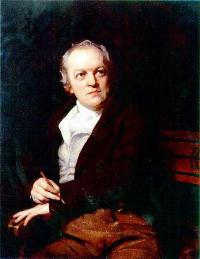
1757 London, England - 1827 London, England. Known for: Romantic allegorical and religious images, engraving.
The son of a hosier, William Blake had little formal education and no money; but nonetheless became in the eyes of critics, one of the very greatest English poets and painters - a modern prophet.... Read full biography
The son of a hosier, William Blake had little formal education and no money; but nonetheless became in the eyes of critics, one of the very greatest English poets and painters - a modern prophet. Blake came of age as an artist during the French Revolution, and his pictures of gloating serpents and... Read full biography
The son of a hosier, William Blake had little formal education and no money; but nonetheless became in the eyes of critics, one of the very greatest English poets and painters - a modern prophet. Blake came of age as an artist during the French Revolution, and his pictures of gloating serpents and fiery figures are some of the earliest of the great romantic statements. Blake was sent to drawing shool at the age of ten, and then was apprenticed to an engraver. When the apprenticeship ended, he... Read full biography
The son of a hosier, William Blake had little formal education and no money; but nonetheless became in the eyes of critics, one of the very greatest English poets and painters - a modern prophet. Blake came of age as an artist during the French Revolution, and his pictures of gloating serpents and fiery figures are some of the earliest of the great romantic statements. Blake was sent to drawing shool at the age of ten, and then was apprenticed to an engraver. When the apprenticeship ended, he studied briefly at the Royal Academy for painting. He pored over the work of Michelangelo, whom he admired for his discovery of an ideal spirit clothed in human form. His other love was for the Middle Ages. Many of Blake's lines curl in Romanesque... Read full biography
The son of a hosier, William Blake had little formal education and no money; but nonetheless became in the eyes of critics, one of the very greatest English poets and painters - a modern prophet. Blake came of age as an artist during the French Revolution, and his pictures of gloating serpents and fiery figures are some of the earliest of the great romantic statements. Blake was sent to drawing shool at the age of ten, and then was apprenticed to an engraver. When the apprenticeship ended, he studied briefly at the Royal Academy for painting. He pored over the work of Michelangelo, whom he admired for his discovery of an ideal spirit clothed in human form. His other love was for the Middle Ages. Many of Blake's lines curl in Romanesque shapes, and the luxuriant foliage of forms suggests the gothic. His illuminated books, so closely related to medieval books, are his most o... Read full biography
Artist Biography
Biography page for William Blake ((1757 - 1827)), known for Romantic allegorical and religious images, engraving. Showing 1 biographical entries and 0 sample artworks.
William Blake - Artist Info
About William Blake
Biography from the Archives of askART
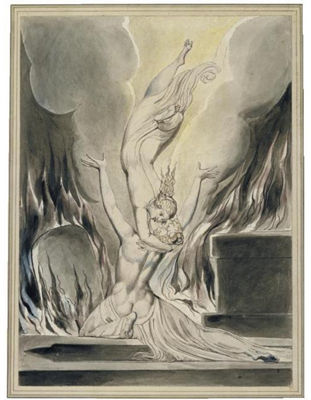 The son of a hosier, William Blake had little formal education and no money; but nonetheless became in the eyes of critics, one of the very greatest English poets and painters - a modern prophet. Blake came of age as an artist during the French Revolution, and his pictures of gloating serpents and fiery figures are some of the earliest of the great romantic statements.
Blake was sent to drawing shool at the age of ten, and then was apprenticed to an engraver. When the apprenticeship ended, he studied briefly at the Royal Academy for painting. He pored over the work of Michelangelo, whom he admired for his discovery of an ideal spirit clothed in human form. His other love was for the Middle Ages. Many of Blake's lines curl in Romanesque shapes, and the luxuriant foliage of forms suggests the gothic.
His illuminated books, so closely related to medieval books, are his most original creations. The books are a kind of handmade universe. Blake wrote the poetry, penned the scripts, engraved the designs and colored the prints. His images illuminate, refresh, criticize and enrich the text. His masterpiece may well be his engravings for the Book of Job, in which his strength as a craftsman matches his vision as an artist. The clear-cut quality of his line, so reminiscent of Durer, transforms the story into a Blakean, not a Biblical, parable of man's rise and fall.
To Blake, art was lines. Lines moved; they netted the imagination. He despised fashionable chiaroscuro, Venetian coloring and painting for painting's sake. Blake's pictures can seem dull; they are sometimes wooden and predictably colored. Yet his best images somehow seize the mind. His work is rank with genius, not smooth with polish. That lack of distance makes him one of the most personal of artists. His mythic figures may seem distant at first but they were always just symbols for man's "divided self". In a period when reason had dethroned faith, he found a way to keep the notion of paradise alive by moving it into the human imagination. He did this fully aware of the nature of the world around him, believing that art, the fruit of the imagination, could regenerate man. Today, there are no more channels for the imagination than there were in Bkake's time - which many explain why his visions are still so moving.
Blake had made sporadic attempts to achieve greater recognition, but he lacked tact, discretion and power to compromise, and he would not conceal his disconcerting ideas or produce the conventional things a patron might desire. He was a profoundly stirring poet who was, in large part, responsible for bringing about the Romantic movement in poetry, was able to achieve "remarkable results with the simplest means", and was one of several poets of the time who restored "rich musicality to the language."
Compiled and submitted August 2004 by Jean Ershler Schatz, artist and researcher from Laguna Woods, California.
Source:
Mark Stevens in "Newsweek", March 27, 1978
David D. Perkins in the "Harvard Magazine", May-June 1994.
William Blake's "Relevance to the Modern World" by Patrick Mooney (Literature 101)
From the internet, Artchive.com