Page loaded successfully. Showing biography for William Conor.
William Conor BIOGRAPHY
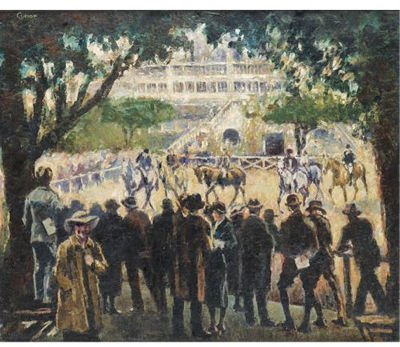
1881 Belfast, Ireland - 1968. Known for: Figure, portrait and working-class genre painting.
William Conor OBE, RHA, RUA (1881-1968). The Irish figure and portrait painter William Conor, noted for his sympathetic genre-paintings of working-class life in Ulster, was born in Belfast, the son... Read full biography
William Conor OBE, RHA, RUA (1881-1968). The Irish figure and portrait painter William Conor, noted for his sympathetic genre-paintings of working-class life in Ulster, was born in Belfast, the son of a wrought-iron worker. At the age of 10, the skill and dexterity of his chalk drawings was noticed... Read full biography
William Conor OBE, RHA, RUA (1881-1968). The Irish figure and portrait painter William Conor, noted for his sympathetic genre-paintings of working-class life in Ulster, was born in Belfast, the son of a wrought-iron worker. At the age of 10, the skill and dexterity of his chalk drawings was noticed by a teacher who arranged for him to attend the Government School of Design in Belfast. After initially working as a commercial designer, William Conor was commissioned by the British wartime... Read full biography
William Conor OBE, RHA, RUA (1881-1968). The Irish figure and portrait painter William Conor, noted for his sympathetic genre-paintings of working-class life in Ulster, was born in Belfast, the son of a wrought-iron worker. At the age of 10, the skill and dexterity of his chalk drawings was noticed by a teacher who arranged for him to attend the Government School of Design in Belfast. After initially working as a commercial designer, William Conor was commissioned by the British wartime government to produce official records of soldiers and munitions workers. In 1920, he moved to London where he met such artists as John Lavery and Augustus John. In 1921, he exhibited at the Royal Academy (RA) and continued showing at the Royal Hibernian... Read full biography
William Conor OBE, RHA, RUA (1881-1968). The Irish figure and portrait painter William Conor, noted for his sympathetic genre-paintings of working-class life in Ulster, was born in Belfast, the son of a wrought-iron worker. At the age of 10, the skill and dexterity of his chalk drawings was noticed by a teacher who arranged for him to attend the Government School of Design in Belfast. After initially working as a commercial designer, William Conor was commissioned by the British wartime government to produce official records of soldiers and munitions workers. In 1920, he moved to London where he met such artists as John Lavery and Augustus John. In 1921, he exhibited at the Royal Academy (RA) and continued showing at the Royal Hibernian Academy (RHA). From 1918-1967, he exhibited more than 200 works at the RHA. He became an Associate RHA in 1938 and a full member in... Read full biography
Artist Biography
Biography page for William Conor ((1881 - 1968)), known for Figure, portrait and working-class genre painting. Showing 7 biographical entries and 0 sample artworks.
William Conor - Artist Info
About William Conor
Biography from the Archives of askART
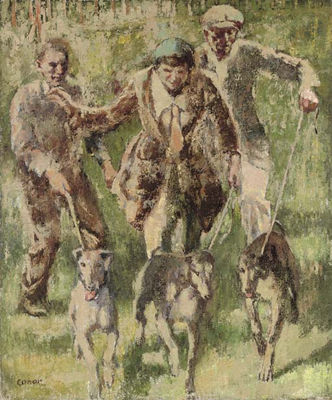 William Conor OBE, RHA, RUA (1881-1968)
The Irish figure and portrait painter William Conor, noted for his sympathetic genre-paintings of working-class life in Ulster, was born in Belfast, the son of a wrought-iron worker. At the age of 10, the skill and dexterity of his chalk drawings was noticed by a teacher who arranged for him to attend the Government School of Design in Belfast.
After initially working as a commercial designer, William Conor was commissioned by the British wartime government to produce official records of soldiers and munitions workers.
In 1920, he moved to London where he met such artists as John Lavery and Augustus John. In 1921, he exhibited at the Royal Academy (RA) and continued showing at the Royal Hibernian Academy (RHA). From 1918-1967, he exhibited more than 200 works at the RHA. He became an Associate RHA in 1938 and a full member in 1946. He focused on oil painting but executed a number of watercolours and crayon drawings.
In 1930, William Conor was one of the first Academicians when the Belfast Art Society was renamed the Ulster Academy of Arts. Two years later, he executed several mural commissions for Belfast Museum and Art Gallery. He showed at the Victor Waddington Galleries in 1944 and 1948.
In 1952, he was made OBE and in 1957 he was elected President of the Royal Ulster Academy (RUA) - an office he held for 7 years. He exhibited at Bell Gallery, Belfast in 1964, 1966 and 1967. Conor was also elected foundation member of the National Society of Painters, Sculptors and Engravers. In addition, he became the first Irish member of the Royal Institute of Oil Painters.
His paintings were widely shown during his lifetime. His solo exhibitions include:
1922 Grosvenor Galleries, London: "William Conor."?1968 Arts Council Northern Ireland, Belfast: "William Conor 1881-1968."?1999 Ulster Museum, Belfast: "William Conor- The People's Painter."
His group exhibitions include numerous Royal Hibernian Academy (RHA) shows and numerous Oireachtas. His artworks are represented in several public collections, including:
- Ulster Museum, Belfast.?- Hugh Lane Gallery, Dublin.?- Limerick Gallery of Art.?- National Self Portrait Collection, University of Limerick.?- Water Colour Society of Ireland Collection, Limerick.
Source:
Online Encyclopedia of Irish and World Art
http://www.visual-arts-cork.com/irish-artists/william-conor.htmBiography from the Archives of askART
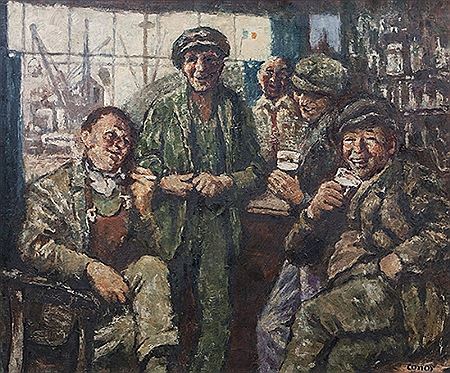 Celebrated for his warm and sympathetic portrayals of working-class life in Ulster, William Conor studied at the Government School of Design in Belfast in the 1890s. He initially worked as a commercial artist, before being commissioned during WWI by the British government to produce official records of soldiers and munitions workers.
He moved to London in 1920 and there met and socialized with such artists as Sir John Lavery and Augustus John. He exhibited at the Royal Academy in 1921 and in Dublin at the Royal Hibernian Academy (RHA) from 1918-1967, showing there nearly 200 works.
Conor was one of the first Academicians when the Belfast Art Society became the Ulster Academy of Arts in 1930. He became an Associate RHA in 1938 and a full member in 1946.
Exhibitions at the Victor Waddington Galleries were held in 1944 and 1948. In 1952 he was awarded the OBE and in 1957 he was elected President of the Royal Ulster Academy - an office he held until 1964.
More than 50 works of his in crayon and watercolour are in the permanent collections of the Ulster Museum.Biography from Caza Sikes
William Conor was born in Belfast, Ireland in 1881. William Conor was an Irish figurative painter who is remembered for his paintings of working-class life in Ulster, the northernmost province of Ireland. Over the course of his career, Conor received numerous prestigious commissions, including one for the opening of the Northern Ireland Parliament, as well as a mural, Ulster Past And Present, for the Belfast Museum and Art Gallery. Today, Conor's best known works are the crayon and watercolor studies of ordinary people and scenes from daily life. "My aim has been to seek for beauty in those places where it is not often sought, in crowded thoroughfares, in the factory and in the shipyard," the artist said of his work. Born in Belfast, Ireland on May 9, 1881 he studied at the Belfast Government School of Art before joining the lithography company David Allen and Sons. There he apprenticed as a poster designer. During World War I, Conor was enlisted by the British government as a war artist to document in drawings, the soldiers and munitions workers on the front lines. In 1920, Conor moved to London where he befriended the artists John Lavery and Augustus Edwin John. He was the first Irish artist to gain membership to the Royal Institute of Oil Painters and in 1952 was awarded the Order of the British Empire. Conor died in Belfast, Ireland on February 5, 1968.Biography from Ross's (John Ross & Co)
William Conor was a portrait and figure painter, born on 9 May 1881 in Fortingale street, Belfast. He was the son of a sheet-metal worker, and is still celebrated for his vivid, perceptive and sympathetic portrayal of working class life in Ulster.
Following his early education at Cliftonville Central National School, he went on to attend the Government school of Design after his artistic skill was noticed by a music teacher, Louis Mantell, who found the ten year old Conor sketching on the wall and consequently arranged for him to attend the art school. Conor began his career as an apprentice poster designer for David Allen and Sons Ltd., where he remained from 1904 to 1909. He first exhibited at the Belfast Art Society in 1910. He spent time on the Blasket Islands, Dingle Bay, CO. Kerry and in Paris where he would later exhibit at the Paris Salon, before moving to London in 1920 where he intended to settle. There he became acquainted with such figures as Augustus John (1878-1961), Belfast-born Sir John Lavery (1856-1941), and the Cafe Royal circle.
He first exhibited in the Royal Academy in 1921, while at the same time he was becoming established in Dublin; his works having been exhibiting at the Royal Hibernian Academy since 1918. 'The Darlin'; 'Balloon Man' and a portrait of Lieut- Col. James Craig, M.P. were amongst his first contributions to the academy, and he went on to exhibit some 200 works there until 1967. In 1925, in an article in London's The Studio magazine, Holbrook Johnson wrote: 'Belfast has... produced a painter. This event is of twofold importance. In the first place that Conor is a painter of genius and in the second place he is a painter of Belfast. There are notes in his work which suggest he could not have painted anywhere else. If a modern manufacturing town could have folk songs and if those folk songs could be translated into pictures, or if the feelings which inspired them could be pictorially represented, they would take the form of the art of William Conor.'
Conor was commissioned by the government in both WWI and II to record aspects of Northern Ireland's participation in the war effort. He spent the First World War producing official records of soldiers and munitions workers, and in 1916 at the end of the war, his drawings were sold at auction in aid of the Ulster Volunteer Force Patriotic Fund. In The Second World War, he produced works such as 'Building an Air Raid Shelter', 'The Warden' and twenty-seven sketches which were purchased by The Belfast Museum and Art Gallery. His work during this period was also exhibited in an exhibition of war artists at The National Gallery, London in 1941. He was elected one of the first academicians of the Ulster Academy of Arts (formerly the Belfast Art Society) in 1930, and was appointed a foundation member of the National Society of Painters, Sculptors and Gravers in the same year. He became an Associate of the RHA in 1938, going on to become a full member in 1946. In 1952, Conor received the OBE and in 1957, he was elected President of the RUA where he held office up until 1964. During the year of his election, the Council for the Encouragement of Music and Arts organized a retrospective which included more than 160 works, the largest individual exhibition ever to have been shown in Northern Ireland. In that same year, Conor received an honorary Master of Arts degree from Queen's University, Belfast.
William Conor died at his home on Salisbury Avenue, Belfast on 5 February 1968.Biography from Lyon & Turnbull
William Conor was born in Belfast, the son of a sheet metal worker. His origins strongly influenced his artistic life and inspired him many portraits of the working-class life in Ulster for which he is still highly celebrated today. When he was ten, his music teacher recognize his talent and helped him entering the Belfast College of Art. Immediately after school he worked as a commercial artist but was soon enlisted by the British government as an official war artist during the First World War.
In 1920 Conor moved to London and there a flourishing period of his artistic career began. He met and became good friends with Sir John Lavery and Augustus John and started exhibiting at the Royal Academy. He was also the first Irish artist to gain membership to the Royal Institute of Oil Painters. He remained faithful to his favorite subject: the people and street life of the industrial Belfast, which he always depicted with a warm and sympathetic approach. Between 1918 and 1967 he exhibited nearly 200 works at the Royal Hibernian Academy of which he became full member in 1946. Further honors followed: the Order of the British Empire in 1952 and President of the Royal Ulster Academy in 1957. More than 50 watercolors are held now in the permanent collections of the Ulster Museum.Biography from Morgan O'Driscoll
William Conor was a Belfast-born artist (1881) celebrated for his warm and sympathetic portrayals of working-class life in Ulster. His artistic talents were recognized at the early age of ten when a teacher of music, Louis Mantell, noticed the merit of his chalk drawings and arranged for him to attend the College of Art. He initially worked as a commercial artist, before being commissioned during WWI by the British government to produce official records of soldiers and munitions workers. He moved to London in 1920 and there met and socialized with such artists as Sir John Lavery and Augustus John. He exhibited at the RA in 1921 and in Dublin at the RHA from 1918 to 1967. Conor was one of the first Academicians when the Belfast Art Society became the Ulster Academy of Arts in 1930. He became an Associate RHA in 1938 and a full member in 1946. William Conor exhibited at the Victor Waddington Galleries in 1944 and 1948. In 1952 he was awarded the OBE and in 1957 he was elected President of the RUA, an office Conor held until 1964. More than 50 works of his in crayon and watercolour are in the permanent collections of the Ulster Museum. Conor passed away in 1968.Biography from De Veres Art Auctions
Belfast born, Conor has endeared himself to the art world by his sympathetic portrayals of working class life in Belfast. From a working class background Conor's ability to draw was noticed at an early age and arrangements were made for him to attend the College of Art.
He was commissioned during World War I, by the British Government to produce official records of soldiers and munition workers. He moved to London in 1920 and became friendly with Sir John Lavery and Augustus John. He exhibited with the victor Waddington Galleries in 1944 and 1948. In 1957 he became President of the RUA. He is represented in the Ulster Museum by a large body of work.