Page loaded successfully. Showing biography for William Sandy.
William Sandy BIOGRAPHY
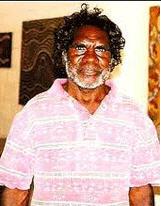
Born 1944 Pitjantjorra country around Ernabella in South Australia. Known for: Aboriginal dot painting symbolic of dreamtime stories, design.
William Sandy. William Sandy was born “in the bush” in 1944 in Pitjantjorra country around Ernabella in South Australia. Winkilini, further to the south, is William's country from his father and... Read full biography
William Sandy. William Sandy was born “in the bush” in 1944 in Pitjantjorra country around Ernabella in South Australia. Winkilini, further to the south, is William's country from his father and grandfathers side of the family. He paints Dingo, Emu, Women and other dreamtime stories for this... Read full biography
William Sandy. William Sandy was born “in the bush” in 1944 in Pitjantjorra country around Ernabella in South Australia. Winkilini, further to the south, is William's country from his father and grandfathers side of the family. He paints Dingo, Emu, Women and other dreamtime stories for this country in the traditional dot painting style mainly using earth tones. He grew up with the nomadic lifestyle of his tribe. Walking around his tribal lands until like many other tribal groups his people... Read full biography
William Sandy. William Sandy was born “in the bush” in 1944 in Pitjantjorra country around Ernabella in South Australia. Winkilini, further to the south, is William's country from his father and grandfathers side of the family. He paints Dingo, Emu, Women and other dreamtime stories for this country in the traditional dot painting style mainly using earth tones. He grew up with the nomadic lifestyle of his tribe. Walking around his tribal lands until like many other tribal groups his people came in from the desert under pressure from the government. Eventually the family settled at Ernabella, South Australia where he attended the mission school. From there William came to Papunya in 1973 during a walkabout, where he met and married Violet... Read full biography
William Sandy. William Sandy was born “in the bush” in 1944 in Pitjantjorra country around Ernabella in South Australia. Winkilini, further to the south, is William's country from his father and grandfathers side of the family. He paints Dingo, Emu, Women and other dreamtime stories for this country in the traditional dot painting style mainly using earth tones. He grew up with the nomadic lifestyle of his tribe. Walking around his tribal lands until like many other tribal groups his people came in from the desert under pressure from the government. Eventually the family settled at Ernabella, South Australia where he attended the mission school. From there William came to Papunya in 1973 during a walkabout, where he met and married Violet Nakamarra, sister of Michael Nelson Jagamarra. Michael became a noted award winning artist and d... Read full biography
Artist Biography
Biography page for William Sandy ((Born 1944)), known for Aboriginal dot painting symbolic of dreamtime stories, design. Showing 2 biographical entries and 0 sample artworks.
William Sandy - Artist Info
About William Sandy
Name variants
Sandy William
Biography from the Archives of askART
 William Sandy
 was born “in the bush” in 1944 in Pitjantjorra country around Ernabella in South Australia.
Winkilini, further to the south, is William's country from his father and grandfathers side of the family.
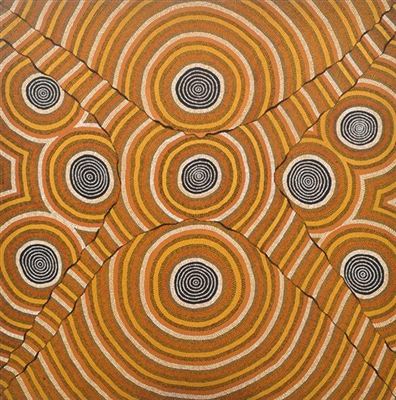
He paints Dingo, Emu, Women and other dreamtime stories for this country in the traditional dot painting style mainly using earth tones.
He grew up with the nomadic lifestyle of his tribe.
Walking around his tribal lands until like many other tribal groups his people came in from the desert under pressure from the government.
Eventually the family settled at Ernabella, South Australia where he attended the mission school.
From there William came to Papunya in 1973 during a walkabout, where he met and married Violet Nakamarra, sister of Michael Nelson Jagamarra.
Michael became a noted award winning artist and designer of the forecourt of the new Australian Parliment building in Canbera ACT.
They have four children a boy and three girls.
William did his first painting in 1975 influenced by the areas emerging art scene.
Teaching himself to paint while watching the other Papunya artists at work he became strongly influenced by the group.
However, it was not until the early ‘80s that he began painting regularly for Papunya Tula Artists.
It did take some time for Papunya Tula to establish itself in representing the artists of Papunya.
Slowed by the departure of Geoffrey Bardon a strong mentor of the group.
This was because it was difficult for some to recognize that Aboriginal people had something valuable to add to society.
In 1985 he won the Northern Territory Art Award.
His work was included in the “Dreamings” show, which toured in the subsequent show of Papunya Tula Artists at the John Weber Gallery in New York.
William Sandy had a solo exhibition in 1990 at gallery Gabrielle Pizzi.
Major Collections holding his works:
Holmes a Court
Broken Hill Art Gallery
Wollongong City Art Gallery
Source:
Website of personally-selected-aboriginal-art.comBiography from the Archives of askART
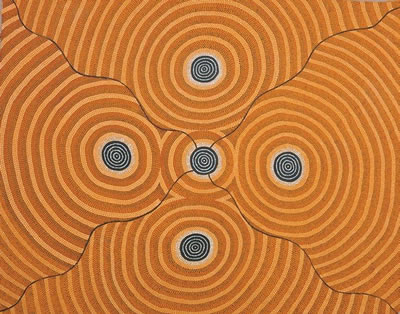 William Sandy was born c.1944 near Ernabella in South Australia. William Sandy started to paint in 1975. From the early 1980s, he began painting for the Papunya Tula Artists. William Sandy has lived in Areyonga and Haasts Bluff and since 1973 at Papunya in central Australia.
William moved to Papunya in 1973 and two years later did his first painting for Papunya Tula Artists, after teaching himself to paint by watching the older artists. At Papunya he married Violet Nakamarra, the sister of Michael Nelson Jagamarra, who is also a well know Aboriginal artist.
William Sandy was the first of the Pitjantjatjara involved in the contemporary art movement. From the early 1980s, he began painting for the Papunya Tula Artists. William Sandy is also a very knowledgeable, traditional medicine man.
Source:
Australian Encyclopedia Aboriginal Artists dictionary of biographies
Collections:
Art Gallery Western Australia
Art Gallery of South Australia
National Gallery of Australia, Canberra
Art Bank, Sydney
National Gallery of Victoria, Melbourne
Museum and Art Gallery of the Northern Territory, Darwin