Page loaded successfully. Showing biography for Yan Hsia.
Yan Hsia BIOGRAPHY
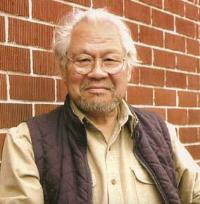
Born 1937 Hunan, China. Known for: Abstract realism-figure, landscape.
Hsia Yan . 1932. Hsia Yan was born in Xiangxiang, in Hunan Province, in China. 1949. Orphaned very young, he grew up in Nanjing. He is a graduate of Nanjing Normal University. 1951. He went to study... Read full biography
Hsia Yan . 1932. Hsia Yan was born in Xiangxiang, in Hunan Province, in China. 1949. Orphaned very young, he grew up in Nanjing. He is a graduate of Nanjing Normal University. 1951. He went to study in Taipei, under the leadership of Li Zhong-Sheng, with innovative precepts. 1955. Although martial... Read full biography
Hsia Yan . 1932. Hsia Yan was born in Xiangxiang, in Hunan Province, in China. 1949. Orphaned very young, he grew up in Nanjing. He is a graduate of Nanjing Normal University. 1951. He went to study in Taipei, under the leadership of Li Zhong-Sheng, with innovative precepts. 1955. Although martial law had been imposed, Hsia Yan and seven other Chinese artists took the risk of founding Ton-Fan, in pinyin dongfang huahui Orient Movement,the first movement in Chinese art, rather abstract art.... Read full biography
Hsia Yan . 1932. Hsia Yan was born in Xiangxiang, in Hunan Province, in China. 1949. Orphaned very young, he grew up in Nanjing. He is a graduate of Nanjing Normal University. 1951. He went to study in Taipei, under the leadership of Li Zhong-Sheng, with innovative precepts. 1955. Although martial law had been imposed, Hsia Yan and seven other Chinese artists took the risk of founding Ton-Fan, in pinyin dongfang huahui Orient Movement,the first movement in Chinese art, rather abstract art. Fortunately the regime was unfamiliar with avant-garde art, and the group was able to work. 1957. He participated in the 1st exhibition of the group Ton Fan in Spain. 1963. He went to France and studied at E.S.B.A. from Paris. 1968. He moved to the... Read full biography
Hsia Yan . 1932. Hsia Yan was born in Xiangxiang, in Hunan Province, in China. 1949. Orphaned very young, he grew up in Nanjing. He is a graduate of Nanjing Normal University. 1951. He went to study in Taipei, under the leadership of Li Zhong-Sheng, with innovative precepts. 1955. Although martial law had been imposed, Hsia Yan and seven other Chinese artists took the risk of founding Ton-Fan, in pinyin dongfang huahui Orient Movement,the first movement in Chinese art, rather abstract art. Fortunately the regime was unfamiliar with avant-garde art, and the group was able to work. 1957. He participated in the 1st exhibition of the group Ton Fan in Spain. 1963. He went to France and studied at E.S.B.A. from Paris. 1968. He moved to the United States and was influenced by Ameri... Read full biography
Artist Biography
Biography page for Yan Hsia ((Born 1937)), known for Abstract realism-figure, landscape. Showing 3 biographical entries and 0 sample artworks.
Yan Hsia - Artist Info
About Yan Hsia
Name variants
Yang Hsia
Biography from the Archives of askART
 Hsia Yan
1932
Hsia Yan was born in Xiangxiang, in Hunan Province, in China.
1949
Orphaned very young, he grew up in Nanjing.
He is a graduate of Nanjing Normal University.
1951
He went to study in Taipei, under the leadership of Li Zhong-Sheng, with innovative precepts.
1955
Although martial law had been imposed, Hsia Yan and seven other Chinese artists took the risk of founding Ton-Fan, in pinyin dongfang huahui Orient Movement,the first movement in Chinese art, rather abstract art. Fortunately the regime was unfamiliar with avant-garde art, and the group was able to work.
1957
He participated in the 1st exhibition of the group Ton Fan in Spain.
1963
He went to France and studied at E.S.B.A. from Paris.
1968
He moved to the United States and was influenced by American photo-realism.
1992
He returned to Taiwan.
2000
He received the National Art and Culture Award from the Arts Foundation
2002
He moved to Shanghai and continues to explore different styles of Contemporary Art.
Source:
China Art Museum, Shanghai, 2021Biography from Setdart
Throughout his long and varied career, Hsia has developed a wide range of visual languages. In 1951, Hsia studied art with Lee Chun-Shan and then formed the group Ton Fan with seven other artists. In 1963, he went to Europe for the first time and settled in Paris for five years. In 1968 he moved to New York and in 1992 he returned to Taipei. From 2002, Hsia moved to Shanghai, where she has lived ever since.
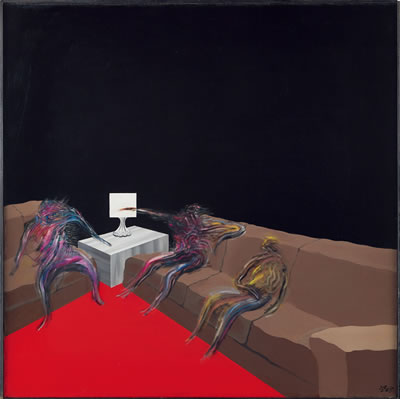
His experience in the art world has been rich and varied. In 2018, he organized a retrospective at the Taipei Museum of Fine Arts, Taiwan. Hsia was living in New York City in the 1970s when photo-realism became popular, which influenced his painting style. He began to depict scenes of people moving through cityscapes, paying close attention to the details of these scenes and simulating rushed movement by blurring those parts.
In the second half of the 1990s, Hsia continued his series of fuzzy characters with 100 faces (1994-1996) and Thirty-six portraits (2002), which are considered to be the most vivid expressions of her formal blur technique. After 1999, Hsia developed a series of iron sculptures based on the same theme, exploring and transforming his pictorial language with a new medium.
Since 2002, Hsia has used cut-paper collage techniques and introduced spiritual verses in his paintings, especially in her monumental landscapes which include contemporary scenes of urban recreation.Biography from Kingsley Art Auction (CLOSED)
Hsia graduated from Nanjing Normal University in 1949 and then studied under Lee Chung-Shen in 1951. In 1956, Wu Hao, Ho Kan, Shiao Chin, and Hsia Yan formed the Oriental Paintings Society under the huge impact of abstraction to depict in automatism technique. In 1958, Hsia started to express in abstraction fracture. In 1963, he went to Paris and later developed the most well-known "mao mao jen" series, which allows the twisting and fluctuating lines to create the dramatic tension. Hsia was studied at École Nationale Superieure Des Beaux-Arts for two years; yet at the same time, also held many solo and group exhibitions all over the world. In 1968, Hsia Yan moved to New York. His style was influenced by American Photo-Realism and combined with "mao mao jen," which made him an active artist among New York Photo-Realists. In 1990, he chose Chinese mythology and Taiwan imagery as the subject matter. In 1992, Hsia moved back to Taiwan and blended Taiwan local language and intense race emotion into his artwork. In 2002, Hsia moved to Shanghai and continues his artistic creation with medium of bronze sculpture, paper-cut and oil paint.