Page loaded successfully. Showing biography for Yu Youhan.
Yu Youhan BIOGRAPHY
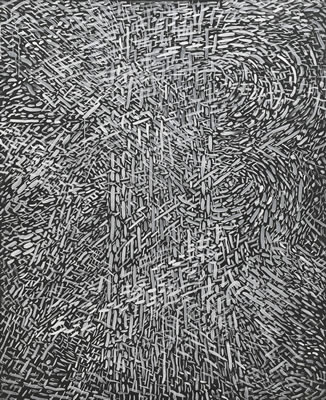
Born 1943. Known for: Painting.
Yu Youhan: Founder of Abstract Art & Pioneer of Political Pop. Yu Youhan not only is an important figure that greatly influenced contemporary abstract art in China from as early as 1979, he has also... Read full biography
Yu Youhan: Founder of Abstract Art & Pioneer of Political Pop. Yu Youhan not only is an important figure that greatly influenced contemporary abstract art in China from as early as 1979, he has also established the concept of “Political Pop” in China since 1988. As a mentor, Yu Youhan inspired... Read full biography
Yu Youhan: Founder of Abstract Art & Pioneer of Political Pop. Yu Youhan not only is an important figure that greatly influenced contemporary abstract art in China from as early as 1979, he has also established the concept of “Political Pop” in China since 1988. As a mentor, Yu Youhan inspired successors such as Wang Ziwei among others with his Political Pop, as well as later on influenced Ding Yi to begin creating abstract works as well. The Circle Series: Tribute to the Free Spirit In 1979,... Read full biography
Yu Youhan: Founder of Abstract Art & Pioneer of Political Pop. Yu Youhan not only is an important figure that greatly influenced contemporary abstract art in China from as early as 1979, he has also established the concept of “Political Pop” in China since 1988. As a mentor, Yu Youhan inspired successors such as Wang Ziwei among others with his Political Pop, as well as later on influenced Ding Yi to begin creating abstract works as well. The Circle Series: Tribute to the Free Spirit In 1979, Yu Youhan created an artistic revolution by challenging conventional mainstream art with new abstract art using free strokes to create the Circle series; which surpasses both reality and the secular world. The series’ implications of oriental... Read full biography
Yu Youhan: Founder of Abstract Art & Pioneer of Political Pop. Yu Youhan not only is an important figure that greatly influenced contemporary abstract art in China from as early as 1979, he has also established the concept of “Political Pop” in China since 1988. As a mentor, Yu Youhan inspired successors such as Wang Ziwei among others with his Political Pop, as well as later on influenced Ding Yi to begin creating abstract works as well. The Circle Series: Tribute to the Free Spirit In 1979, Yu Youhan created an artistic revolution by challenging conventional mainstream art with new abstract art using free strokes to create the Circle series; which surpasses both reality and the secular world. The series’ implications of oriental mysticism allow us to confront our souls because, “To express in abstract ways is spo... Read full biography
Artist Biography
Biography page for Yu Youhan ((Born 1943)), known for Painting. Showing 1 biographical entries and 0 sample artworks.
Yu Youhan - Artist Info
About Yu Youhan
Name variants
Youhan Yu
Biography from Poly Auction Hong Kong
Yu Youhan: Founder of Abstract Art & Pioneer of Political Pop. Yu Youhan not only is an important figure that greatly influenced contemporary abstract art in China from as early as 1979, he has also established the concept of “Political Pop” in China since 1988. As a mentor, Yu Youhan inspired successors such as Wang Ziwei among others with his Political Pop, as well as later on influenced Ding Yi to begin creating abstract works as well.
The Circle Series: Tribute to the Free Spirit In 1979, Yu Youhan created an artistic revolution by challenging conventional mainstream art with new abstract art using free strokes to create the Circle series; which surpasses both reality and the secular world. The series’ implications of oriental mysticism allow us to confront our souls because, “To express in abstract ways is spontaneous and free of all movements in the universe, including human thinking,” says Yu. In his view, all things of the universe have common grounds and are shaped from the combinations and the movements of tiny unities. He was particularly captivated by the perspective in Lao Tze’s Daodejing, and said, “I hope my work follows Lao Tze’s point of view that the world is permanently alive and ever-changing.” The circle refers to the universe, karma and stability; it is an instant, eternity, nothingness and presence, start and end altogether.
The Circle series is not only a tribute to Oriental philosophy, but also a homage to the free spirit. Works in color are rare in the Circle series from the early days of Yu’s career. Painting as generally in black and white, but with blue and yellow further added to the piece, the dimensions are intensified and the painting becomes even more treasurable.
The Mao Series: One of the Two Major Social Events in Art of the 1990s. In 1988, as a response to the changing times, Yu Youhan began to produce paintings of Mao Zedong. In 1993, the Mao series was not only displayed in the “China Avant-Garde” exhibition in Europe, but also the Venice Biennial Exhibition that featured Chinese artists for the first time. This led to the increase in Yu’s international reputation. A renowned art critic Li Xianting once wrote to Yu, “Among all the painters who paint leaders in our country today, I prefer your work; in addition to Wang Guangyi’s”. Furthermore, the famed British art historian and critic Edward Lucie-Smith wrote that Yu’s Mao series and Frank Ghery’s architectural masterwork, the building of the Guggenheim Museum in Bilbao, represent the two largest social events of the art world in the 1990s. Then in 1996, a famous Swiss collector named Uli Sigg, who collected approximately two-thousand artworks of Chinese contemporary artists, was asked, “if your house is on fire and you can only save one work, which one will you take?” Sigg answered without the least hesitation, “Yu’s Mao series.” Chairman Mao Discussing with the Peasants of ShaoShan is the most iconic piece in the Mao series. With Mao being the artist’s favorite subject, Yu successively made three distinct paintings on the subject. The first one was grandly presented in Europe at the “China Avant-Garde” exhibition in 1993. With the painting on the cover of the exhibition’s catalogue, the work rose to global fame, bringing Chinese avant-garde to the international stage. The second piece, painted in 1999, was on the cover of the U.S. Time magazine before joining Sigg’s collection. Mao Discussing with the Peasants of Shao Shan is not only the largest among the three pieces, but also the largest amongst all of Yu’s portraits of Mao. Yu painted Mao Discussing with the Peasants of Shao Shan in 2007, the year of diplomatic exchanges between China and the Soviet Union, following the invitation to the 2nd Moscow Biennial Exhibition.
Renowned art critic, Li Xianting compared Chinese Political Pop art and American Pop art and said, “While the specific language of American Pop art enhances popular images into ‘myth’, the creativity of the Chinese Political Pop art lies precisely in making godlike images vulgar and popular.” In the painting, what the artist did was both deconstructing and recreating Mao’s image in creative ways; de-politicizing Mao with delightful flower patterns to dissolve the historical myth of the political icon. Yu Youhan’s Mao is no longer a sacred and inviolable god, but a mundane and ordinary man. The artist briskly omitted the utopian myth of the Cultural Revolution, by evoking a re-examination of a history turned into a myth. “My painting contains the comparison of two epochs: times under the rule of Mao and the approaching of a new era of reform and openness.” Yu’s paintings of Mao sufficiently express a specific historical context with an extremely unique style and characteristic.
In 1991, before the Soviet Union collapsed, Political Pop art was prevalent in the international art market. The fact that Mao Discussing with the Peasants of Shao Shan was shown in the Moscow Biennial Exhibition is a significant milestone in the history of exchanges between the two countries; the work indeed implies an epochal broadness, a historical thickness and an academic importance in the art history.
Mao in New York is a particularly important series in Yu’s oeuvre. It was with this series that the artist amplified his sales record in 2007. Among the works in this series, Mao and Statue of Liberty, painted in 1995, is the most important. The artist felt especially reluctant when the piece was sold to a foreign collector. Years later, this regret persisted; “I really like this piece. It is an important work of mine,” said Yu. Mao’s gesture of salutation with a waving hand marks the most popular image of the Cultural Revolution. “Advancing across high waves and under strong wind,” Mao passes through time and space, waving. This image juxtaposes the Statue of Liberty of the U.S.A., of her holding the Declaration of Independence and raising a torch, symbolizing freedom and liberty. It is a divergence between the Eastern and Western cultures, as well as between tyranny and freedom of the two distinct political systems. Yu Youhan painted pleasing flower patterns over Mao’s gown in his work. It shows Mao’s passionate attitude and his eagerness of winning the dynasty battles. However, one cannot but notice there’s a gap and loneness behind which is expressed from the painting. Yu was living in the U.S. when he completed this painting. His thoughts and feelings motivated him to materialize his criticism towards the tyranny of the Cultural Revolution and his longing for freedom and democracy. He also cleverly and humorously questions the endurance of two different political structures. As a major work of the artist in the 1990s, Mao in New York represented an important stage of his career.
Jiao Yulu: A Major Piece in the Transformation Period Yu’s art is a reflection of his times. In 1998, Yu began to create the Ah, Us series that bears the common interest and reflects how an individual lives his entire life, and what an ideal society is like. “Us” refers to “we Chinese”; Ah, Us is a galaxy of Chinese figures. Painted in 2001, Jiao Yu Lu in this series came after profound thinking; each head seems to go through repeated modifications. In 1964, Jiao died from liver cancer at the age of 42. In all his fragility before his death, he still fought for the people of Kao County in Henan. For Yu Youhan, Jiao represented a hero of the people, and the painting is an appraisal and commemoration to him. The ocean in the artwork embodied the mortal world as Jiao stands in the middle showing his intelligence and might. The 15 figures are ordinary people, and the baby represents generational inheritance. With tragic and heroic historical feelings and influential power, the work contains contradicting emotions of sadness and delight, and struggle and rebirth.
As an extension of the artist’s pop art works, the new series differ from Yu’s previous works on Mao by subliming instead to the ordinary man, as a symbol of heroes amongst us all. Yu painted the ocean with the same strokes he used in his abstract Circle series, inducing Yu’s return to abstract painting soon after. Therefore, Jiao Yu Lu is both an essential piece from Ah, Us series, and a turning point for the artist.
Yu has played a key role in the development of several art trends, and continues to contribute to the development of contemporary art in China. His influence extends from the rise of abstract art in Shanghai in the 1980s, to opening new possibilities for contemporary art in the metropolis. Admirers of his Political Pop Art are everywhere in Mainland China. Just as the famed British art historian and critic Edward Lucie-Smith put it, “Whenever we mention about the development of art in China after the Cultural Revolution in 1976, Yu Youhan is the most represented person in this period.”