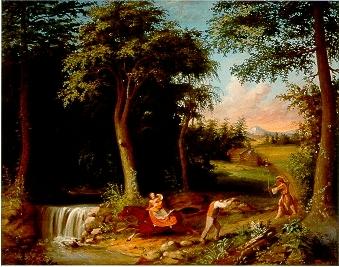
Browere, born in Tarrytown, New York in 1814, was the son of a sculptor, John Henri Isaac Browere (1790-1834), famous for a series of life masks of U.S. presidents and other noteworthy personages,... Read full biography
Browere, born in Tarrytown, New York in 1814, was the son of a sculptor, John Henri Isaac Browere (1790-1834), famous for a series of life masks of U.S. presidents and other noteworthy personages, but the son was largely self taught. Established in New York City, Browere executed eight scenes from... Read full biography
Browere, born in Tarrytown, New York in 1814, was the son of a sculptor, John Henri Isaac Browere (1790-1834), famous for a series of life masks of U.S. presidents and other noteworthy personages, but the son was largely self taught. Established in New York City, Browere executed eight scenes from the writings of Washington Irving. One example is the rather ambitious battle scene, Peter Stuyvesant at the Recapture of Fort Casimir (1838; M. Knoedler and Co., New York), full of animated figure... Read full biography
Browere, born in Tarrytown, New York in 1814, was the son of a sculptor, John Henri Isaac Browere (1790-1834), famous for a series of life masks of U.S. presidents and other noteworthy personages, but the son was largely self taught. Established in New York City, Browere executed eight scenes from the writings of Washington Irving. One example is the rather ambitious battle scene, Peter Stuyvesant at the Recapture of Fort Casimir (1838; M. Knoedler and Co., New York), full of animated figure groups and descriptive detail. Then he moved to Catskill where he focused on landscapes. Meanwhile, Browere was exhibiting works at the American Art-Union, the National Academy, and at the Apollo Association. He also exhibited The Headless Horseman of... Read full biography
Browere, born in Tarrytown, New York in 1814, was the son of a sculptor, John Henri Isaac Browere (1790-1834), famous for a series of life masks of U.S. presidents and other noteworthy personages, but the son was largely self taught. Established in New York City, Browere executed eight scenes from the writings of Washington Irving. One example is the rather ambitious battle scene, Peter Stuyvesant at the Recapture of Fort Casimir (1838; M. Knoedler and Co., New York), full of animated figure groups and descriptive detail. Then he moved to Catskill where he focused on landscapes. Meanwhile, Browere was exhibiting works at the American Art-Union, the National Academy, and at the Apollo Association. He also exhibited The Headless Horseman of Sleepy Hollow in 1839. The New York Historical Association in Cooperstown has one of Browere's lively... Read full biography
Albertus Del Orient Browere - Artist Info
About Albertus Del Orient Browere: Books
Books & Publications (65)
Publications based on askART research. List may not be comprehensive.
The Artists Bluebook 34,000 North American Artists to March 2005
2005
AskART.com Inc. - Dunbier, Lonnie Pierson (Editor)