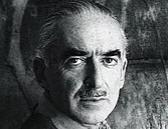
Born in 1912 in Kiev, Russia, Alexander Liberman became an academic and post-Impressionist painter in Europe before moving to the United States in 1941. From that time, he painted and sculpted in... Read full biography
Born in 1912 in Kiev, Russia, Alexander Liberman became an academic and post-Impressionist painter in Europe before moving to the United States in 1941. From that time, he painted and sculpted in abstract styles, often using the circle, which he asserted was the ideal shape. In his sculpture, he... Read full biography
Born in 1912 in Kiev, Russia, Alexander Liberman became an academic and post-Impressionist painter in Europe before moving to the United States in 1941. From that time, he painted and sculpted in abstract styles, often using the circle, which he asserted was the ideal shape. In his sculpture, he was revolutionary because of his use of industrial materials, factory building methods, and large-scale size. The first nine years of his life, he lived in Kiev with his family where the father was in... Read full biography
Born in 1912 in Kiev, Russia, Alexander Liberman became an academic and post-Impressionist painter in Europe before moving to the United States in 1941. From that time, he painted and sculpted in abstract styles, often using the circle, which he asserted was the ideal shape. In his sculpture, he was revolutionary because of his use of industrial materials, factory building methods, and large-scale size. The first nine years of his life, he lived in Kiev with his family where the father was in the lumber business and his mother was devoted to the theatre. The Libermans left Russia in 1921, and Alexander studied in England and France, first in London and then in Paris with Andre Lhote from 1929 to 1931. He studied philosophy and mathematics... Read full biography
Born in 1912 in Kiev, Russia, Alexander Liberman became an academic and post-Impressionist painter in Europe before moving to the United States in 1941. From that time, he painted and sculpted in abstract styles, often using the circle, which he asserted was the ideal shape. In his sculpture, he was revolutionary because of his use of industrial materials, factory building methods, and large-scale size. The first nine years of his life, he lived in Kiev with his family where the father was in the lumber business and his mother was devoted to the theatre. The Libermans left Russia in 1921, and Alexander studied in England and France, first in London and then in Paris with Andre Lhote from 1929 to 1931. He studied philosophy and mathematics at the Sorbonne and architecture at Ecole des Beaux-Arts. In the 1930s, Liberman designed stage sets, and worked briefly with a landscap... Read full biography
Alexander Semeonovitch Liberman - Artist Info
About Alexander Semeonovitch Liberman: Books
Books & Publications (48)
Publications based on askART research. List may not be comprehensive.
The Artists Bluebook 34,000 North American Artists to March 2005
2005
AskART.com Inc. - Dunbier, Lonnie Pierson (Editor)
479 pages
Who Was Who in American Art, 1564-1975: Three Volumes
1999
Falk, Peter Hastings (Editor)
3,724 pages
A Guide to Art At the University of Illinois
1995
Scheinman, Muriel
218 pages (color)
Who's Who in American Art, 1993-1994, 20th Edition (American Federation of Arts)
1993
Bowker R R
1,473 pages
American Paintings An Illustrated Catalogue (Exhibition catalog)
1992
National Gallery of Art
545 pages
Betty Parsons Artist, Dealer, Collector
1991
Hall, Lee
192 pages (color)
Art Since Mid Century 1945 to the Present
1991
Wheeler, Daniel
344 pages (color)
Annual Exhibition Record, 1914-68, Pennsylvania Academy of the Fine Arts (Exhibition catalog)
1989
Falk, Peter Hastings (Editor)
538 pages
Contemporary Artists (3rd Edition)
1989
Naylor, Colin (editor)
1,059 pages
Universal Limited Art Editions History and Catalogue/the 1st 25 Years
1989
Sparks, Esther
552 pages (color)
Contemporary Illustrated Books Word and Image, 1967-1988 (Exhibition catalog)
1989
Stein, Donna
72 pages
Alexander Liberman New Paintings (Exhibition catalog)
1988
Andre Emmerich Gallery
32 pages (color)
Dictionary of Contemporary American Artists (5th Edition)
1987
Cummings, Paul
653 pages
The Empire State Collection Art for the Public
1987
Sandler, Irving
214 pages (color)
Who's Who in American Art-1986 1986
1986
Jaques Cattell Press
1,292 pages
Mantle Fielding's Dictionary of American Painters, Sculptors & Engravers
1986
Opitz, Glenn B (editor)
1,081 pages
American Painting: The Twentieth Century (Second edition)
1986
Rose, Barbara
170 pages (color)
Dictionary of American Sculptors: 18th Century to Present
1984
Opitz, Glenn B (editor)
656 pages
The Britannica Encyclopedia of American Art
1981
Rugoff, Milton
669 pages (color)
The Guggenheim Museum Collection Handbook/ 1900-1980
1980
Barnett, Vivian Endicott
526 pages (color)
Urban Encounters Art, Architecture, Audience
1980
Institute of Contemporary Art
64 pages (color)
Arts in America/A Bibliography Volume 1 (Sculpture, the West etc)
1979
Karpel, Bernard/Ruth Spiegel
730 pages
Arts in America/A Bibliography Volume 2 (Painting and Graphics)
1979
Karpel, Bernard/Ruth Spiegel
736 pages
Painting and Sculpture in the Museum of Modern Art
1977
Barr, Alfred H
655 pages
American Sculpture A Guide to Information Sources
1977
Ekdahl, Janis
260 pages
American Painting From the Colonial Period to the Present
1977
Prown, Jules/Barbara Rose
277 pages (color)
American Prints 1913-1963 (Exhibition catalog)
1976
Castelman, Riva
160 pages
Who's Who in American Art, 1976 12th Edition
1976
Jaques Cattell Press
756 pages
Whitney Museum of American Art Catalogue of the Collection
1974
Baur, John I H
235 pages (color)
Catalogue of American Paintings in British Public Collections
1974
Gidley, Mick
58 pages
Alexander Liberman The Circle Paintings 1950-64 (Exhibition catalog)
1974
Hess, Thomas B
16 pages (color)
The Artist's America American Heritage History of
1973
Davidson, Marshall
416 pages (color)
The Vincent Price Treasury of American Art
1972
Price, Vincent
320 pages (color)
Contemporary Art 1942-72
1972
Sandler, Irving (intro)
479 pages (color)
Icons and Images of the Sixties
1971
Calas, Nicolas and Elena
347 pages
American Painting The Twentieth Century
1970
Rose, Barbara
116 pages
Twentieth Century Art From the Nelson Aldrich Rockefeller Collection (Exhibition catalog)
1969
Lieberman, William
139 pages (color)
Art of the Real U S A 1948-1968
1968
Goosen, E C
64 pages (color)
The Artist in America
1967
Artist in America, Editors
256 pages (color)
Drawings/Recent Acquisitions Museum of Modern Art/New York
1967
Lieberman, William S
48 pages
New Tendencies in Art
1966
Pellegrini, Aldo
320 pages (color)
The Responsive Eye (Exhibition catalog)
1965
Seitz, William C
56 pages (color)
Contemporary American Painting and Sculpture (Exhibition catalog)
1965
University of Illinois
210 pages
A Decade of American Drawings 8th Exhibition Sponsored by Friends (Exhibition catalog)
1965
Whitney Museum
52 pages
American Drawings (Exhibition catalog)
1964
Solomon R Guggenheim Museum
48 pages
New Directions in American Painting: A Loan Exhibition (Exhibition catalog)
1963
Brandeis University
48 pages
Geometric Abstraction in America (Exhibition catalog)
1962
Gordon, John
68 pages (color)
Gardens of Art: The Sculpture Park at the Frederik Meijer Gardens