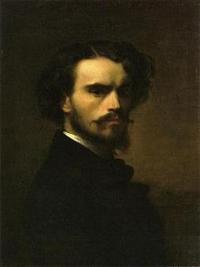
Alexandre Cabanel, born in Montpellier, France on September 28, 1823, was a tremendously popular painter who personified official academic art at the top of the Salon hierarchy and with his... Read full biography
Alexandre Cabanel, born in Montpellier, France on September 28, 1823, was a tremendously popular painter who personified official academic art at the top of the Salon hierarchy and with his contemporary Bouguereau stood as the antithesis of progressive movements, including impressionism. Alexandre... Read full biography
Alexandre Cabanel, born in Montpellier, France on September 28, 1823, was a tremendously popular painter who personified official academic art at the top of the Salon hierarchy and with his contemporary Bouguereau stood as the antithesis of progressive movements, including impressionism. Alexandre entered drawing school as a boy and continued at the Ecole des Beaux-Arts in 1840 under Picot. Soon after his debut at the Salon, he won the Second Prix de Rome (1845) with Christ in the Praetorium, a... Read full biography
Alexandre Cabanel, born in Montpellier, France on September 28, 1823, was a tremendously popular painter who personified official academic art at the top of the Salon hierarchy and with his contemporary Bouguereau stood as the antithesis of progressive movements, including impressionism. Alexandre entered drawing school as a boy and continued at the Ecole des Beaux-Arts in 1840 under Picot. Soon after his debut at the Salon, he won the Second Prix de Rome (1845) with Christ in the Praetorium, a rather neo-Baroque crowd scene. In Rome he painted Albaydé (Musée Fabre, Montpellier), a kind of Neo-Greek femme fatale. In 1855, he exhibited The Glorification of St Louis, which D. Cady Eaton later called pretentious. His Birth of Venus (Musée... Read full biography
Alexandre Cabanel, born in Montpellier, France on September 28, 1823, was a tremendously popular painter who personified official academic art at the top of the Salon hierarchy and with his contemporary Bouguereau stood as the antithesis of progressive movements, including impressionism. Alexandre entered drawing school as a boy and continued at the Ecole des Beaux-Arts in 1840 under Picot. Soon after his debut at the Salon, he won the Second Prix de Rome (1845) with Christ in the Praetorium, a rather neo-Baroque crowd scene. In Rome he painted Albaydé (Musée Fabre, Montpellier), a kind of Neo-Greek femme fatale. In 1855, he exhibited The Glorification of St Louis, which D. Cady Eaton later called pretentious. His Birth of Venus (Musée d'Orsay), inspired by Ingres' Odalisque with a Slave (Fogg Art Museum), caused such a sens... Read full biography
Alexandre Cabanel - Artist Info
About Alexandre Cabanel: Books
Books & Publications (2)
Publications based on askART research. List may not be comprehensive.
Who Was Who in American Art, 1564-1975: Three Volumes
1999
Falk, Peter Hastings (Editor)
3,724 pages
Accents on Artists A fact-filled pronunciation guide. Over 800 artist’s names you should know…