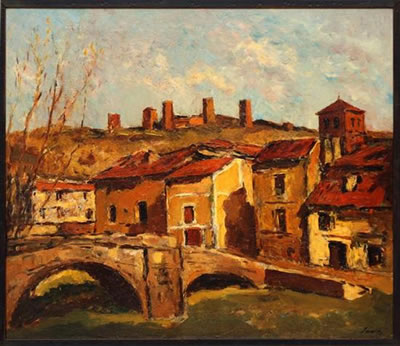
Arturo Souto Feijoo arrived in Mexico in 1942 in one of the first contingents of Spaniards who had been fleeing from the Second World War. Like what happened with other artists, Arturo Souto was... Read full biography
Arturo Souto Feijoo arrived in Mexico in 1942 in one of the first contingents of Spaniards who had been fleeing from the Second World War. Like what happened with other artists, Arturo Souto was already an adult when he arrived in America, so his migratory experiences were more determinant in his... Read full biography
Arturo Souto Feijoo arrived in Mexico in 1942 in one of the first contingents of Spaniards who had been fleeing from the Second World War. Like what happened with other artists, Arturo Souto was already an adult when he arrived in America, so his migratory experiences were more determinant in his production than the Mexican influence. The group of exiled artists is known as the "mature generation" and Arturo Souto was a prominent figure within this contingent of painters. During his stay the... Read full biography
Arturo Souto Feijoo arrived in Mexico in 1942 in one of the first contingents of Spaniards who had been fleeing from the Second World War. Like what happened with other artists, Arturo Souto was already an adult when he arrived in America, so his migratory experiences were more determinant in his production than the Mexican influence. The group of exiled artists is known as the "mature generation" and Arturo Souto was a prominent figure within this contingent of painters. During his stay the United States, Feijoo had several pictorial phases, part of them was to neutralize his palette of color and learn about muralism. However, he was always a hieratic, avant-garde painter, capable of capturing all kinds of environments, painting both... Read full biography
Arturo Souto Feijoo arrived in Mexico in 1942 in one of the first contingents of Spaniards who had been fleeing from the Second World War. Like what happened with other artists, Arturo Souto was already an adult when he arrived in America, so his migratory experiences were more determinant in his production than the Mexican influence. The group of exiled artists is known as the "mature generation" and Arturo Souto was a prominent figure within this contingent of painters. During his stay the United States, Feijoo had several pictorial phases, part of them was to neutralize his palette of color and learn about muralism. However, he was always a hieratic, avant-garde painter, capable of capturing all kinds of environments, painting both still lifes, nudes, portraits and free compositions, such as meadows and forests. In 1962 he returned to Spain and after remaining two years, he... Read full biography
Arturo Souto Feijoo - Artist Info
About Arturo Souto Feijoo: Books
Books & Publications (2)
Publications based on askART research. List may not be comprehensive.
Who Was Who in American Art, 1564-1975: Three Volumes
1999
Falk, Peter Hastings (Editor)
3,724 pages
The Fifty-fifth Annual American Exhibition: Water Colors and Drawings (Exhibition catalog)