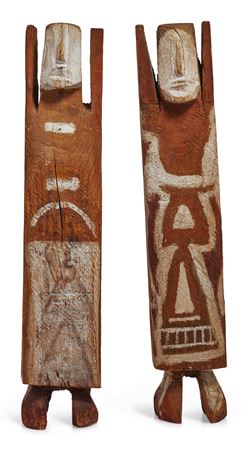
Charlie Willeto, Active in Blanco Canyon, New Mexico. A traditional Navajo sheepherder, Charlie Willeto began carving in the early 1960s, only a few years before his death. He used his works as... Read full biography
Charlie Willeto, Active in Blanco Canyon, New Mexico. A traditional Navajo sheepherder, Charlie Willeto began carving in the early 1960s, only a few years before his death. He used his works as barter—a standard form of trade on the reservation—for groceries at the Mauzy Trading Post near Lybrook.... Read full biography
Charlie Willeto, Active in Blanco Canyon, New Mexico. A traditional Navajo sheepherder, Charlie Willeto began carving in the early 1960s, only a few years before his death. He used his works as barter—a standard form of trade on the reservation—for groceries at the Mauzy Trading Post near Lybrook. Jim Mauzy accepted Willeto’s carvings, although they differed from the more conventional Navajo crafts of weaving and silverwork. Only one other life-sized carving exists; most of Willeto’s four... Read full biography
Charlie Willeto, Active in Blanco Canyon, New Mexico. A traditional Navajo sheepherder, Charlie Willeto began carving in the early 1960s, only a few years before his death. He used his works as barter—a standard form of trade on the reservation—for groceries at the Mauzy Trading Post near Lybrook. Jim Mauzy accepted Willeto’s carvings, although they differed from the more conventional Navajo crafts of weaving and silverwork. Only one other life-sized carving exists; most of Willeto’s four hundred figures range in size from twelve to thirty inches. Willeto’s figures came from a heritage of carving that had little to do with commercial signs. A Navajo curing rite, ?‘awééshíín’análnééh, prominently featured the carving of human figurines.... Read full biography
Charlie Willeto, Active in Blanco Canyon, New Mexico. A traditional Navajo sheepherder, Charlie Willeto began carving in the early 1960s, only a few years before his death. He used his works as barter—a standard form of trade on the reservation—for groceries at the Mauzy Trading Post near Lybrook. Jim Mauzy accepted Willeto’s carvings, although they differed from the more conventional Navajo crafts of weaving and silverwork. Only one other life-sized carving exists; most of Willeto’s four hundred figures range in size from twelve to thirty inches. Willeto’s figures came from a heritage of carving that had little to do with commercial signs. A Navajo curing rite, ?‘awééshíín’análnééh, prominently featured the carving of human figurines. These were usually between four and eight inches long, and were used only in a religious context specific to that ceremony. After the rite’s... Read full biography
Charlie Willeto - Artist Info
About Charlie Willeto: Books
Books & Publications (3)
Publications based on askART research. List may not be comprehensive.
The Artists Bluebook 34,000 North American Artists to March 2005
2005
AskART.com Inc. - Dunbier, Lonnie Pierson (Editor)
479 pages
Collective Willeto: The Visionary Carvings of a Navajo Artist
2002
Begay, Shonto (essay)
115 pages (color)
Contemporary American Folk Art A Collectors's Guide