Born in Chengdu, Diao immigrated to the United States in the 1950s, where he continues to live and work today. Diao recalls collecting cardboard tubes discarded by garment and fabric factories near... Read full biography
Born in Chengdu, Diao immigrated to the United States in the 1950s, where he continues to live and work today. Diao recalls collecting cardboard tubes discarded by garment and fabric factories near his studio in Soho, and then flattening and using them to apply paint to canvas in lieu of brushes.... Read full biography
Born in Chengdu, Diao immigrated to the United States in the 1950s, where he continues to live and work today. Diao recalls collecting cardboard tubes discarded by garment and fabric factories near his studio in Soho, and then flattening and using them to apply paint to canvas in lieu of brushes. This simple act not only provided the young artist with a free and plentiful source of painting materials, but it also served to subvert the concept of the artist's brushstroke, which reigned supreme... Read full biography
Born in Chengdu, Diao immigrated to the United States in the 1950s, where he continues to live and work today. Diao recalls collecting cardboard tubes discarded by garment and fabric factories near his studio in Soho, and then flattening and using them to apply paint to canvas in lieu of brushes. This simple act not only provided the young artist with a free and plentiful source of painting materials, but it also served to subvert the concept of the artist's brushstroke, which reigned supreme at the time. Multiple layers of paint would be applied to the canvas in this way, building up depth and a resonant richness of color. In a work called Untitled, muted and mossy green is layered over a lush burgundy, while hints of cerulean are... Read full biography
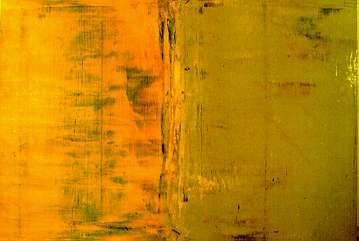
Born in Chengdu, Diao immigrated to the United States in the 1950s, where he continues to live and work today. Diao recalls collecting cardboard tubes discarded by garment and fabric factories near his studio in Soho, and then flattening and using them to apply paint to canvas in lieu of brushes. This simple act not only provided the young artist with a free and plentiful source of painting materials, but it also served to subvert the concept of the artist's brushstroke, which reigned supreme at the time. Multiple layers of paint would be applied to the canvas in this way, building up depth and a resonant richness of color. In a work called Untitled, muted and mossy green is layered over a lush burgundy, while hints of cerulean are suggested between the clashing colors. The overall effect suggests an iridescent sheen—some type of impossible co... Read full biography
David Diao - Artist Info
About David Diao: Books
Books & Publications (14)
Publications based on askART research. List may not be comprehensive.
The Artists Bluebook 34,000 North American Artists to March 2005
2005
AskART.com Inc. - Dunbier, Lonnie Pierson (Editor)
479 pages
Davenport's Art Reference: The Gold Edition
2005
Davenport, Ray
2,421 pages
Who's Who in American Art, 2004 2003 - 2004 (25th Edition)
2004
McGowan, Alison C (Editor)
1,512 pages
Who Was Who in American Art, 1564-1975: Three Volumes
1999
Falk, Peter Hastings (Editor)
3,724 pages
Who's Who in American Art, 1997-1998
1997
Marquis Who's Who
1,515 pages
Who's Who in American Art, 1993-1994, 20th Edition (American Federation of Arts)
1993
Bowker R R
1,473 pages
Mixed Blessings New Art in a Multicultural America
1990
Lippard, Lucy R
279 pages (color)
Albright-Knox Art Gallery Painting and Sculpture/Acquisitions since 1972
1987
Krane, Susan
379 pages (color)
Who's Who in American Art-1986 1986
1986
Jaques Cattell Press
1,292 pages
San Francisco Museum of Modern Art Paintings and Sculpture Collection
1985
DuPont, Diana, K Holland
402 pages (color)
American Paintings/Brooklyn Museum Complete Illustrated Listing of Works
1979
Brooklyn Museum
133 pages (color)
Who's Who in American Art, 1976 12th Edition
1976
Jaques Cattell Press
756 pages
Whitney Museum of American Art Catalogue of the Collection
1974
Baur, John I H
235 pages (color)
The Albert Pilavin Collection Twentieth-Century American Art (Exhibition catalog)