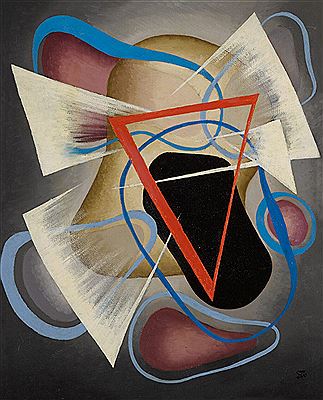
When he was twelve, Dwinell Grant began studying landscape painting with his grandfather. Seeking further traditional training, in 1931 Grant enrolled at the Dayton Art Institute, which he soon... Read full biography
When he was twelve, Dwinell Grant began studying landscape painting with his grandfather. Seeking further traditional training, in 1931 Grant enrolled at the Dayton Art Institute, which he soon discovered, had modernist leanings. After a year, he left Dayton to go to New York where he entered the... Read full biography
When he was twelve, Dwinell Grant began studying landscape painting with his grandfather. Seeking further traditional training, in 1931 Grant enrolled at the Dayton Art Institute, which he soon discovered, had modernist leanings. After a year, he left Dayton to go to New York where he entered the National Academy of Design in 1933. By the time he arrived in New York, he had seen the Bliss collection and had begun thinking along modern lines. Although at the time, he said, his painting had not... Read full biography
When he was twelve, Dwinell Grant began studying landscape painting with his grandfather. Seeking further traditional training, in 1931 Grant enrolled at the Dayton Art Institute, which he soon discovered, had modernist leanings. After a year, he left Dayton to go to New York where he entered the National Academy of Design in 1933. By the time he arrived in New York, he had seen the Bliss collection and had begun thinking along modern lines. Although at the time, he said, his painting had not yet progressed "beyond the pointillist stage." . After five months, he left the National Academy and in 1935 became an instructor in art and director of dramatics at Wittenberg College in Ohio. By this time, Grant's paintings were nonobjective, and he... Read full biography
When he was twelve, Dwinell Grant began studying landscape painting with his grandfather. Seeking further traditional training, in 1931 Grant enrolled at the Dayton Art Institute, which he soon discovered, had modernist leanings. After a year, he left Dayton to go to New York where he entered the National Academy of Design in 1933. By the time he arrived in New York, he had seen the Bliss collection and had begun thinking along modern lines. Although at the time, he said, his painting had not yet progressed "beyond the pointillist stage." . After five months, he left the National Academy and in 1935 became an instructor in art and director of dramatics at Wittenberg College in Ohio. By this time, Grant's paintings were nonobjective, and he had come to believe that nonobjectivism "is a part of the earth itself. In creating it we do not say s... Read full biography
Dwinell (Dwinnell) Grant - Artist Info
About Dwinell (Dwinnell) Grant: Books
Books & Publications (7)
Publications based on askART research. List may not be comprehensive.
Order and Intuition American Abstraction From The Patty & Jay Baker Naples Museum of Art, 1913-1954 (Exhibition catalog)
2008
Berman, Avis (Hollis Taggart Galleries)
120 pages (color)
The Artists Bluebook 34,000 North American Artists to March 2005
2005
AskART.com Inc. - Dunbier, Lonnie Pierson (Editor)
479 pages
Davenport's Art Reference: The Gold Edition
2005
Davenport, Ray
2,421 pages
America Gone Modern: From the Twenties to the Sixties (Exhibition catalog)
2000
Spanierman Gallery
56 pages (color)
Who Was Who in American Art, 1564-1975: Three Volumes
1999
Falk, Peter Hastings (Editor)
3,724 pages
Theme & Improvisation Kandinsky & the American Avant-Garde (Exhibition catalog)