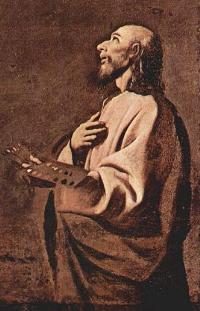
Francisco de Zurbaran (November 7, 1598 - August 27, 1664) was a Spanish painter. He is known primarily for his religious paintings depicting monks, nuns, and martyrs, and for his still-lifes.... Read full biography
Francisco de Zurbaran (November 7, 1598 - August 27, 1664) was a Spanish painter. He is known primarily for his religious paintings depicting monks, nuns, and martyrs, and for his still-lifes. Zurbaran gained the nickname Spanish Caravaggio, owing to the forceful, realistic use of chiaroscuro* in... Read full biography
Francisco de Zurbaran (November 7, 1598 - August 27, 1664) was a Spanish painter. He is known primarily for his religious paintings depicting monks, nuns, and martyrs, and for his still-lifes. Zurbaran gained the nickname Spanish Caravaggio, owing to the forceful, realistic use of chiaroscuro* in which he excelled. He was born at Fuente de Cantos in Extremadura, the son of Luis Zurbarán, a haberdasher, and his wife, Isabel Márquez. In childhood he set about copying objects with charcoal. In... Read full biography
Francisco de Zurbaran (November 7, 1598 - August 27, 1664) was a Spanish painter. He is known primarily for his religious paintings depicting monks, nuns, and martyrs, and for his still-lifes. Zurbaran gained the nickname Spanish Caravaggio, owing to the forceful, realistic use of chiaroscuro* in which he excelled. He was born at Fuente de Cantos in Extremadura, the son of Luis Zurbarán, a haberdasher, and his wife, Isabel Márquez. In childhood he set about copying objects with charcoal. In 1614 his father sent him to Seville to apprentice for three years with Pedro Díaz de Villanueva, an artist of whom very little is known. It is unknown whether Zurbarán had the opportunity to copy the paintings of Michelangelo da Caravaggio; at any rate,... Read full biography
Francisco de Zurbaran (November 7, 1598 - August 27, 1664) was a Spanish painter. He is known primarily for his religious paintings depicting monks, nuns, and martyrs, and for his still-lifes. Zurbaran gained the nickname Spanish Caravaggio, owing to the forceful, realistic use of chiaroscuro* in which he excelled. He was born at Fuente de Cantos in Extremadura, the son of Luis Zurbarán, a haberdasher, and his wife, Isabel Márquez. In childhood he set about copying objects with charcoal. In 1614 his father sent him to Seville to apprentice for three years with Pedro Díaz de Villanueva, an artist of whom very little is known. It is unknown whether Zurbarán had the opportunity to copy the paintings of Michelangelo da Caravaggio; at any rate, he adopted Caravaggio's realistic use of chiaroscuro and tenebrism*. The painter who may have had the... Read full biography
Francisco de Zurbaran - Artist Info
About Francisco de Zurbaran: Books
Books & Publications (2)
Publications based on askART research. List may not be comprehensive.
The MFA Handbook: A Guide to the Collections of the Museum of Fine Arts, Boston
2009
Rogers, Malcolm (Introduction) and Gilian Shallcross,(Entores
400 pages (color)
Accents on Artists A fact-filled pronunciation guide. Over 800 artist’s names you should know…