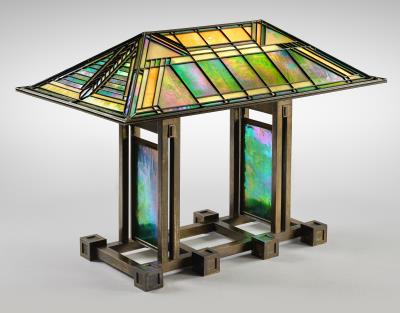
Born in Richland Center, Wisconsin, Frank Lloyd Wright became one of the pre-eminent architects of the early 20th century and designed many structures to express his theory that aesthetics and... Read full biography
Born in Richland Center, Wisconsin, Frank Lloyd Wright became one of the pre-eminent architects of the early 20th century and designed many structures to express his theory that aesthetics and function should work together. Wright's houses had a unique style of being a horizontal plane with no... Read full biography
Born in Richland Center, Wisconsin, Frank Lloyd Wright became one of the pre-eminent architects of the early 20th century and designed many structures to express his theory that aesthetics and function should work together. Wright's houses had a unique style of being a horizontal plane with no basements or attics. They were built of natural materials, were never painted, and had low pitched roofs and deep overhangs and walls of windows, all conveying a sense of horizontal and being WITH the... Read full biography
Born in Richland Center, Wisconsin, Frank Lloyd Wright became one of the pre-eminent architects of the early 20th century and designed many structures to express his theory that aesthetics and function should work together. Wright's houses had a unique style of being a horizontal plane with no basements or attics. They were built of natural materials, were never painted, and had low pitched roofs and deep overhangs and walls of windows, all conveying a sense of horizontal and being WITH the landscape. His rooms opened to each other and the homes were centered with large stone or brick fireplaces. Some of Wrights best-known designs include the Robie House in Chicago, Illinois; the Martin House in Buffalo, New York; the Johnson Wax Building... Read full biography
Born in Richland Center, Wisconsin, Frank Lloyd Wright became one of the pre-eminent architects of the early 20th century and designed many structures to express his theory that aesthetics and function should work together. Wright's houses had a unique style of being a horizontal plane with no basements or attics. They were built of natural materials, were never painted, and had low pitched roofs and deep overhangs and walls of windows, all conveying a sense of horizontal and being WITH the landscape. His rooms opened to each other and the homes were centered with large stone or brick fireplaces. Some of Wrights best-known designs include the Robie House in Chicago, Illinois; the Martin House in Buffalo, New York; the Johnson Wax Building in Racine, Wisconsin; and the Guggenheim Museum in New York. He is also credited with the Art-Deco motif of the decorative blocks of the Biltmore Hotel... Read full biography
Frank Lloyd Wright - Artist Info
About Frank Lloyd Wright: Books
Books & Publications (9)
Publications based on askART research. List may not be comprehensive.
The Florence Sketchbook of Frank Lloyd Wright, 1910 Limited Edition. 100th Anniversary Commemorative Editions
2010
Wright, Frank Lloyd
48 pages (color)
The Artists Bluebook 34,000 North American Artists to March 2005
2005
AskART.com Inc. - Dunbier, Lonnie Pierson (Editor)
479 pages
Famous Wisconsin Artists and Architects
2004
Levy, Hannah Heidi
316 pages
Window on the West: Chicago and the Art of the New Frontier, 1890-1940 (Exhibition catalog)
2003
Barter, Judith & Kelly, Sarah
184 pages (color)
The Devil in the White City
2003
Larson, Erik
447 pages
Who Was Who in American Art, 1564-1975: Three Volumes
1999
Falk, Peter Hastings (Editor)
3,724 pages
Accents on Artists A fact-filled pronunciation guide. Over 800 artist’s names you should know…