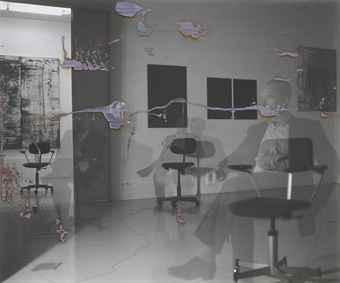
Gerhard Richter was born on February 9, 1932 in the East German town of Dresden, whose culture and charm were obliterated by the war. He grew up in the nearby village of Oberlausitz where his father... Read full biography
Gerhard Richter was born on February 9, 1932 in the East German town of Dresden, whose culture and charm were obliterated by the war. He grew up in the nearby village of Oberlausitz where his father was a schoolteacher. He was a gifted child artistically, but not a good student. As a young man he... Read full biography
Gerhard Richter was born on February 9, 1932 in the East German town of Dresden, whose culture and charm were obliterated by the war. He grew up in the nearby village of Oberlausitz where his father was a schoolteacher. He was a gifted child artistically, but not a good student. As a young man he earned a living making posters and set designs and from 1952-56 he studied Socialist Realism, the official school of painting in East Germany, at the Academy of Fine Arts in Dresden. A few years later... Read full biography
Gerhard Richter was born on February 9, 1932 in the East German town of Dresden, whose culture and charm were obliterated by the war. He grew up in the nearby village of Oberlausitz where his father was a schoolteacher. He was a gifted child artistically, but not a good student. As a young man he earned a living making posters and set designs and from 1952-56 he studied Socialist Realism, the official school of painting in East Germany, at the Academy of Fine Arts in Dresden. A few years later he was to receive another, very different education, from Karl Otto Gotz, at the Academy of Fine Arts in Dusseldorf, in Abstract Expressionism. Richter's move to West Germany in 1961 occurred only two months before the Berlin Wall went up. A decade... Read full biography
Gerhard Richter was born on February 9, 1932 in the East German town of Dresden, whose culture and charm were obliterated by the war. He grew up in the nearby village of Oberlausitz where his father was a schoolteacher. He was a gifted child artistically, but not a good student. As a young man he earned a living making posters and set designs and from 1952-56 he studied Socialist Realism, the official school of painting in East Germany, at the Academy of Fine Arts in Dresden. A few years later he was to receive another, very different education, from Karl Otto Gotz, at the Academy of Fine Arts in Dusseldorf, in Abstract Expressionism. Richter's move to West Germany in 1961 occurred only two months before the Berlin Wall went up. A decade of libertarian and licentious excess along with prosperity accompanied a period of blurred-photo paintings, partic... Read full biography
Gerhard Richter - Artist Info
About Gerhard Richter: Books
Books & Publications (7)
Publications based on askART research. List may not be comprehensive.
San Francisco Museum of Modern Art 360 Views on the Collection (Exhibition catalog)
2016
Block, Judy and Suzanne Stein, Editors
360 pages (color)
The Last Art College: Nova Scotia College of Art and Design, 1968-1978
2012
Kennedy, Garry Neill
455 pages (color)
Art Metropole: The Top 100 (National Gallery of Canada) (Exhibition catalog)
2006
Scott, Kitty et al
137 pages
Global Conceptualism: Points of Origin, 1950s-1980s
1999
Bann, Stephen, et al
279 pages
TRANSlinear (McMaster Museum of Art)
1999
Holubizky, Ihor, David Moos and Joseph R. Wolin
32 pages (color)
Accents on Artists A fact-filled pronunciation guide. Over 800 artist’s names you should know…